

Corporate Event Debrief Checklist: Review Feedback, Logistics and Vendors
A debrief that records impressions but not decisions leaves the next event with the same avoidable gaps. A useful corporate event debrief checklist reviews whether goals and attendance targets were met, compares actual results with the budget after bills are paid, and assesses logistics, staffing, vendors and sponsor outcomes. Schedule the discussion within one to three days of the event, while details are still fresh.
It’s easy to focus on what happened on the day, but useful lessons can emerge throughout planning and delivery. This guide explains how to capture feedback across the event lifecycle, organise it into clear themes and turn it into a practical debrief template. You’ll also learn how to assign actions so the review informs better decisions for the next event.
Table of Contents
1. What are the key components of a successful post-event debrief?
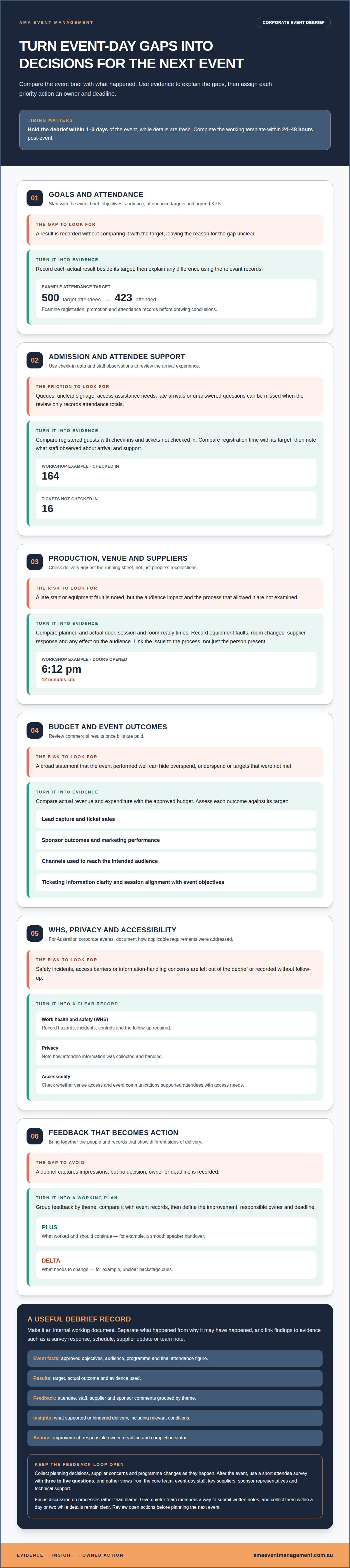
A useful corporate event debrief checklist compares the event brief with what actually happened. Start with objectives, audience, attendance targets and agreed KPIs. Record each result beside its target, then explain any gap. For example, an event aiming for 500 attendees and receiving 423 should examine registration, promotion and attendance records before drawing conclusions.
Review admission and attendee support using check-in data and staff observations. How many registered guests arrived, and how many tickets went unused? One workshop example recorded 164 check-ins, while 16 tickets were not checked in. Compare registration time with its target, then note queues, signage, access assistance, late arrivals and unanswered questions. These details show where the attendee experience needs attention.
Next, assess production, venue and suppliers against the running sheet. Compare planned and actual door, session and room-ready times; the workshop example’s doors opened at 6:12 pm, 12 minutes late. Record equipment faults, room changes, supplier response and any effect on the audience. Link each issue to the process that allowed it, not just the person present.
Review commercial results once bills are paid. Compare actual revenue and expenditure with the approved budget, noting overspend and underspend. Assess lead capture, ticket sales, sponsor outcomes and marketing performance against their targets. Check which channels reached the intended audience, whether ticketing information was clear, and whether each session supported the event’s objectives.
For Australian corporate events, document how applicable work health and safety (WHS), privacy and accessibility requirements were addressed. Record hazards, incidents and controls, how attendee information was collected and handled, and whether venue access and event communications supported attendees with access needs.
Close the meeting by grouping feedback under logistics, suppliers, presenters and team communications. For each priority issue, record the evidence, action, owner and due date. This creates a working record for the next event, rather than a summary of impressions.
2. Gathering feedback across the event lifecycle
Feedback is more useful when teams collect it throughout planning, delivery and follow-up. Record planning decisions, supplier concerns and programme changes as they happen, rather than relying on post-event memory. During delivery, note attendee questions, staff observations and changes to the schedule or room setup. These details give the debrief specific evidence to examine.
After the event, send attendees a short survey with three to five questions. Ask what helped them participate, where they encountered friction and what would improve a future session. A survey complements the debrief; it doesn’t replace discussion with the people who planned or delivered the event. Gather views from the core team, event-day staff, key suppliers, sponsor representatives and technical support. Different perspectives can reveal different causes.
Make honest feedback easier to share. Set a constructive purpose for the meeting, invite specific examples and focus on processes rather than blame. Give quieter team members a way to submit written notes, and collect them within a day or two, while details remain clear. A neutral facilitator can keep the discussion focused on what happened and what the evidence shows.
Use a Plus/Delta format to organise feedback. “Plus” captures what worked and should continue; “Delta” records what needs to change. For example, a smooth speaker handover may be a Plus, while unclear backstage cues may be a Delta. Group comments by theme, then compare them with survey responses and event records. This helps distinguish a recurring issue from an isolated comment.
Turn each priority finding into a task for the next event: define the change, assign an owner and set a deadline. For example, a Delta about confusing arrival instructions could become a revised guest email, with a named owner and review date. Record progress in the planning notes so the decision informs future delivery. Coordinated event delivery can help keep feedback, logistics and follow-up actions aligned.
4. Creating an event debrief template
A useful event debrief template is an internal working document, not a polished report. Organise it into event details, feedback and insights, and improvement actions. Add fields for the event name, date, format, audience, objectives and planning team. Use the same structure for each event so the team can compare lessons and carry effective practices into the next programme.
Complete the template within 24–48 hours post-event, while observations are fresh. Make room for evidence as well as opinions: link each finding to a survey response, schedule, supplier update or team note. Separate what happened from why it may have happened. For example, record a delayed session as an observation, then capture the contributing factors and any follow-up needed.
Include clear prompts that guide consistent entries:
Event facts: Record the approved objectives, audience, programme and final attendance figure.
Results: Compare each target with the actual outcome, and note the evidence used.
Feedback: Group attendee, staff, supplier and sponsor comments by theme.
Insights: Explain what supported or hindered delivery, including relevant conditions.
Actions: State the improvement, responsible owner, deadline and completion status.
For a sponsor outcome, the template might capture the agreed objective, evidence of delivery and sponsor feedback. This is more useful than a general note that sponsorship went well. Limit sensitive details to people who need them, and store supporting records alongside the debrief using the team’s usual document controls.
Before planning the next event, review open actions. Carry forward unfinished tasks with their owners and deadlines; close completed items with a brief note describing the change. A template that records decisions and tracks follow-through helps turn one event’s experience into a repeatable process, rather than starting each review from a blank page.
4. What safety incidents, accessibility issues, or compliance risks should be documented?
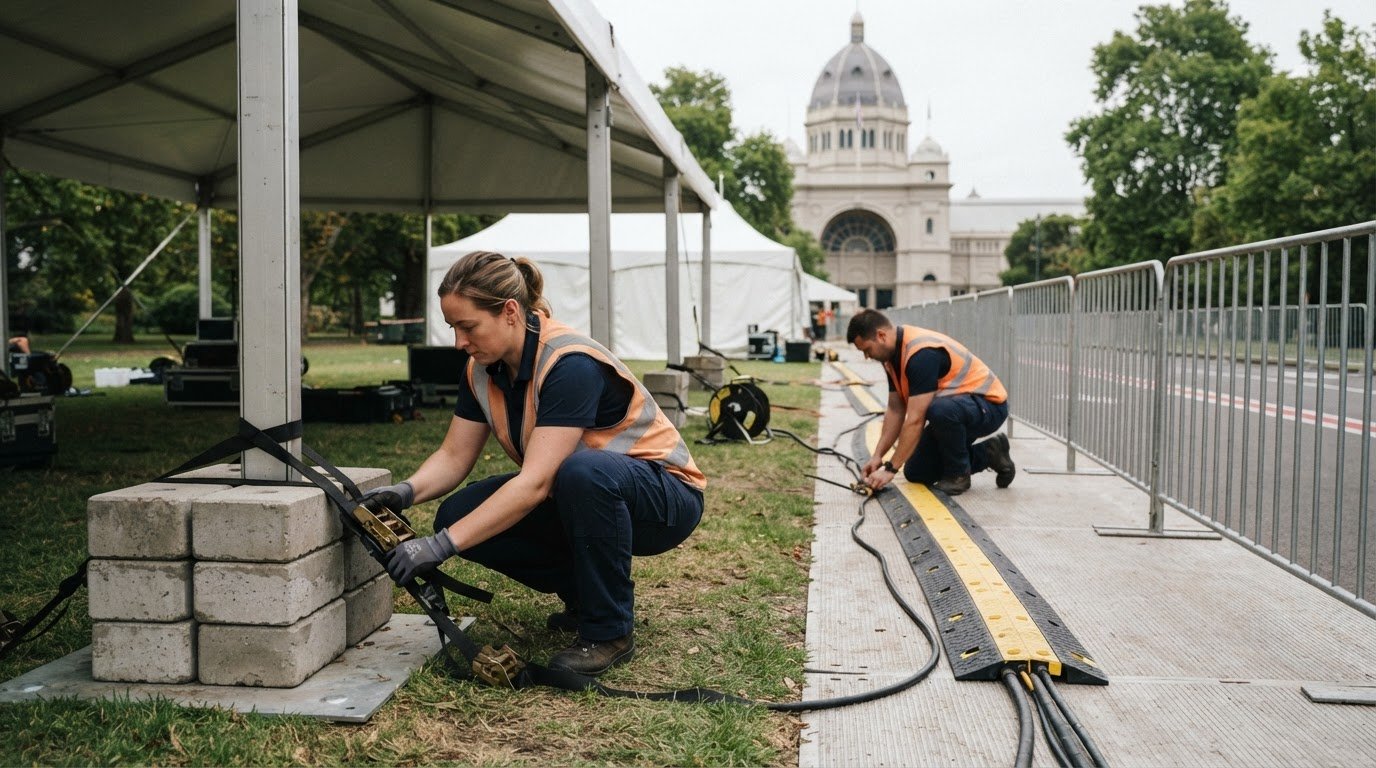
Record incidents, near misses and hazards even when nobody needs medical attention. For each event, capture the time, location, people involved, what happened, the immediate response and the follow-up owner. For example, note a cable across a walkway, who isolated the area and whether the route changed. Keep factual descriptions separate from assumptions about the cause. This gives the team a clear record to review alongside its risk assessment.
Document how safety controls worked in practice. Note blocked exits, crowd-flow pinch points, equipment faults, weather responses and delays in escalating issues. Record the planned control, what staff actually did and what should change. If event equipment obstructed an emergency route, include where it happened and how the team restored access.
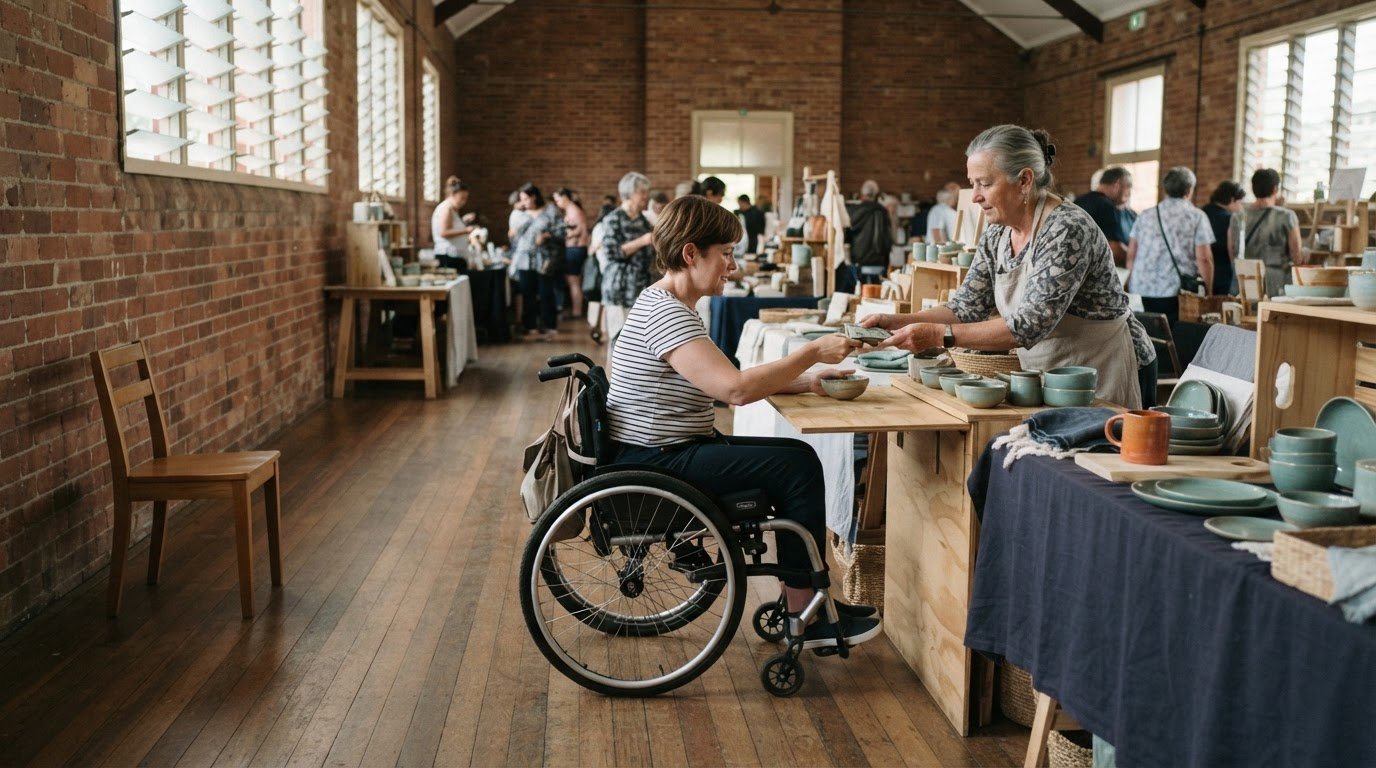
Accessibility notes should describe barriers and their effect on participation. Capture reports about step-free access, seating, accessible toilets, signage, hearing support or unclear event communications. Record where the issue arose, how staff responded and whether an adjustment resolved it. Avoid unnecessary personal details about attendees; document the access issue, not someone’s private circumstances.
For privacy and other compliance concerns, note the information or process involved, who could access it, the response and any outstanding action. Examples include a registration list left visible at a check-in desk, photographs used without clear permission processes, or a supplier’s safety paperwork missing from the event file. Preserve relevant records securely and restrict access to those responsible for follow-up.
Incident: Record the facts, response and follow-up owner.
Accessibility: Describe the barrier, its impact and the adjustment made.
Compliance: Note the process affected, records retained and corrective action.
Close each entry with a practical improvement, such as repositioning cables or revising arrival instructions. For a corporate conference, structured event safety and logistics planning can help keep operational details aligned.
AMA Event Management: Corporate Conferences and Galas
AMA Event Management plans and manages Corporate Conferences and Galas, coordinating the programme, venue logistics and suppliers through a structured event process. Turn to the team when planning a corporate gathering and you need its moving parts managed together, from early decisions through delivery. A documented debrief can then help shape improvements to the next event, including attendee support, supplier coordination and production planning.
For other event formats, AMA Event Management also offers Themed Brand Activations, Community Festivals and Fairs, and Market Management and Vendor Coordination. The right fit depends on the event’s purpose and format. Contact AMA Event Management to discuss your corporate event and its requirements.
Carry useful lessons into the next event
Treat the debrief as the beginning of the next planning cycle, not a file to archive. Use the corporate event debrief checklist as a living record: preserve why decisions were made, what evidence informed them and which lessons remain relevant. This context helps future teams adapt sound practices to a different audience or format instead of copying the previous plan without thought.
Before approving the next event brief, revisit the review and decide which lessons still apply. Keep the rationale beside each change, then note what the team will observe to assess whether it helped. Over time, this record supports consistent decisions while leaving room to adapt when the event’s purpose, audience or delivery conditions change.
AMA Event Management’s work includes Market Management and Vendor Coordination, Community Festivals and Fairs, and Themed Brand Activations. If you’re planning an event and want to discuss its requirements, contact AMA Event Management. Start the next event with clearer intent and a stronger foundation.
Frequently Asked Questions
What are the key components of a successful post-event debrief?
A successful debrief connects event objectives with evidence and decisions. Review whether the intended audience attended, whether sessions supported the event’s purpose, and whether commercial and sponsor outcomes matched expectations. Briefly document unexpected changes, such as a speaker cancellation or room move, and how the team responded. The most useful record makes clear what to retain, what to adjust and why.
What is an effective format to structure a debrief meeting?
A 60-minute agenda can give the discussion a clear sequence: set the purpose, agree what happened, identify what to repeat, examine priority problems, decide changes and read back decisions. Allocate 0 to 5 minutes to purpose, then 5 to 12 minutes to agreeing events. Reserve the final minutes for confirming each decision, its owner and the next step, rather than opening new topics.
How is it different from a post mortem?
The terms can overlap, so define the purpose before inviting people. A debrief usually centres on shared learning and practical changes after an event. “Post mortem” can suggest a deeper examination of a project or a serious failure, and may feel more focused on causes. For a corporate event, use neutral language and agree whether the meeting will review routine delivery, a specific incident or both.
What should a debrief template look like?
Use a concise working document with one row or entry for each finding. Include the observation, supporting evidence, impact, decision, action owner and progress status. Add a field for the related objective or programme area, so a note about a sponsor activation can be linked to its intended outcome. Keep the template easy to scan during a meeting and straightforward to update afterwards.
When should the debrief be completed?
Capture first impressions and operational notes within 24–48 hours post-event, then hold the discussion within one to three days. Complete the full corporate event review within 5 business days, so follow-up tasks can enter the next planning cycle promptly. If stakeholders need time to provide information, record outstanding inputs and assign someone to add them before closing the document.
Who should fill it out?
The event lead should coordinate the document, while each participant contributes observations from their role. Include people responsible for programme delivery, registration, technical production and venue coordination, then invite relevant stakeholder input. A sponsor representative can comment on agreed outcomes; a presenter can identify session or briefing issues. The coordinator should consolidate contributions, clarify unclear entries and record agreed actions after the meeting.

Comments