

Event insurance requirements Australia: cover and documents
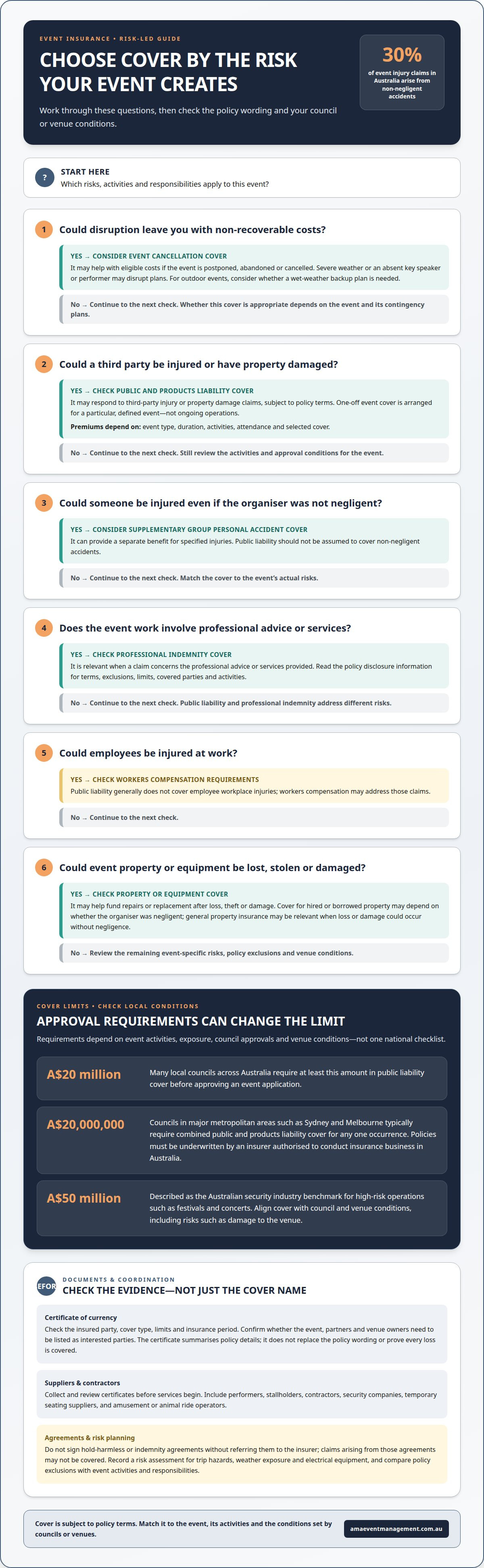
In Australia, 30% of event injury claims arise from non-negligent accidents. That’s why event insurance requirements in Australia involve more than preparing for incidents an organiser may have caused: the right cover depends on the event, its activities and the conditions set by councils or venues.
It’s understandable to focus first on public liability: an injury or property damage claim can affect both the event and its organisers. But public liability, cancellation cover and professional indemnity address different risks. Don’t assume one policy covers every scenario.
This guide explains why events need insurance, how the main types of cover differ, and which certificates and documents organisers may need to collect. It also explains how third-party providers, including vendors, performers and contractors, fit into an event’s overall risk picture.
Table of Contents
Why do you need Event Insurance?
Event insurance can help manage liability claims and non-recoverable costs if an event is disrupted. Choose cover that reflects the event’s activities, including setup, staging and dismantling.
Event cancellation cover
Event cancellation cover can help with non-recoverable costs if an event must be postponed, abandoned or cancelled. Severe weather or an absent key speaker or performer may disrupt plans, while an outdoor event may need a wet-weather backup plan for severe-weather cover. Whether cancellation insurance is appropriate depends on the event’s circumstances and contingency plans. Eligibility may also depend on the event type and contingency plans.
Public and products liability cover
One-off event public and products liability cover is arranged for a particular event. Single-event cover also applies to a defined event rather than ongoing operations. Both may respond to third-party injury or property damage claims, subject to the policy terms. Premiums depend on details such as event type, duration, activities, attendance and selected cover. Australian event policies can also include cancellation, property and equipment cover, but these address different losses. Cancellation cover may help with eligible unrecoverable costs; property or equipment cover may help fund repairs or replacement after loss, theft or damage.
Personal accident cover
Personal accident cover can provide a separate benefit for specified injuries, including when an accident does not establish the organiser’s liability. This distinction matters because public liability should not be assumed to cover non-negligent accidents. In Australia, 30% of event injury claims arise from non-negligent accidents. Organisers may consider supplementary group personal accident cover for people whose injuries could otherwise fall outside liability protection.
Exclusions and workers compensation
Policy exclusions define the circumstances and losses that aren’t covered. Check how they apply to the event’s activities and property. Public liability generally doesn’t cover employee workplace injuries; workers compensation may address those claims. Cover for hired or borrowed property may depend on whether the organiser was negligent. General property insurance may be relevant if property could be lost or damaged without negligence. Compare the policy wording with the event’s operations and responsibilities.
Public Liability and Professional Indemnity differences
Public liability insurance may respond to third-party injury or property damage claims against event organisers. Professional indemnity is relevant when event work involves professional advice or services and a claim concerns that work. Read the policy disclosure information to understand its terms, exclusions and limits, and which parties and activities the cover includes.
Insurance requirements vary with an event’s activities and exposure. Festivals and concerts may involve higher-risk operations, while markets, weddings and sporting events each have different activities to assess. The event type, venue conditions and council approval requirements help determine the public liability cover and other documents organisers need.
Many local councils across Australia require at least A$20 million in public liability insurance before approving an event application. When submitting an application for event approval to local authorities in major metropolitan areas such as Sydney and Melbourne, councils typically require combined public and product liability cover of at least A$20,000,000 for any one occurrence. These municipalities also require policies to be underwritten by an insurer authorised to conduct insurance business in Australia.
High-risk events may need higher limits. A$50 million in public liability cover is described as the Australian security industry benchmark for high-risk operations such as festivals and concerts. Event organisers should align cover with council and venue conditions, plus risks such as damage to the venue.
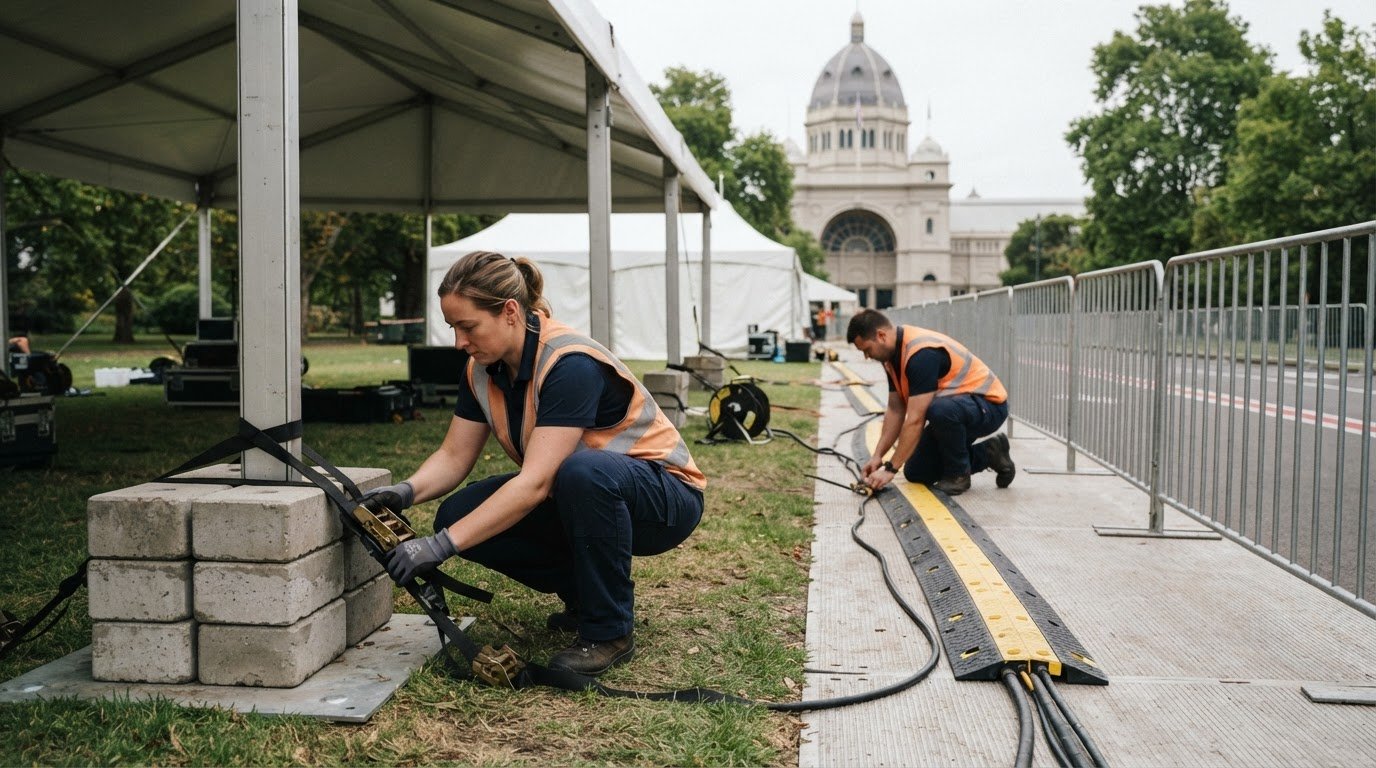
Permits and approvals may set insurance conditions. A recorded risk assessment helps identify trip hazards, weather exposure and electrical equipment risks, and informs practical safety planning. Requirements depend on the activities and approval conditions, not on one national checklist.
Contractors bring their own liability exposures. Obtain and review certificates of currency from stallholders and contractors, including security companies, temporary seating suppliers, and amusement or animal ride operators. Don’t sign hold-harmless or indemnity agreements without referring them to the insurer, as claims arising from those agreements may not be covered.
For markets, Market Management and Vendor Coordination can help organise provider coordination alongside event planning.
What is a certificate of currency and why do I need one?
A certificate of currency provides evidence of an insurance policy and its stated cover. Event organisers use it to document insurance arrangements for venues, partners and suppliers before attendees arrive.
Certificates of currency and interested parties
A certificate of currency summarises key policy details, such as the insured party, cover type, limits and period of insurance. Before the event, check whether the event, partners and venue owners need to be listed as interested parties. This clarifies who has an interest in the policy, but the certificate doesn’t replace the full policy wording or prove that every loss is covered.
For example, a festival venue may require evidence that the organiser’s policy relates to the event and remains current for its scheduled dates. If the certificate doesn’t match the event arrangements, the intended protection may be unclear.
Supplier certificates of currency
Supplier certificates provide evidence that contractors and vendors hold their own insurance. Collect and review these documents before services begin, including for performers, stallholders and temporary structure providers. This helps clarify which party’s insurance may respond to an incident involving a supplier’s work, equipment or products.
For a market, a stallholder’s public and products liability certificate documents their cover arrangements. Record the supplier’s name and file the certificate with their event documents so the information is accessible if an injury or property damage claim arises.
Comparing policies and obtaining a certificate
Compare policies with the event requirements by reviewing insured activities, exclusions, limits, policy period and relevant parties. An insurer or broker provides a certificate of currency after cover is arranged. Give them accurate event details so the certificate reflects the intended policy.
Before the event, check the certificate for the insured name, dates, cover type and any listed interested parties. Compare those details with venue conditions and supplier documents. Keep the certificate with event records, and refer to the full policy wording for conditions that affect compensation, losses or specific activities.
Insurance requirements for third-party service providers
Third-party providers bring their own activities, equipment and potential liability to an event. Vendors and performers at an insured event must hold their own public liability insurance and provide a certificate of currency. Organisers should match each certificate to the provider’s role, so cover is relevant to the work that may involve attendees, property or other parties.
For a market, stallholders or exhibitors should carry public and products liability insurance. Camden Council requires food and drink vendors at events to provide a current certificate of currency. Other subcontractors may include performers, marquee hire and fireworks providers; Camden Council encourages organisers to collect their current certificates. These records help clarify who carries cover if a supplier’s work contributes to an incident.
Some activities need particular attention. Ensure amusement-ride and animal-ride contractors, temporary seating suppliers and contracted security companies carry their own public liability insurance. In the Australian security industry, regulations and insurers require subcontractors to hold Public & Products Liability and Workers Compensation policies. The relevant cover depends on each provider’s work and the event’s conditions.
Vehicles also matter for activities approved by Camden Council. Third-party property damage motor vehicle insurance must cover vehicles used for trading, catering, transport, deliveries, set-up or pack-down, and remain in place for the duration of the approval. This is separate from the Compulsory Third Party insurance included with vehicle registration. Evidence of a current policy must be provided upon request.
Fireworks and pyrotechnics require careful documentation. Record each provider’s role, certificate and applicable conditions, then align requirements with the event’s objectives, operations and financial situation.
For a coordinated event plan, coordinate vendors and event providers through a structured management process.
AMA Event Management
AMA Event Management coordinates event logistics and providers, helping organisers plan with insurance requirements in view. For markets and community festivals, that means coordinating vendors and activities within the wider event plan, while considering certificates, venue conditions and supplier responsibilities alongside event operations.
AMA Event Management provides Market Management and Vendor Coordination, Community Festivals and Fairs, Themed Brand Activations, and Corporate Conferences and Galas. These services suit organisers who need structured oversight of event components and third-party participants. Insurance decisions depend on the policy and approval conditions; clear coordination helps keep responsibilities visible as plans develop.
If you’re planning an event and want to discuss its management, contact AMA Event Management.
Make insurance part of the event plan
Use event insurance requirements in Australia as a planning input, not a last-minute paperwork task. As an event takes shape, provider roles, venue conditions and operational decisions can change. Keep those details aligned to maintain a clear picture of responsibilities and prepare for a smoother handover from planning to delivery.
AMA Event Management can coordinate the broader event structure through Market Management and Vendor Coordination, Community Festivals and Fairs, and Themed Brand Activations. This gives organisers a practical framework for bringing suppliers and activities together, while insurance decisions remain guided by the relevant policy and approval conditions.
Start a conversation about your event’s planning needs and next steps. Contact AMA Event Management to discuss how to move your plans forward with care and clarity.
Frequently Asked Questions
What are event exposures?
Event exposures are situations that could lead to injury, property damage, financial loss or a claim against an organiser. For example, a guest could trip over an outdoor cable, a storm could damage hired equipment, or a supplier’s activity could damage the venue. Map exposures to each event activity to identify where insurance, safe work practices and contingency planning may be relevant.
What are the most common risks for small events?
Small events can still involve trip hazards, weather exposure, electrical equipment issues, attendee injuries and damage to a venue or borrowed property. A community fair, for instance, might combine temporary stalls, power leads and outdoor conditions in one space. A written risk assessment can record hazards and controls; insurance should reflect the event’s activities, equipment and people involved.
Why do service providers I hire need their own insurance?
Each provider controls different work and may create risks that the organiser’s policy doesn’t address in the same way. A performer, food vendor or marquee contractor could cause injury or damage through their activities, products or equipment. Their own insurance helps clarify which policy may respond to a claim involving that work. Collecting current certificates also creates a record of provider cover.
What insurance is legally required for events in Australia?
There isn’t one universal event insurance requirement for every Australian event. Councils and venues may set public liability conditions for approvals or site use, while obligations also depend on the event’s activities and workforce. For example, Camden Council sets insurance conditions for approved activities. Distinguish legal obligations from venue or council contract conditions, then plan cover around both.
Do Australian event organisers need public liability insurance, and what cover limit is typical?
Organisers commonly need public liability cover to meet council or venue conditions, although requirements differ by event and location. Many Australian local councils require at least A$20 million before approving an event application. Treat that as a common council threshold, not a universal limit: the event’s activities, approval conditions and venue requirements determine the amount to arrange.
What workers compensation insurance rules apply to event organisers in each Australian state and territory?
Workers compensation is governed by separate state and territory schemes, so an organiser’s obligations depend on where the work occurs and the worker’s employment status. The relevant scheme may treat employees differently from genuine contractors, and some arrangements can affect that distinction. Identify the workforce and operating jurisdictions, then apply the relevant scheme’s coverage rules to those working arrangements.


Comments