

How to apply for a public entertainment license in Melbourne
There isn’t one approval that covers every part of an event. Applying for a public entertainment licence in Melbourne may involve a place of public entertainment occupancy permit, a temporary liquor licence, a music licence, or more than one of these, depending on the event. For a temporary liquor licence, Liquor Control Victoria may need a minimum of 42 days to process the application.
Before committing to a venue, entertainment or event schedule, clarify which approvals apply. This guide explains who can apply, how to identify the relevant approval, what documents to prepare and how to plan around decision timelines. It also covers why a scaled site plan and complete event details matter when preparing an application.
Table of Contents
Decision timeframes
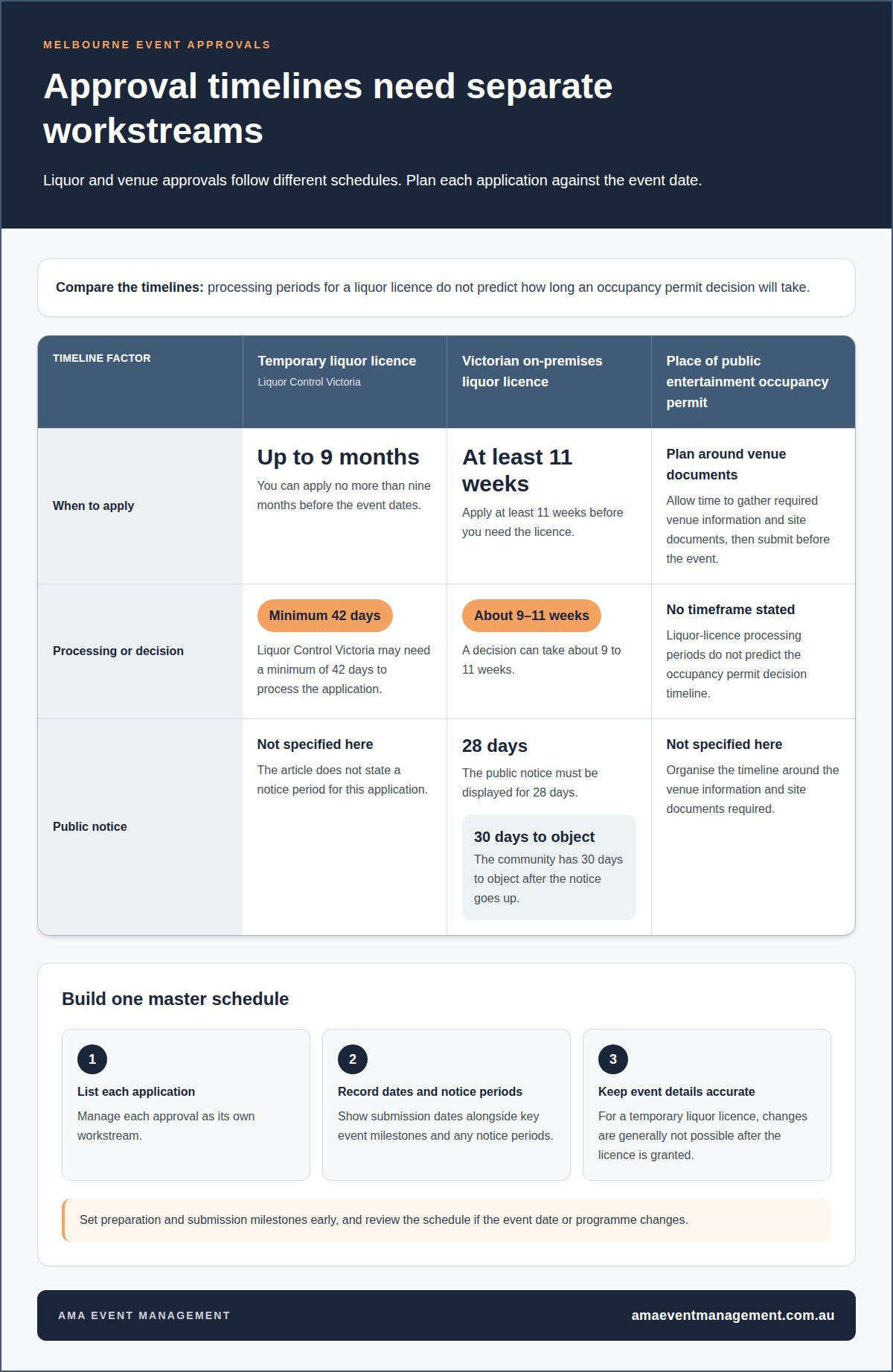
Plan around the processing period for each approval and your event date. Applying for a public entertainment licence in Melbourne can involve separate timelines for liquor and venue approvals, so manage each application as its own workstream.
For a temporary liquor licence, allow Liquor Control Victoria a minimum of 42 days to process the application. You can apply no more than nine months before the event dates. Set a submission deadline that leaves time to prepare and lodge complete supporting material. Record the planned event dates clearly, then work backwards to set preparation and submission milestones. This helps keep the application timetable connected to the event schedule.
If you need a Victorian on-premises liquor licence, apply at least 11 weeks before you need it. A decision can take about 9 to 11 weeks. The public notice must be displayed for 28 days, and the community has 30 days to object after it goes up. Include these stages in the schedule from the outset, rather than treating them as time available after lodging. Keep the notice period visible as a distinct milestone.
For a place of public entertainment occupancy permit, organise the timeline around the venue information and site documents required. Allow time to gather the material and submit the application before the event. Liquor-licence processing periods do not predict how long an occupancy permit decision will take. These are separate approvals with independent timelines, so align venue submission dates with the event programme.
Create a master schedule showing each application, its submission date and key event milestones. Record notice periods alongside the dates that affect the programme. For a temporary liquor licence, provide accurate event details, as changes are generally not possible after the licence is granted. Applying for a public entertainment licence in Melbourne therefore requires coordination between approvals and event planning. Review the schedule if the event date or programme changes.
Public entertainment and arts entertainment licence requirements
For events in Melbourne, identify the relevant Victorian occupancy approval and any separate permissions required for the planned activities.
Separate approvals by activity before finalising the event plan. A place of public entertainment occupancy permit concerns the venue’s use for public entertainment. Liquor service and publicly played music have separate approval requirements. An occupancy permit does not authorise liquor service or music. An event with performances, alcohol and recorded music may therefore require several approval checks, rather than one licence covering everything.
Show the venue’s safety and access arrangements on the site plan. Mark access points, entries, exits, pathways and amenities, along with first aid, crowd control, safety equipment, lighting and emergency evacuation areas. This helps explain how people will move through the site and where key provisions are located. Include practical details such as the route from an entrance to the performance area and clearly marked evacuation areas.
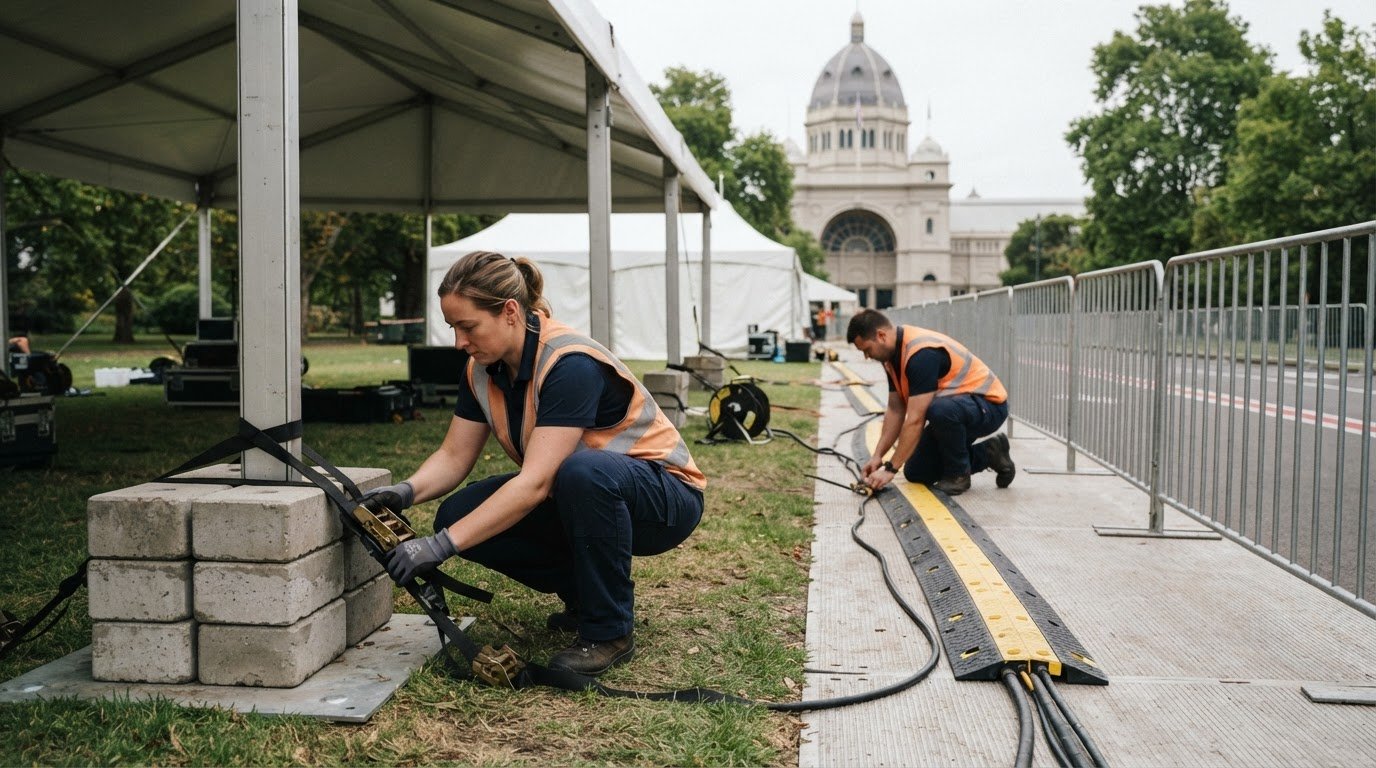
Assess temporary structures and audience infrastructure against the Victorian thresholds. Certification and siting approval are required for platforms larger than 150 square metres. The same approvals are required for seating banks for more than 20 people. Temporary marquees larger than 100 square metres also require certification and siting approval. Include these structures in the event layout, rather than treating them as minor additions after planning.
Secure the permissions that apply to your event before it proceeds. Victoria’s listed requirements do not specify a penalty for operating without a required licence, so do not assume a particular fine. The practical risk is proceeding without approval and encountering compliance issues that disrupt event operations. Keep occupancy, liquor and music requirements distinct, and use the event plan to identify which approvals apply.
Decision timeframes
Plan around the processing period for each approval and your event date. Applying for a public entertainment licence in Melbourne can involve separate timelines for liquor and venue approvals, so manage each application as its own workstream.
For a temporary liquor licence, allow Liquor Control Victoria a minimum of 42 days to process the application. You can apply no more than nine months before the event dates. Set a submission deadline that leaves time to prepare and lodge complete supporting material. Record the planned event dates clearly, then work backwards to set preparation and submission milestones. This keeps the application timetable connected to the event schedule.
If you need a Victorian on-premises liquor licence, apply at least 11 weeks before you need it. A decision can take about 9 to 11 weeks. The public notice must be displayed for 28 days, and the community has 30 days to object after it goes up. Include these stages in the schedule from the outset, rather than treating them as time available after lodging. Keep the notice period visible as a distinct milestone.
For a place of public entertainment occupancy permit, organise the timeline around the venue information and site documents required. Allow time to gather the material and submit the application before the event. Liquor-licence processing periods do not predict how long an occupancy permit decision will take. These are separate approvals with independent timelines, so align venue submission dates with the event programme.
Create a master schedule showing each application, its submission date and key event milestones. Record notice periods alongside the dates that affect the programme. For a temporary liquor licence, provide accurate event details, as changes are generally not possible after the licence is granted. Applying for a public entertainment licence in Melbourne requires coordination between approvals and event planning. Review the schedule if the event date or programme changes.
Which authority issues public entertainment licences in Melbourne, Victoria?
Match each approval to the authority responsible for that activity. Melbourne events may involve a place of public entertainment occupancy permit, a liquor licence and music permissions. These are separate processes, not one general entertainment licence. The Victorian occupancy permit application is Form 15 under Regulation 186 of the Building Regulations 2018, seeking approval under Section 54 of the Building Act 1993. Use those details to identify the application you’re preparing.
For temporary liquor licensing, deal with Liquor Control Victoria. It processes temporary liquor licence applications and may need a minimum of 42 days. Applicants planning to trade past 1am in Melbourne, Port Phillip, Yarra or Stonnington must provide additional documents. Keep liquor application details separate from occupancy paperwork, particularly if your event combines performances and alcohol service.
For music played publicly, identify the relevant music-licensing requirement. OneMusic Australia brings together APRA AMCOS and PPCA, which provide access to their works, sound recordings and music videos. A business playing music publicly may need permission, whether it is played at a performance, on radio or television, through streaming or in another format. Music permission does not replace an occupancy permit or liquor licence.
Build an approvals list around your venue, event activities and location. Record the occupancy permit, liquor application and music permission separately, then assign each its relevant process. For example, an event with amplified music and liquor service involves distinct checks beyond its venue approval. If you’re coordinating event logistics alongside these applications, discuss event planning support as part of your preparation.
AMA Event Management
AMA Event Management coordinates event logistics so the venue, programme and suppliers work together. Its services include Community Festivals and Fairs, Themed Brand Activations, Corporate Conferences and Galas, and Market Management and Vendor Coordination. These services can support the practical delivery of an event once you have identified the approvals it may require.
A community fair, for example, requires coordination of its event elements, while a corporate gala has a different programme and operational structure. Event management does not replace a Victorian occupancy permit, liquor licence or music permission. Keep those applications separate as you plan the event.
Contact AMA Event Management to discuss your event plans and the support that may suit them.
Shape your event plan into a clear next step
Once you have mapped the approvals, turn the event concept into a practical delivery plan. Define what the experience should achieve, who it needs to serve, and how the programme, site and suppliers will work together. This gives planning a clear direction while applications and event arrangements proceed on separate tracks.
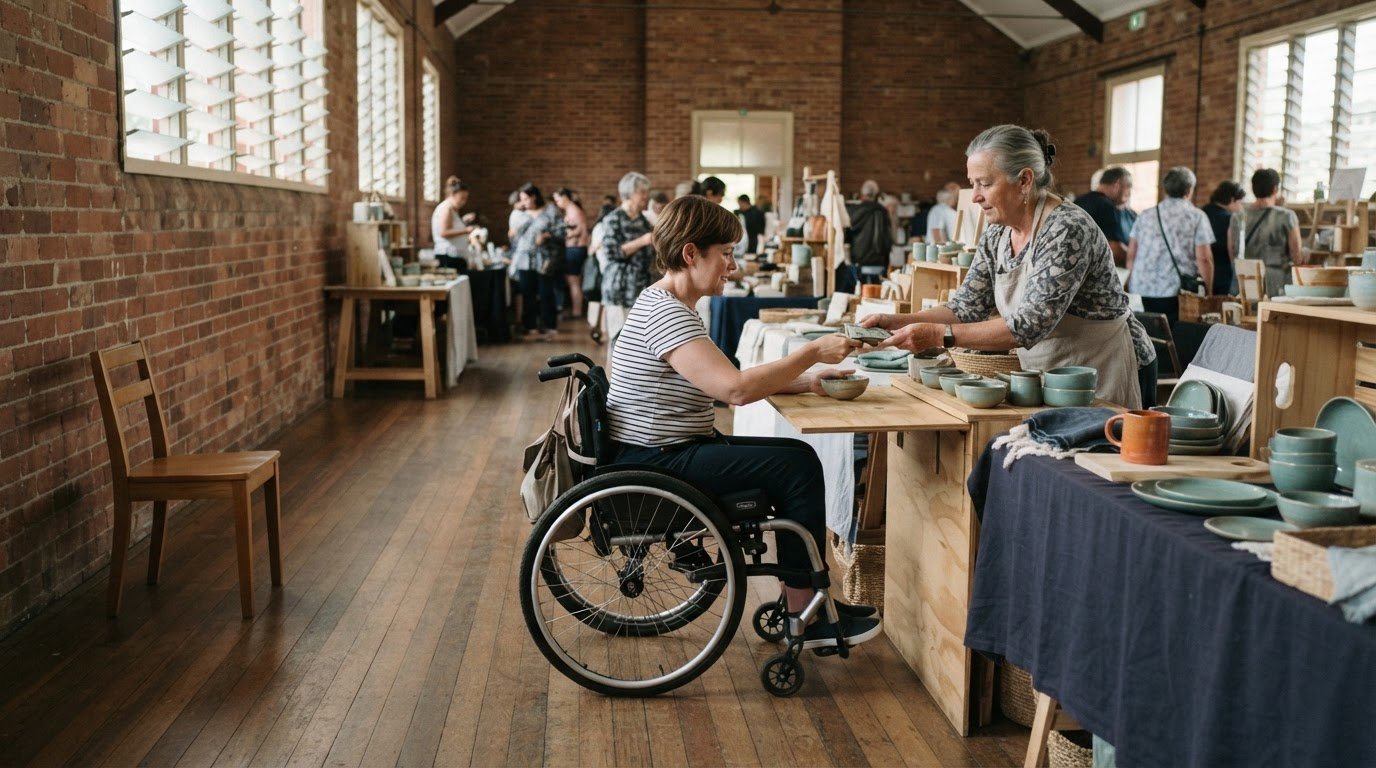
The format of a community festival, themed brand activation or market shapes the coordination it needs. AMA Event Management provides Community Festivals and Fairs, Themed Brand Activations, and Market Management and Vendor Coordination. These services support organisers who need professional help coordinating an event’s moving parts. Event management complements the approval process; it does not replace licences or permissions required in Victoria.
Take the next step with a defined event concept and a clear sense of the support you need. Contact AMA Event Management to discuss your plans. With a considered brief and the right delivery structure, you can move towards an event that’s organised around its purpose.
Frequently Asked Questions
What types of events and venues require a public entertainment licence in Melbourne?
Events at a place used for public entertainment may need an occupancy permit, depending on the venue and proposed use. A festival, fair or performance at a temporary site can involve different venue arrangements from an event in an established space. Check occupancy approval separately from liquor and music permissions, because each applies to a different part of the event.
What are the eligibility requirements for a public entertainment licence in Victoria?
Eligibility depends on the approval sought and the applicant’s role in the event. If an agent applies for a place of public entertainment occupancy permit on behalf of a venue, the application must include the owner’s written consent. Eligibility for a temporary liquor licence is separate: individuals, organisations and existing licensees may apply, subject to the event limits. Identify the applicant and confirm their authority to act before preparing the application.
How do you apply for a public entertainment licence in Melbourne, step by step?
First, define the venue use and event activities, then identify the approvals those activities require. Prepare the relevant application and supporting event information, and submit it through the process for that approval. For example, the Victorian occupancy permit application is Form 15. Keep separate applications for matters such as liquor and music permissions, and schedule each around the event date.
What documents and plans must accompany a Melbourne public entertainment licence application?
For a Victorian place of public entertainment occupancy permit, prepare Form 15 and a detailed site plan drawn to a scale of at least 1:500. The plan should make the event layout clear, including access, exits, pathways, amenities and emergency evacuation areas. If an agent applies, include the venue owner’s written consent. Multiple-event applications need full event details, dates and times.
How do public entertainment licensing rules differ for one-off events and ongoing venues in Melbourne?
An ongoing venue’s public entertainment occupancy approval concerns the place and its use, while one-off events may also require temporary approvals for activities such as liquor service. In Victoria, a temporary liquor licence can cover up to six one-off events in a 12-month period, with no more than three event dates in one application. These liquor limits don’t define occupancy permit requirements.
How much does a public entertainment licence cost in Victoria, and what are the processing times?
Processing times vary by approval: Liquor Control Victoria may need a minimum of 42 days for a temporary liquor licence, while an on-premises liquor licence decision can take about 9 to 11 weeks. Occupancy permit processing is separate.

Comments