

How to Measure Audience Engagement in an Event Sponsorship ROI Report
A sponsor report is not the same as an event performance summary. It shows what the sponsor received and how delivery performed against agreed objectives. An event sponsorship ROI report template helps organise the evidence, from fulfilled placements to audience interactions and measurable outcomes.
Attendance and brand visibility matter, but alone they do not show whether people engaged with a sponsor or became qualified leads. A useful report links each result to a sponsor goal and separates engagement, pipeline and attributable revenue instead of treating them as interchangeable.
This guide covers what to include in a post-event sponsor report, how to measure engagement through clicks, scans and session participation, and how to explain ROI without overstating the evidence. It also shows how to present findings clearly so sponsors can understand the value delivered and identify a next opportunity.
Table of Contents
Engagement and audience interaction metrics
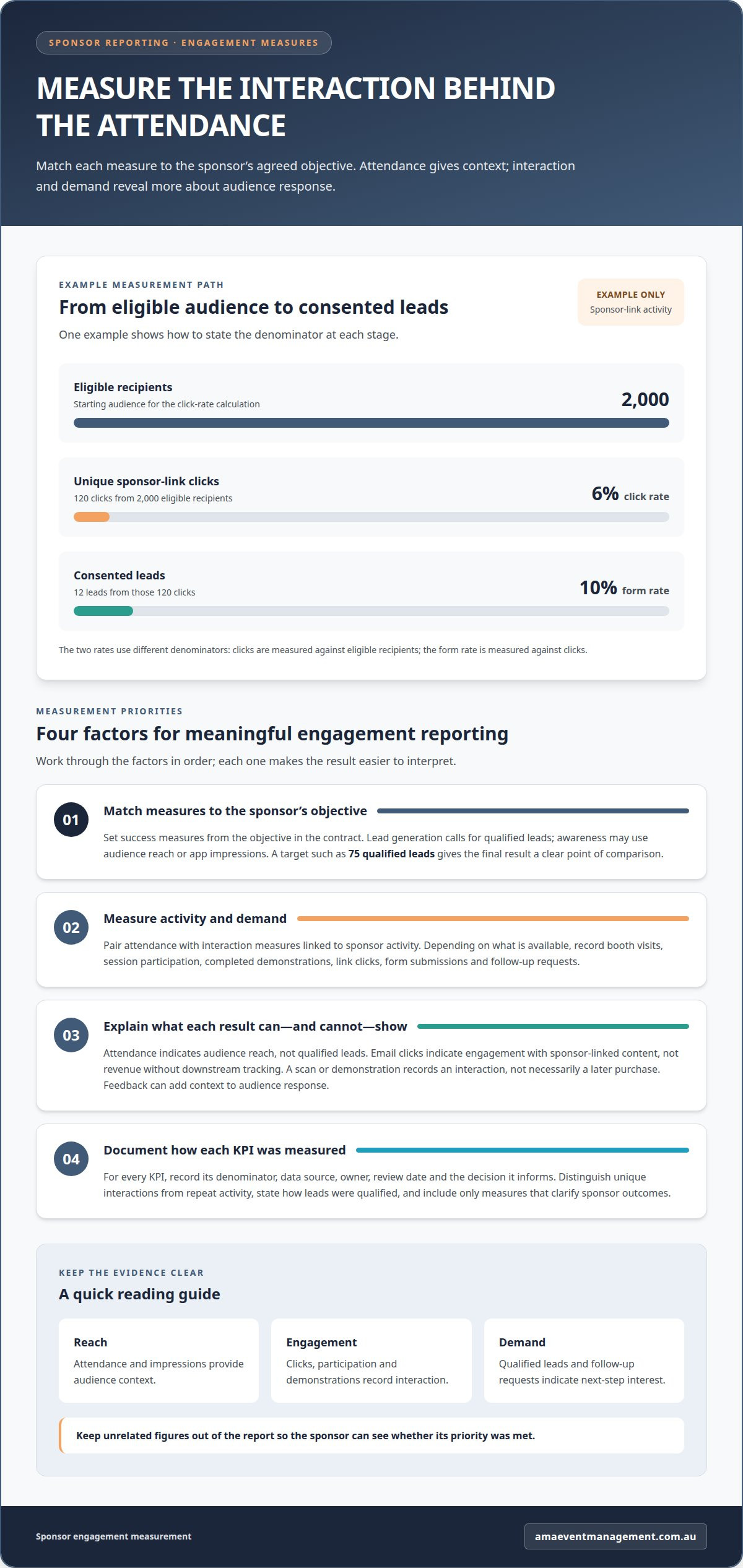
Measure sponsor engagement against agreed objectives and explain what each result indicates. Attendance provides useful context, while interaction and demand measures show more about audience response.
Match metrics to sponsor objectivesSet the success measure from the sponsor’s objective in the contract. A lead-generation goal calls for qualified leads, while an awareness goal may use audience reach or app impressions. For example, generating 75 qualified leads is a specific target to compare with the final result. Avoid adding unrelated figures that make it harder to see whether the sponsor’s priority was met.
Measure engagement and demandCollect interaction measures alongside attendance, and connect each one to a sponsor activity. Track booth visits, session participation, completed demonstrations, link clicks, form submissions and follow-up requests where available. For example, a report could record 120 unique sponsor-link clicks from 2,000 eligible recipients, a 6% click rate. Record consented leads separately: 12 from those clicks would represent a 10% form rate.
Interpret metrics and note limitationsExplain what each metric indicates and what it cannot establish. Attendance shows audience reach and session participation, but does not prove attendees became qualified leads. Email clicks show engagement with sponsor-linked content, but do not establish revenue without downstream tracking. A scan or demonstration records an interaction, not necessarily a later purchase. Use feedback to add context about audience response.
Document the measurement method. For every KPI, record its denominator, data source, owner, review date and the decision it informs. Distinguish unique interactions from repeat activity, and state how you qualified leads. This helps sponsors interpret results consistently and see whether each measure supports an agreed objective. Include only metrics that clarify sponsor outcomes.
Post-event report structure and executive summaries
Structure the report around delivered commitments, sponsor objectives and evidence of results. A concise summary helps each partner see what worked and what needs follow-up.
Set the reporting timelineSet reporting dates before the event, then assign an owner to each update. Send a one-page flash report within 48 hours, followed by the full report within four weeks of closing. For renewal planning, schedule the results conversation while the event remains fresh. Avoid presenting early figures as final if post-event conversions are still being tracked.
Track conversions after the eventContinue recording meetings, pipeline and other agreed conversions after the event. Use the sponsor-agreed 30- or 90-day window for reporting meetings or pipeline, and label results by reporting period. An Excel report can use separate columns for impressions, leads and conversions, with a source and status for each result. This makes an event sponsorship ROI report template easier to update without mixing initial responses with later outcomes.
Organise the report sectionsArrange the report in a clear sequence: executive summary, objectives and results, commitments delivered, engagement evidence, conversions and next steps. Keep the executive summary to one page and lead with three to five key figures. An impressions, leads and conversions report should show each measure separately, define the reporting period and distinguish tracked outcomes from estimates. In Australia, support claims with records and describe results precisely, without implying that an untracked interaction caused a sale.
Report across event stagesDocument the sponsor commitments before the event, capture delivery evidence onsite, then reconcile both in the post-event report. Pre-event records can include agreed placements; onsite evidence can include photographs or session records; the final report connects these items with results. To report sponsorship results after an event, state what was delivered, what audience response was recorded, and what follow-up remains. For future programmes, event delivery planning can help account for sponsor activity across each stage.
What is a sponsor report?
A sponsor report documents what the sponsor received and how results compare with its objectives. Connect lead quality, meetings and revenue without treating every interaction as a sale.
Calculate ROI and cost per leadCalculate ROI using attributed revenue minus sponsorship cost, divided by sponsorship cost, then multiplied by 100. Calculate cost per lead by dividing sponsorship cost by qualified leads, and cost per meeting by dividing it by meetings. For example, show each figure beside its definition so sponsors can see what the numbers measure.Qualify leads using criteria agreed with the sponsor, such as fit or readiness for follow-up. Export CRM records with clear statuses, remove duplicates and separate qualified prospects from general contacts. An exportable file lets the sponsor connect event activity to later opportunities in its sales platform.
Report lead value, not just lead volume. Pair the qualified-lead total with meetings booked and any tracked revenue. Explain which sponsor benefit each measure represents, such as access to prospects or follow-up conversations. Keep pipeline separate from closed revenue, and label the reporting period so the sponsor knows when results were recorded.
Track activation costs and budgetRecord the agreed budget and actual costs for each activation component, then compare them by category. For a themed brand activation, a tracking template might separate production, staffing and promotional materials. Note each variance, explain its reason and link it to the activity delivered. This clarifies activation costs without confusing the event budget with the sponsor’s investment.
Finish with a recommendation. Use cost-per-lead and cost-per-meeting calculations to identify which activity generated relevant prospects. If one activation produced more qualified meetings than another, explain the difference and suggest what to retain or adjust. Base recommendations on recorded outcomes, not assumptions about future revenue.
Sponsor ROI versus event and marketing ROI
Separate the three return measures before drawing conclusions. Each answers a different question about the same event.
Define sponsor ROI from the agreement. Measure the sponsor’s return against its objectives and investment. Include package commitments delivered and sponsor-attributed leads, meetings or revenue, and explain how each result was tracked. Event attendance or overall ticket income belongs elsewhere unless the agreement links it directly to sponsor value. Keep the report focused on what the partner funded.
Report event ROI as the organiser’s result. Assess the event’s overall return using revenue or value generated, less event costs, divided by event costs, then multiplied by 100. This view can include ticket income, broad event costs and event-wide outcomes. It doesn’t automatically show sponsor value: a well-attended event may still miss a sponsor’s lead-generation objective.
Keep marketing ROI tied to campaign activity. Record which source produced each response, such as a sponsor email, event app or campaign link. Marketing ROI evaluates those tracked activities and their attributed outcomes, rather than every result from the event. If several touchpoints contributed, state the attribution method. A model assigning 40% to the first interaction, 30% to the middle and 30% to the last is one possible approach, not proof of causation.
Distinguish evidence from influence. A CRM record linking a lead to a sponsor interaction is stronger evidence than attendance alone. A survey may indicate brand awareness or consideration, while a later sale requires downstream tracking before it can be reported as attributed revenue. Label direct results, influenced value and assumptions separately to give decision-makers a clear basis for their next action.
Use the distinctions to plan the next package. Compare sponsor objectives with recorded results, then recommend changes supported by evidence. For a community market, plan sponsor-ready market activity around measurable interactions, rather than relying only on visibility.
AMA Event Management
AMA Event Management coordinates events where sponsor commitments and audience engagement need careful management. Its services include market management and vendor coordination, community festivals and fairs, themed brand activations, and corporate conferences and galas.
Build the reporting approach into event planning by defining sponsor objectives, agreed deliverables and the evidence needed to assess results. Coordinating event activity makes it easier to document what was delivered and distinguish sponsor outcomes from overall event performance. This is useful when planning an activation or refining sponsorship for a conference, festival or market.
To discuss event planning and management that supports a considered approach to sponsor outcomes, contact AMA Event Management about your event.
Build a stronger foundation for your next sponsorship cycle
Use the planning conversation to decide what sponsors should be able to assess after the event. An event sponsorship ROI report template is most useful when its measures shape event design, rather than being added after the activity. This helps structure sponsor opportunities around meaningful participation and outcomes the event can record. It also gives the team a clearer basis for refining future packages and planning with partners.
For your next event, consider how coordination, audience experience and sponsor activity can work together from the outset. AMA Event Management organises markets, festivals and themed activations with these elements in view. Start with a conversation about the event you’re planning and the outcomes you want to assess.
Contact AMA Event Management to discuss your event and take the next step with confidence.
Frequently Asked Questions
How do you calculate event ROI?
Calculate event ROI by subtracting event costs from the revenue or value generated, dividing the result by event costs, then multiplying by 100. Define which costs and returns belong in the calculation before comparing events. For example, a ticketed conference might track ticket revenue against its event costs, while keeping sponsor-attributed sales separate unless the analysis specifically includes them.
How do you compare one year with the next?
Compare the same measures across both years, then check whether event conditions were comparable. Session attendance may change because room capacity changed, not because interest fell. For example, report room size and format alongside session views and questions. If conditions differ, explain the change and avoid presenting raw totals as a like-for-like trend.
How do you track pipeline and business impact from an event?
Track event-influenced accounts through the sales process after the event, recording stage changes and outcomes in the CRM. A 60-90-day review window can show whether conversations progress into opportunities or wins. Keep pipeline value distinct from revenue already earned, and record the touchpoints supporting event influence. This gives the business a clearer view of contribution without claiming the event caused every sale.
How is sponsor ROI defined and measured at conferences?
Sponsor ROI measures the value a sponsor receives against its conference investment and objectives. Assess qualified prospects, meetings, pipeline or attributable revenue according to the sponsor’s goal. A brand-awareness objective needs a different measure from a sales objective. Keep conference-wide results separate from sponsor-specific outcomes to show what the sponsor’s participation contributed.
Should you include sponsorship ROI?
Yes, include sponsorship ROI when an event has sponsors, but report it separately from the organiser’s overall event ROI. This helps sponsors assess their investment without conflating it with ticket revenue or event-wide marketing results. If sales attribution is incomplete, report measurable outcomes, explain the tracking basis and do not present influenced pipeline as confirmed revenue.
What does a sponsor's finance team ask?
A sponsor’s finance team needs a clear record of the investment, calculation method and evidence behind reported outcomes. Show how costs were allocated, how leads or meetings were counted and which revenue figures were attributed. Include the reporting period and distinguish confirmed results from pipeline. Consistent definitions make the report easier to reconcile with internal finance records.



Comments