

Serving Alcohol at an Event in NSW: Licence Rules
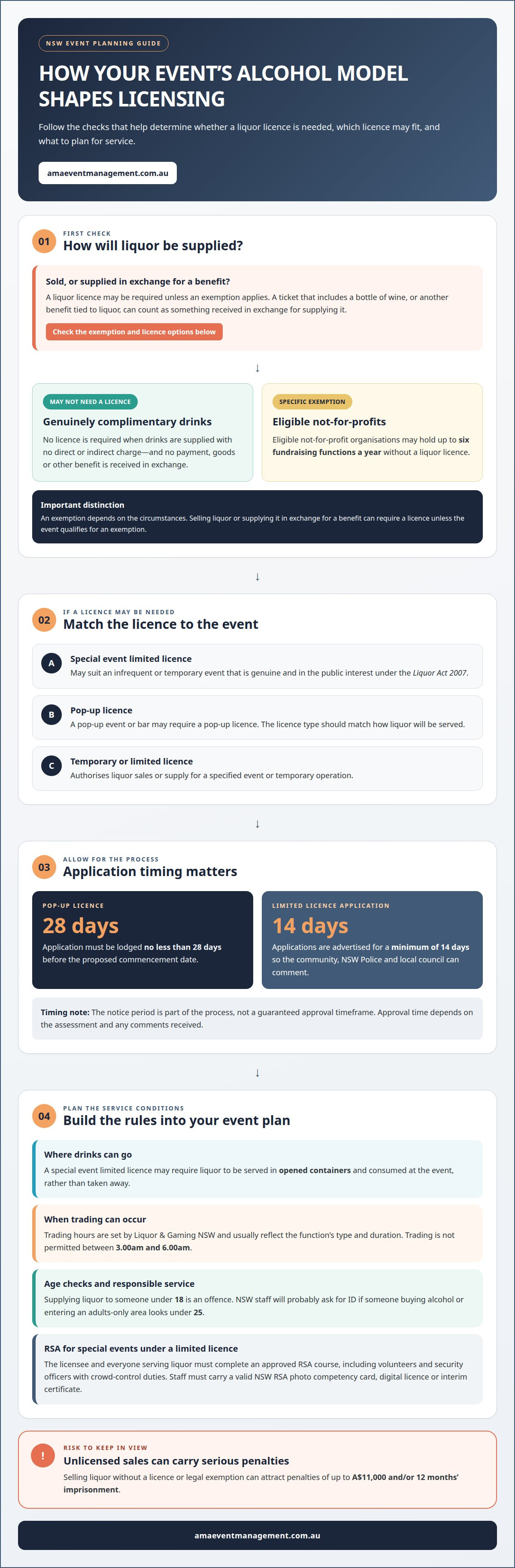
Selling alcohol at an event in NSW generally requires a liquor licence unless an exemption applies. Eligible not-for-profit organisations can sell liquor at up to six fundraising functions a year without a licence. Genuinely complimentary drinks, with no direct or indirect charge, also do not require one.
Before finalising your event plan, establish how the alcohol will be supplied, the event’s purpose and scale, and whether an exemption applies. These factors determine whether you need a liquor licence.
This guide explains when an event needs a licence, which licence types may apply, and the practical rules for age checks, responsible service, alcohol sales and on-site consumption. It also outlines what to consider when planning a public or private event, so you can account for relevant requirements from the outset.
Table of Contents
Do I Need a Liquor Licence for an Event?
Whether an event needs a liquor licence depends on how alcohol is supplied, the event’s purpose and the venue. Selling liquor, or supplying it in exchange for a benefit, can require a licence unless an exemption applies.
Choosing an Event Liquor Licence
An event liquor licence authorises liquor sales or supply under defined circumstances. A special event limited liquor licence may suit an infrequent or temporary event that is genuine and in the public interest under the Liquor Act 2007. For an eligible not-for-profit, up to six fundraising functions annually may be exempt from licensing. A pop-up event or bar may instead require a pop-up licence. Match the licence type to the event’s purpose and how alcohol will be served.
Temporary and Limited Licence Applications
A temporary or limited licence authorises liquor sales or supply for a specified event or temporary operation. For a pop-up licence, applicants must lodge an application no less than 28 days before the proposed commencement date, according to Liquor & Gaming NSW. Limited licence applications are advertised for a minimum of 14 days, allowing the community, NSW Police and local council to comment. That notice period is part of the process, not a guaranteed approval timeframe.
How do you apply, and how long does approval take? Apply for the licence that matches your event model, allowing time for the application and notice process. Approval time depends on the assessment and any comments received. Do organisers need council, police, venue or noise approvals? Police and council can comment on an advertised application, but liquor licensing and site or noise arrangements are separate planning matters.
Licence Conditions and Compliance
Licence conditions set the boundaries for lawful liquor service at an event. A special event limited licence may require liquor to be served in opened containers and consumed at the event, rather than taken away. Trading hours are set by Liquor & Gaming NSW and usually reflect the function’s type and duration; trading is not permitted between 3.00am and 6.00am. Plan signs to make the approved service area and hours clear to attendees.
Selling liquor without a licence or legal exemption can attract penalties of up to A$11,000 and/or 12 months’ imprisonment. Insurance, security and risk controls should reflect the event’s footprint, service arrangements and licence conditions. Build in supervision, incident response and clear communication with the venue so staff can manage service safely.
Legal drinking age and responsible service
Responsible service means preventing alcohol supply to minors and responding safely to intoxication. Alcohol service at licensed venues is subject to age restrictions. Supplying liquor to someone under 18 is an offence. Staff should check proof of age and assess whether a person appears intoxicated before serving.
Age checks are practical safeguards at event premises. NSW staff will probably ask for identification if someone buying alcohol or entering an adults-only area looks under 25. Organisers can brief staff to pause service when age is uncertain, follow the event’s ID procedure, and involve a manager when a patron’s behaviour raises concern. A consistent process helps each organisation respond in the same way.
Responsible service includes refusing service and managing a safe departure. Venues should set a clear refusal procedure, including when to escalate concerns to a manager or security, and explain staff and volunteer responsibilities. For a special event under a limited licence, the licensee and everyone serving liquor must complete an approved RSA course. This includes volunteers and security officers with crowd-control duties. Staff must carry a valid NSW RSA photo competency card, digital licence or interim certificate.
Complimentary drinks are supplied without a direct or indirect charge. They do not require a liquor licence when no payment, goods or other benefit is received in exchange. A ticket that includes a bottle of wine or another benefit tied to liquor may change the position: a licence is required when something is received in exchange for supplying the liquor.
Public-place restrictions apply separately from event licensing. Alcohol is prohibited in designated alcohol-free or alcohol-prohibited places, regardless of a person’s age or whether they’re accompanied by an adult. A person under 18 who has or drinks alcohol in a public place without a stated exception can be fined A$20, and the alcohol can be confiscated permanently. For markets with several operators, market and vendor coordination can help organise clear vendor arrangements.
NSW Liquor Law Basics: What Do The Rules Cover?
NSW liquor regulation sets the framework for selling and supplying drinks. The Liquor Act 2007 and Liquor Regulation 2018 identify key requirements.
NSW Liquor Law Framework
NSW liquor laws govern who may sell alcohol, where and when sales can occur, and the safety measures intended to reduce alcohol-related harm. Liquor & Gaming NSW regulates alcohol service in the state. The rules cover licensed venues, restaurants and temporary events, with the relevant licence setting out how liquor may be served.
Some exemptions are specific to the activity. A cruise vessel operating in NSW waters may qualify for a liquor-licence exemption if it has sleeping facilities for at least 100 passengers and meets other conditions. That threshold alone does not establish eligibility; the vessel must also satisfy the exemption’s remaining requirements.
Auction sales follow a separate pathway. An auctioneer may sell liquor to an adult without a liquor licence if the auction meets the stated requirements, including public promotion as an auction involving liquor. The auctioneer must notify ILGA. This exception applies to qualifying auctions, not ordinary liquor sales at an event.
RSA Requirements for Liquor Servers
Responsible service of alcohol (RSA) training prepares liquor servers to serve in accordance with the rules applying to their licence. At a special event under a limited liquor licence, the licensee and everyone serving liquor must complete an approved RSA course. This includes volunteers and security officers performing crowd-control duties.
Before service begins, organise staffing around the licence requirements. Staff at a NSW special event under a limited licence must carry a valid NSW RSA photo competency card, digital licence or interim certificate. For example, these requirements apply to a volunteer pouring drinks and a security officer with crowd-control duties. Keep credentials available during service so the event team can show that relevant roles meet the conditions.
Open-container sales and on-site consumption
On-site consumption means liquor is opened and consumed within the licensed event area. Under a NSW special event limited liquor licence, liquor sold or supplied must be in opened containers and consumed at the event, not taken away. Plan service accordingly: staff should open bottles before handing them over, and takeaway sales should remain outside the licensed arrangement.
Open-container service is liquor supplied in a container that has been opened for consumption at the event. The licence conditions determine where service can occur and when trading can take place. Trading hours for a limited liquor licence are set by Liquor & Gaming NSW and usually reflect the function’s duration and type. Trading is not permitted between 3.00am and 6.00am.
What are the NSW rules for event sales, tickets and drink packages? A licence is generally required when liquor is sold or supplied in exchange for money, goods or another benefit, unless an exemption applies. If a ticket includes drinks or a package promises a bottle, treat the liquor as part of the paid benefit, not as a complimentary drink. A genuinely free drink, with no direct or indirect charge, is different.
Some arrangements have specific limits. At a surf club function in NSW, alcohol may be sold for consumption on the premises for a maximum of 4 hours. A temporary pop-up event licence allows sales for on-site consumption on temporary premises connected with an organised event, where liquor sales remain ancillary to the event’s purpose. The licence model, approved area and service conditions shape how organisers can operate.
For community events in Australia, map the service point, licensed boundary and container handling into the site plan. These details help vendors understand where to serve and where attendees may consume drinks. To organise a market or community event with coordinated vendors, plan your event logistics.
AMA Event Management
AMA Event Management coordinates event logistics and vendors, helping organisers account for alcohol service alongside the wider event setup. This is useful when a festival, market, brand activation or corporate function involves multiple moving parts and service arrangements need to suit the event format.
For events with liquor, the plan can account for practical details such as the service area, vendor roles and how attendees move through the site. These arrangements support a well-organised event, while licence applications and legal decisions remain subject to NSW requirements.
Planning an event where alcohol will be served? Contact AMA Event Management to discuss your event logistics.
Shape Your Event Plan With Confidence
Plan liquor service early, alongside the guest experience, site layout and vendor responsibilities. Understanding the laws for serving alcohol at an event in NSW helps you make considered decisions about how the event operates and keep licence requirements in view.
AMA Event Management plans and coordinates community festivals, markets and themed brand activations. Services include Market Management and Vendor Coordination, Community Festivals and Fairs, and Themed Brand Activations. This event-management perspective helps bring the moving parts together, from vendor arrangements to the overall event format.
Whether you’re developing a public gathering or a branded experience, the next step is to align the event concept with practical delivery. Discuss your event plans with AMA Event Management and take the next step towards a well-organised event.
Frequently Asked Questions
When is a liquor licence or permit required to serve alcohol at an event in NSW?
A licence is generally required when alcohol is sold or supplied in exchange for money, goods or another benefit, unless an exemption applies. A ticket that includes drinks, for example, may count as a benefit. Eligible not-for-profit organisations can sell liquor at up to six fundraising functions a year without a licence. Genuinely complimentary drinks with no direct or indirect charge are also exempt.
What liquor licence applies to a one-off event in NSW?
A special event limited liquor licence may suit a genuine, infrequent or temporary event that is in the public interest, where alcohol is not the event’s sole purpose. A qualifying event expecting fewer than 2,000 attendees may use this licence type; an open-to-the-public event expecting 2,000 or more is treated as a large-scale commercial event. The event’s purpose, scale and service model inform the application.
What are the NSW rules for serving alcohol at a private event or free event?
A private setting or free entry doesn’t automatically remove liquor-licensing requirements. The key question is whether guests pay directly or indirectly for alcohol. A genuinely complimentary drink with no charge or other benefit doesn’t require a licence. If admission, goods or another benefit is exchanged for liquor, licensing may apply. For a person under 18, supply is permitted only with parental or guardian permission and adult supervision.
What RSA requirements apply to staff and volunteers serving alcohol at events in NSW?
At a special event under a limited liquor licence, the licensee and everyone serving liquor must complete an approved RSA course. This includes volunteers and security officers carrying out crowd-control duties. Staff must also carry a valid NSW RSA photo competency card, digital licence or interim certificate while working. Organisers can assign a supervisor to coordinate credential checks and confirm each service role is covered before doors open.
What responsible service of alcohol rules apply to intoxicated people and minors at NSW events?
Staff should assess intoxication and refuse service when a person should not be served. A clear refusal procedure should explain how to involve a manager or security and support a safe departure. Liquor must not be supplied to someone under 18, except where parental or guardian permission and supervision apply. Event teams should communicate these steps before service and apply them consistently across bars and service points.
What are the liquor trading hours and alcohol service conditions for events in NSW?
Trading hours for a limited liquor licence are set by Liquor & Gaming NSW and usually reflect the event’s type and duration. Trading isn’t permitted between 3.00am and 6.00am. Under a special event limited licence, liquor must be served in opened containers for consumption at the event, not taken away. Licence conditions may also affect service areas, supervision and whether under-18s can attend.
Comments