

Stress-Free Event Planning Tips for Budget and Task Control
A well-built checklist keeps simultaneous event tasks from competing for attention. These stress-free event planning tips show why checklists matter: they make deadlines, priorities and responsibilities visible, so essential details are less likely to be overlooked. When tasks overlap, a clear plan gives each one a place and helps you see what needs attention next.
Event planning can feel demanding when spending, suppliers, guests and timing all need attention. A structured approach makes the work more manageable without adding unnecessary complexity. These stress-free event planning tips show you how to set a budget and track expenses, automate repeat tasks, communicate clearly with everyone involved and break overlapping deadlines into practical steps. You’ll also learn to build flexibility into your timeline so you can respond calmly when plans change. Start with the checklist and use it to keep every part of the event moving in the same direction.
Table of Contents
Budget planning and expense tracking
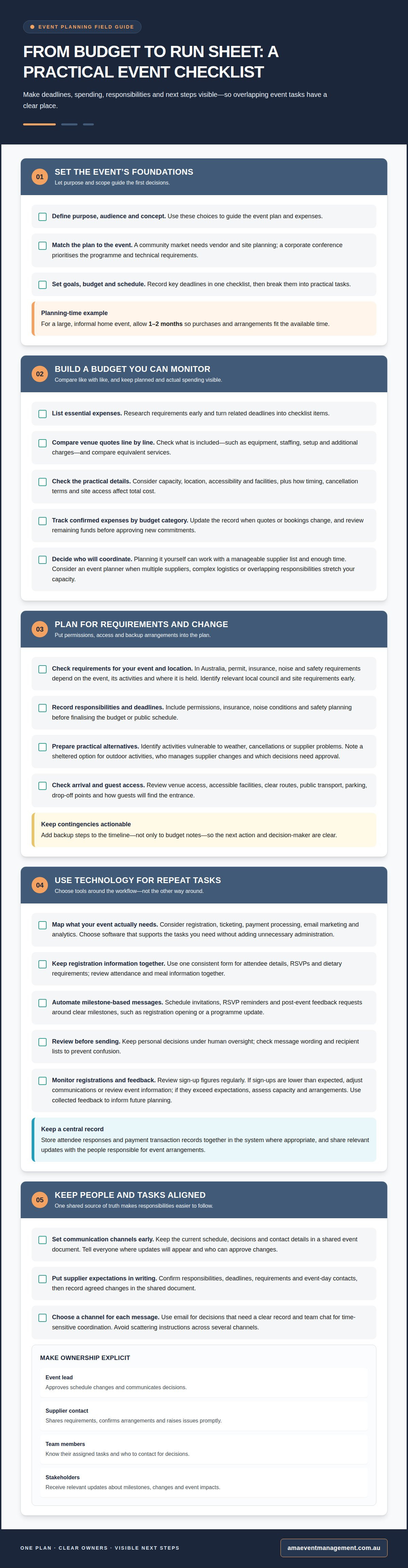
Begin with the event’s purpose, audience and concept: these choices guide every expense. A community market, for example, needs vendor and site planning, while a corporate conference prioritises the programme and technical requirements. Set goals that fit your budget and schedule, then record key deadlines in one checklist.
Choose a venue that matches your event concept, capacity needs, location, accessibility and facilities. Compare quotes line by line, noting what each includes, such as equipment, staffing, setup and additional charges. Ask how timing, cancellation terms and site access affect the total cost. Compare equivalent services before making a commitment.
Planning an event yourself can work well when the supplier list is manageable and you have enough time to coordinate it. Consider an event planner if multiple suppliers, complex logistics or overlapping responsibilities would stretch your time or your team’s capacity. Base the decision on the event’s scope and the work you can reliably manage.
In Australia, permit, insurance, noise and safety requirements depend on the event, its activities and its location. Identify relevant local council and site requirements early, then include permissions, insurance, noise conditions and safety planning in your checklist. Confirm responsibilities and deadlines before finalising the budget or public schedule.
First, define the purpose, audience and event concept; next, set a realistic budget and schedule. Research requirements, list essential expenses, and turn deadlines into checklist items. For a large, informal home event, allow 1-2 months of planning so purchases and arrangements fit the available time.
Prepare for weather, cancellations and supplier problems by identifying vulnerable activities and recording a practical alternative for each. Move outdoor activities to a sheltered option, assign someone to manage supplier changes, and note which decisions need approval. Add contingency steps to the timeline, not just to your budget notes.
Before booking, check venue access, accessible facilities, clear routes and transport options. Consider public transport, parking, drop-off points and how guests will find the entrance. Track confirmed expenses by budget category, update the record when quotes or bookings change, and review the remaining funds before approving new commitments.
Using event management technology and automation
Choose event software based on the tasks your event actually requires. One system may support registration, ticketing, payment processing, email marketing and analytics. Map your workflow first: what information guests submit, which updates they receive, and what the organising team needs to monitor. This helps avoid features that add administration without solving a real need.
Automate repeat communications, but keep personal decisions under human oversight. You could schedule invitations, RSVP reminders and post-event feedback requests. Tie each message to a clear milestone, such as registration opening or a programme update. Review the wording and recipient list before sending to prevent a template from causing confusion.
Registration: Collect attendee details through one consistent form to reduce re-entry.
Payments: Use the system’s payment processing to keep transaction records together.
Email: Schedule invitations and reminders around registration milestones.
Analytics: Review registration numbers to spot sign-ups that are too high or low.
To manage RSVPs, invitations and dietary requirements efficiently, use one registration process and keep responses in a central record. Review attendance and meal information together, then share relevant updates with the people responsible for event arrangements.
Review registration figures regularly instead of waiting until event day. If sign-ups are lower than expected, adjust communications or review the event information. If they exceed expectations, assess capacity and available arrangements. Use the same system to collect feedback after the event, so responses can inform future planning.
Assign a team member to review automated messages, records and analytics at set points in the planning schedule. For a market with multiple stallholders, a coordinated process for vendor updates can keep information organised alongside attendee communications. Explore market management and vendor coordination when that operational support fits your event.
Communicating with teams, vendors and stakeholders
Set clear communication channels before suppliers and team members start work. Keep the current schedule, decisions and contact details in a shared event document. For example, store the latest run sheet in one place instead of relying on separate email attachments. Tell everyone where updates will appear and who can approve changes.
Put expectations in writing for every supplier. A market stallholder, for example, needs clear details about arrival arrangements, site access, setup and event-day contacts. A technical supplier needs the programme, equipment requirements and timings. Confirm responsibilities and deadlines together, then record agreed changes in the shared document.
Event lead: Approves changes to the schedule and communicates decisions.
Supplier contact: Shares requirements, confirms arrangements and raises issues promptly.
Team members: Know their assigned tasks and who to contact for decisions.
Stakeholders: Receive relevant updates about milestones, changes and event impacts.
Choose a channel for each type of message. Use email for decisions that need a clear record and team chat for time-sensitive coordination. Avoid scattering instructions across several channels. If a supplier changes a delivery time, update the shared schedule and alert everyone whose work depends on that delivery.
Schedule regular check-ins around planning milestones. Ask each lead to report completed tasks, upcoming deadlines and issues that need a decision. A change to venue access, for example, could affect deliveries, staff arrival and guest directions. Raise changes early, identify who is affected, and assign someone to communicate the revised plan.
Open communication with clients and stakeholders helps prevent last-minute changes. Share the event concept, programme and decision-making process early. If a request changes the scope, explain which arrangements are affected and agree on the next step before updating suppliers. A written record keeps the team aligned and reduces conflicting instructions.
Managing simultaneous event-planning tasks
When deadlines overlap, prioritise tasks by urgency and dependency. Confirm the venue before finalising room layouts, deliveries or guest directions, for example. A task that blocks other work deserves attention before one that can proceed independently. This order makes it easier to see which decision will keep the wider plan moving.
Break large responsibilities into actions with a clear finish point. Instead of listing “organise registration”, separate the work into form setup, information review and attendee updates. Add each action to the event timeline, then assign an owner and deadline. Smaller steps make progress visible and reveal delays before they affect related work.
Use a checklist to keep parallel workstreams legible:
Prioritise: Mark tasks as urgent, dependent or flexible to guide the next decision.
Assign: Give each task one responsible person to prevent gaps or duplicated effort.
Sequence: Record which action must finish before another can begin.
Review: Update status when a deadline, decision or supplier arrangement changes.
Set aside focused work time in your calendar. For example, reserve one block to review supplier details and another for programme decisions. Keep relevant documents ready and limit unrelated interruptions during each block. This gives detailed work a defined place instead of letting urgent messages continually push it aside.
Build flexibility into the timeline by identifying tasks that can move without affecting the event. Separate fixed deadlines, such as supplier confirmations or print approvals, from adaptable work, such as internal reviews. If a task slips, check its dependencies and revise affected deadlines instead of automatically shifting the whole schedule.
Delegation helps when a colleague, volunteer or event professional can own a defined task. Provide the expected outcome, deadline and decision boundaries, then schedule a progress check. For a complex event, get support coordinating event logistics to bring overlapping responsibilities into a structured plan.
AMA Event Management: Market Management and Vendor Coordination
When vendor and event coordination takes your focus away from the wider plan, AMA Event Management can help. Its Market Management and Vendor Coordination service supports markets that need organised oversight of stallholder communication and practical logistics. This can bring vendor requirements and event arrangements into a clearer working structure.
For larger public or business events, AMA Event Management also manages Community Festivals and Fairs, Themed Brand Activations, and Corporate Conferences and Galas. These services suit organisers who want professional support coordinating an event’s moving parts instead of handling every task themselves.
If your event would benefit from structured market or vendor coordination, contact AMA Event Management or visit amaeventmanagement.com.au to discuss your event.
Shape your next event with confidence
Your next planning decision can set the tone for the whole event. Apply the stress-free event planning tips that fit your priorities, then decide where extra coordination would make the biggest difference. A clear division of responsibilities helps you stay focused on the event’s purpose while essential arrangements move forward.
For a project involving stallholders, AMA Event Management offers Market Management and Vendor Coordination. Its services also include Community Festivals and Fairs, and Themed Brand Activations. These options suit organisers developing public events or brand experiences that need coordinated delivery.
Consider the scale of your plans and the coordination involved, then take the next step that suits your event. Contact AMA Event Management to discuss how its event services align with your plans. A considered start gives you a stronger foundation for the work ahead, and helps you approach your next event with greater clarity.
Frequently Asked Questions
Why are event checklists important?
An event checklist gives you a dependable record of what’s complete, outstanding and awaiting a decision. It’s especially useful when someone takes over a task or a team member is unavailable, because the next person can see the current status. For example, a checklist can show whether a supplier’s delivery details have arrived, rather than leaving the answer to memory.
How far in advance should you start planning an event?
For a large, informal home event, start planning 1-2 months ahead. Other events need a schedule shaped by their venue, suppliers, approvals and programme complexity. Work back from the event date and identify the earliest decision that affects other arrangements, such as confirming a site before promoting the location. Start once that first dependency and its deadline are clear.
How do you create an event planning checklist and timeline?
Start with the event date and work backwards from fixed milestones, such as opening registration or publishing the programme. List the decisions and tasks required for each milestone, then note who owns each action and what completion means. For example, publishing the programme may depend on confirmed speakers, session details and final copy approval.
What are the best ways to reduce event planning stress and delegate tasks?
These stress-free event planning tips work best when delegation includes authority, not just a task. Give each person a defined outcome and clarify which decisions they can make independently. To reset between demanding planning blocks, try box breathing with equal four-second intervals for each breath stage, or take a five-minute walk. Protect sleep and regular meals during busy event periods, too.


Comments