

Trade Show Event Management in Sydney for Seamless Event Flow
A trade show succeeds when every part works together, from guest arrival to the final conference session. Trade show event management in Sydney brings planning, exhibitor coordination, guest flow and event delivery into one organised process. The aim is to create a clear experience for visitors and a well-run event for the people presenting and hosting.
Choosing an event partner is a practical decision when exhibitions, networking and conference sessions share a space and schedule. A structured plan helps coordinate these moving parts, smooth transitions and give attendees room to connect while keeping the programme on track.
This article explains how event management can support guest movement, networking areas and conference delivery at B2B and B2C trade shows. It also outlines what end-to-end planning involves, which details shape the approach, and when a professional event team can help bring the work together.
Table of Contents
Guest flow and networking areas
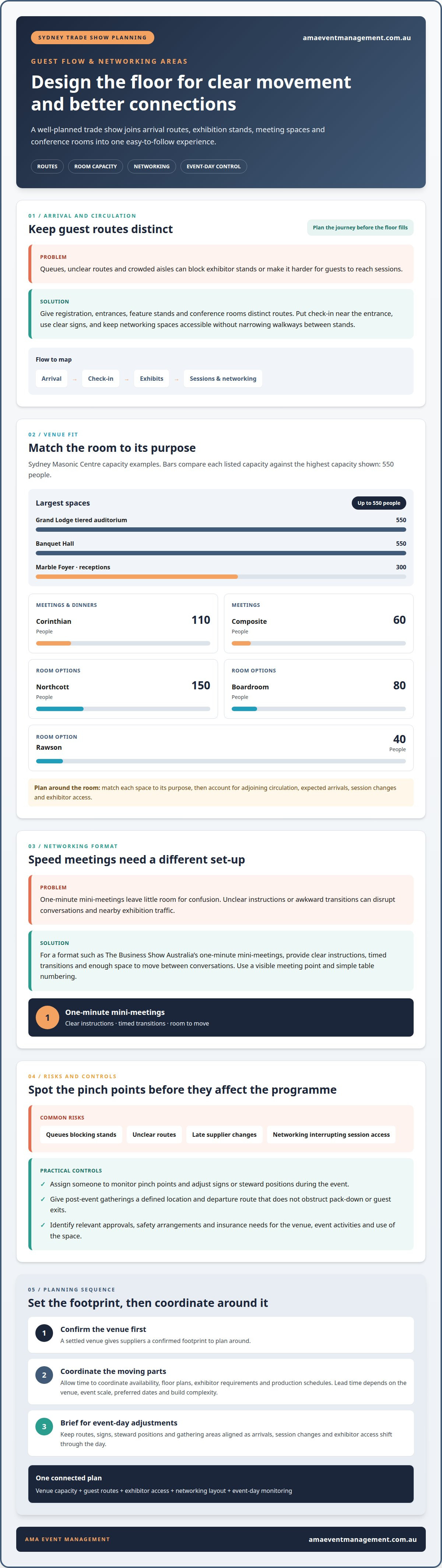
Guest flow starts before attendees reach the exhibition floor. Give registration, entrances, feature stands and conference rooms distinct routes, then use clear signs to guide people. For example, place check-in near the entrance rather than across a busy aisle. Keep networking spaces accessible without narrowing routes between exhibitor stands.
Venue capacity helps determine how those areas fit together. At Sydney Masonic Centre, the Grand Lodge tiered auditorium accommodates up to 550 people, while its Banquet Hall accommodates up to 550 people. The Marble Foyer accommodates up to 300 people for receptions. Corinthian suits meetings and dinners for up to 110 people; Composite accommodates up to 60 people for meetings.
Other Sydney Masonic Centre spaces provide options for different formats: Northcott accommodates up to 150 people, the Boardroom up to 80 people, and Rawson up to 40 people. Match the room to its purpose, then plan adjoining circulation areas around expected arrivals, session changes and exhibitor access.
Speed networking needs a different layout from open mingling. The Business Show Australia uses one-minute mini-meetings, so participants need clear instructions, timed transitions and enough space to move between conversations. A visible meeting point and simple table numbering help attendees connect without disrupting nearby exhibition traffic.
There is no single permit or insurance package for every Sydney trade show. Requirements depend on venue conditions, event activities and how the space is used. Identify relevant approvals, safety arrangements and insurance needs as part of the planning process.
Plan venue and supplier bookings around the time needed to coordinate availability, floor plans, exhibitor requirements and production schedules. Lead time depends on the venue, event scale, preferred dates and build complexity. Confirming the venue first gives suppliers a settled footprint to plan around.
Common risks include queues blocking stands, unclear routes, late supplier changes and networking areas that interrupt access to sessions. Give post-event gatherings a defined location and departure route so they do not obstruct pack-down or guest exits. Assign someone to monitor pinch points and adjust signs or steward positions during the event.
Professional conference management
Sydney’s conference calendar includes industry gatherings such as the 16th Biennial ISAKOS Congress, scheduled for 30 May to 2 June 2027. Specialist event management companies coordinate conference delivery, exhibition requirements and programme logistics.
Convention and conference delivery
Conventions and conferences need a programme that connects plenary sessions, smaller meetings, speaker requirements and attendee movement. Map each session to its room, timing and audience, then coordinate transitions and technical needs with the venue team. This gives speakers and delegates a clear sequence to follow.
For example, The Business Show Australia lists 150 seminars and masterclasses, with panel discussions running hourly across both event days. Its seminars are CPD accredited. A detailed schedule helps attendees choose sessions while allowing organisers to coordinate room changes, speaker handovers and breaks.
Trade show management expertise
Trade show event management connects the exhibition with its conference programme. This can involve coordinating exhibitor requirements, floor plans, production schedules and the relationship between stands and session spaces. Look for a planning process that brings these elements together rather than treating the exhibition as separate from the event.
When a convention and exhibition run together, the operational plan should account for build access, presenter schedules, visitor arrival periods and shared spaces. A central run sheet gives teams one working reference for timing, responsibilities and changes during delivery.
Conference and meeting management also means matching each space to its purpose. A board meeting may need a different setup from a keynote or panel. Confirm room layouts, session order, speaker movements and attendee transitions during planning, then brief the relevant teams using the same schedule.
These details shape whether delegates can focus on the content and connect with the right organisations. For coordinated conference delivery, explore corporate conference and gala planning as part of your event brief.
B2B and B2C events
A B2B trade show is designed to help organisations meet suppliers, assess products and build commercial relationships. A B2C event puts more emphasis on public discovery, product displays and visitor engagement. Set the format around the audience’s main reason for attending, then align the programme, exhibitor mix and floor plan with that purpose.
Sydney’s upcoming calendar shows how B2B formats can serve distinct industries. The Business Show Australia is scheduled at ICC Sydney for 25 and 26 November 2026. MyMoney Expo and AusCryptoCon are both scheduled there for 28 and 29 November 2026. For each event, organise exhibitor information, networking opportunities and session content around the interests of its professional audience.
Consumer-facing events call for a different visitor journey. The Sydney Home Show is scheduled for 12 to 14 March 2027. Its public exhibition format can bring product displays and demonstrations together, so plan the route to make browsing straightforward. Group related categories, position key displays clearly and give visitors space to pause without interrupting movement through the venue.
Retail trade fairs can also combine commercial buying with product discovery. Reed Retail Fairs Sydney is scheduled for 20 to 23 February 2027. Its schedule and floor plan should help trade visitors move between relevant stands, while clear exhibitor information supports purposeful conversations. For a public-facing format, simplify wayfinding and make demonstrations easy to locate.
To shape a successful event, first define the audience and intended outcomes. Next, select a format, map the visitor journey, and coordinate exhibitor requirements with the programme. Then review whether displays, meeting areas and session spaces support the event’s purpose. These steps help enhance the experience without making a B2B show feel like a consumer fair, or a public exhibition feel closed to casual visitors.
The World Business Forum Sydney is scheduled at ICC Sydney for 05 - 06 November 2026. The Business Show Australia expects more than 8,000 attendees in Sydney.
End-to-end project management
In Australia, a trade show brings together a venue, exhibitors, suppliers, production and an audience. Coordinate these workstreams against one event brief, recording responsibilities, deadlines and decisions in a shared project plan.
Plan in sequence: define the event’s purpose and audience, select a suitable venue, map exhibitor and production needs, coordinate suppliers, then manage delivery and review the outcomes.
Set the brief. Record the event format, audience, objectives and key programme requirements. For example, a product launch may need demonstration space alongside exhibitor stands.
Secure the venue. Compare venue layouts against the brief, including access routes, loading arrangements, stand positions and session spaces. The floor plan should support both visitors and suppliers.
Coordinate exhibitors. Gather stand dimensions, display needs, arrival details and operational requirements. Keep these details in one schedule so venue and production partners can work from the same information.
Plan production. Event specialists can help design and produce trade stands and booths, according to Business Queensland. Coordinate those requirements with the floor plan and build schedule.
Align suppliers. Document responsibilities, delivery windows, setup arrangements and key contacts. A central run sheet helps partners understand the sequence and manage changes without losing sight of priorities.
Manage event delivery. Brief the event team against the final schedule, monitor progress onsite and record decisions. After the show, review feedback and outstanding tasks to inform future planning.
Keep the details connected. If an exhibitor changes a display, assess the effects on floor space, access and production before updating the plan. A shared schedule gives the venue team and suppliers one current reference.
Market Management and Vendor Coordination can bring vendor requirements into the wider event plan. Set clear communication points with partners, then track decisions through setup, event delivery and pack-down.
Discuss vendor coordination for your event as you shape the project plan.
AMA Event Management
AMA Event Management coordinates events where exhibitors, suppliers, programming and guest experience need to work together. Its services include Market Management and Vendor Coordination, Corporate Conferences and Galas, Community Festivals and Fairs, and Themed Brand Activations.
Consider an event team when planning needs to connect vendor requirements with the wider schedule. A clear brief can set out your audience, event format, key activities and priorities. From there, planning can bring the moving parts together into a coherent delivery approach.
If you’re preparing a trade show or related event in Sydney or Melbourne, contact AMA Event Management to discuss your plans.
Set your next event in motion
Turn the event brief into a shared working plan. Set out the audience, purpose and priorities, then align stakeholders on the decisions that will shape delivery. This gives each partner a clear role and keeps changes connected to the event’s objectives.
For trade show event management in Sydney or Melbourne, AMA Event Management offers Market Management and Vendor Coordination, Community Festivals and Fairs, and Themed Brand Activations. These services suit events bringing vendors, public engagement or a branded experience together. Discuss the format and requirements early so planning can focus on your event’s practical needs.
Bring your event brief, intended audience and priorities into the conversation. Contact AMA Event Management to discuss your event and its planning needs. A clear first conversation can help move your plans towards a considered next step.
Frequently Asked Questions
LOOKING FOR A PARTNER TO RUN YOUR EVENT?
An event partner can coordinate planning and delivery when your team is balancing exhibitor needs with other responsibilities. AMA Event Management works on corporate and public events, including expos and conferences. For a Sydney or Melbourne event, outline its purpose, audience, preferred format and the areas where your team needs support. This gives the conversation a practical starting point.
What services do trade show event managers in Sydney provide?
Trade show event managers coordinate planning, logistics and delivery according to the event brief. AMA Event Management’s event services include budget management, vendor procurement and on-site supervision. Its offerings include Market Management and Vendor Coordination, Corporate Conferences and Galas, Community Festivals and Fairs, and Themed Brand Activations. For example, an organiser planning an expo can discuss vendor needs and event logistics together.
How much does trade show event management cost in Sydney?
The cost depends on the event and is provided after a quote request. Factors include planning scope, venue requirements, supplier coordination, production needs and on-site management. A Sydney trade show with complex exhibitor logistics may need a different plan from a smaller event with fewer moving parts. Share the format, objectives and support required to define the project scope.
How far in advance should I book a Sydney trade show venue and suppliers?
Book early enough to coordinate availability, floor plans, exhibitor requirements and production schedules. Lead time depends on the venue, event scale, preferred dates and build complexity. Confirming the venue first gives suppliers a settled footprint to plan around.

Comments