

How to Run a Successful Market Stall and Set It Up Well
The busiest market isn’t automatically the right one for your stall. Learning how to run a successful market stall starts with choosing an event whose audience, product mix and trading requirements suit what you sell. A good fit gives you a sound basis for planning your setup and serving customers.
It’s reasonable to want more than a busy day: you need to know what to prepare before committing. This guide explains how to run a successful market stall, from choosing an event and setting clear prices to planning stock, signage and customer service. It also covers permits and requirements that may apply. Follow the steps to make informed decisions before market day and manage the practical details with confidence.
Table of Contents
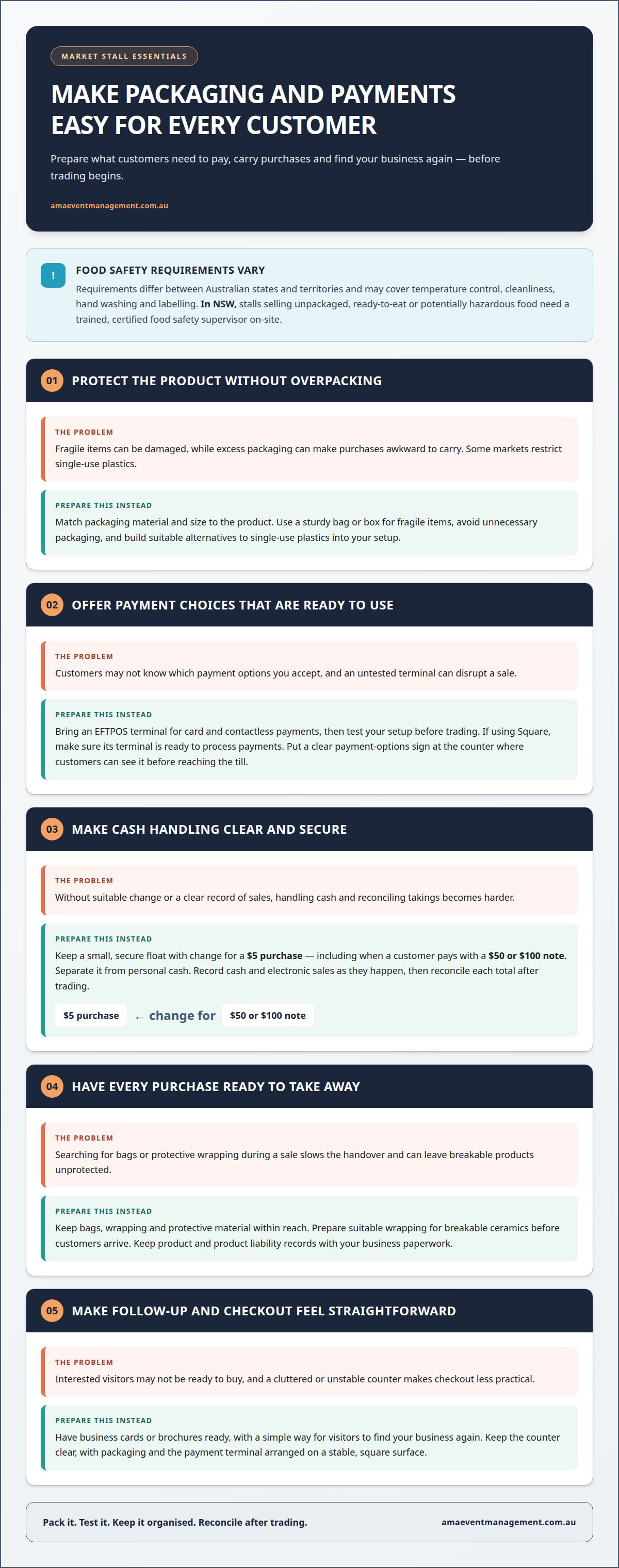
Best packaging for market stall customers?
Food safety requirements vary between Australian states and territories and may cover temperature control, cleanliness, hand washing and labelling. In NSW, stalls selling unpackaged, ready-to-eat or potentially hazardous food need a trained, certified food safety supervisor on-site.
Choose packaging that protects each product. Match the material and size to what you’re selling. Use a sturdy bag or box for fragile items, and avoid excess packaging that makes carrying purchases awkward. Sustainable options can reduce reliance on plastic; some markets restrict single-use plastics, so build suitable alternatives into your setup.
Prepare both cash and electronic payments. Bring an EFTPOS terminal for card and contactless payments, and test your payment setup before trading. If you use Square, make sure its terminal is ready to process payments. A clear sign at the counter helps customers see their options before they reach the till.
Set up a practical cash float. Keep a small float with change for a $5 purchase, including if a customer pays with a $50 or $100 note. Store the float securely and separate it from personal cash. Record cash and electronic sales as they happen, then reconcile each total after trading.
Make every purchase easy to take away. Keep bags, wrapping and protective material within reach, rather than searching for supplies during a sale. For example, prepare suitable wrapping for breakable ceramics before customers arrive. Keep product and product liability records with your business paperwork.
Plan for follow-up as well as payment. Have business cards or brochures ready for visitors who want to consider a purchase later. Remember to include a simple way to find your business again. Keep the counter clear, with packaging and the terminal arranged on a stable, square surface.
Customer relationships, stock and promotion
Attract customers with a clear display, a welcoming greeting and a memorable reason to visit. Knowing how to run a successful market stall means connecting your products, customer experience and promotion. Thoughtful stock planning and useful follow-up materials can help turn browsing into future enquiries.
Build customer relationshipsWelcome visitors without pressuring them, then give them room to browse. Share your product’s story when it explains the materials, making process or purpose. For example, a clothing maker can describe how a garment is made and what makes its design distinctive. Listen to questions and note common requests. These observations can help you refine your display and future range.
Manage stockWhen learning how to run a successful market stall, plan stock to keep the display full while retaining products for later orders. Set aside some stock for reorders or potential wholesale enquiries, group similar products together and replenish the display as items sell. Record sales and remaining stock by product to identify popular lines and plan future batches. Avoid keeping all your stock hidden beneath the table.
Create branding and promotional materialsUse a consistent business name, colours and product descriptions across your display, packaging and printed materials. Business cards or brochures give interested visitors a way to follow up after market day, especially if they aren’t ready to buy. Make the design clear and readable, and include the details customers need to remember your business. Keep materials within easy reach so you can offer them without interrupting a conversation.
Promote your stall on social mediaPost a market announcement with the event name, trading date and a photo of the products you’ll bring. Share a short preparation update, such as a new item being finished, then post your stall location on the day if the organiser provides one. Show your passion through useful product details, not repeated sales claims. For a stall within a larger event, coordinated event planning can align vendor promotion with wider event communications.
What do you recommend for signage and prices?
Show an easy-to-read price for every item, then arrange products so visitors can browse without asking first. A brief product story can make your display more memorable.
Present products and set out pricing signsArrange products at different heights so visitors can see the range, and keep each price beside the item it describes. Use clear lettering that remains readable from the front of the stall. If prices vary between ceramic pieces, for example, display a separate price beside each one. Ask friends to review the layout before market day, and remove any signs that could be mistaken for another product’s price.Greet visitors warmly, then give them time to browse. Share a concise product story when it helps explain your work, such as the inspiration behind a ceramic design or how you make it. Keep the explanation relevant to the item in front of them. A simple sign can prompt questions, but avoid crowding the display with lengthy text or details better shared in conversation.Think about seasonal buyers when choosing which work to feature. Christmas shoppers may look for gifts priced at A$50 or A$100. Treat these as examples, not fixed price rules. Set each price to suit the item, and make sure the displayed amount matches what you charge.
Label products clearlyLabel each product with its name and price, adding details that help customers choose. For ceramic work, you might describe the piece, its design or its intended use. Keep labels consistent across similar products, and make sure packaging doesn’t cover important information. Clear descriptions let visitors compare items independently while leaving you available to answer questions.If you sell goods by weight, length or volume, comply with Australian trade measurement laws. State the basis of the price clearly so customers can understand how the amount is calculated. Review signs and labels together before trading: even a correct label beside the wrong item can confuse buyers. Keep liability insurance documents with your stall records, separate from customer-facing product signs.
Market stall licences and permits
Requirements vary between Australian markets, so identify applicable permits, insurance and food rules before committing to trade. For a Sydney stall, confirm the event’s requirements and any relevant NSW food safety obligations.
Check market stall licences and permitsAsk market organisers which licences, permits and documents apply to your stall. Requirements, fees and eligibility criteria vary between markets. Examples include a temporary food stall licence and a footpath usage permit. The Australian Government’s Australian Business Licence and Information Service offers an online tool to identify business requirements.Food stall requirements vary between states and territories. In NSW, a stall selling unpackaged, ready-to-eat or potentially hazardous food needs a trained, certified food safety supervisor on-site. Food safety obligations may include temperature control, cleanliness, hand washing and labelling. Some temporary food businesses may qualify for exemptions from certain standards.
Budget for site fees and insuranceBase your budget on the market’s site fee and insurance requirements. Organisers may require public liability insurance before trading, and some include it in the stall registration fee. Read what the cover includes, particularly whether it applies during setup and pack-down. There is no single cost for running a stall: fees and insurance costs vary between markets and according to the cover required.Public liability cover is the relevant insurance to ask about, but the required cover depends on the market’s conditions. Don’t assume registration includes insurance. Establish whether it does and what the policy covers before trading.
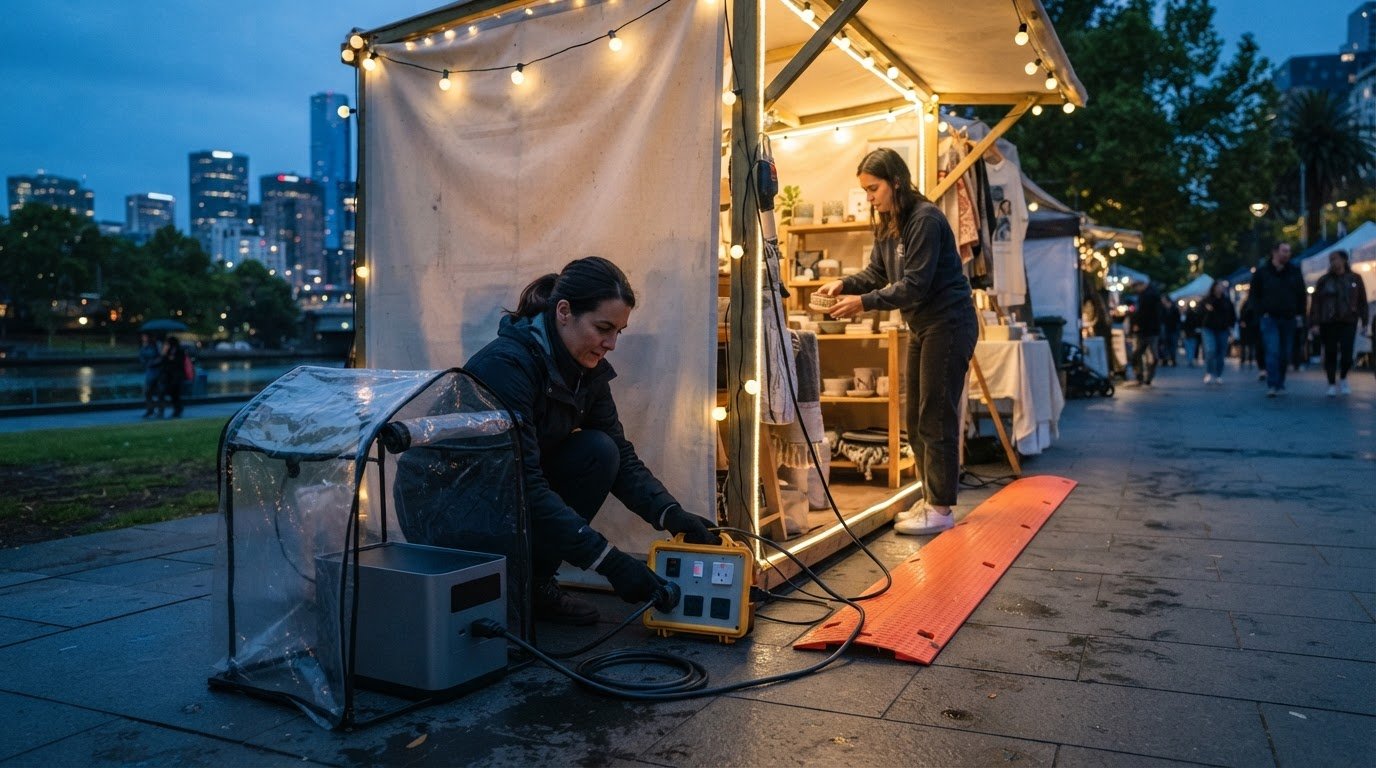
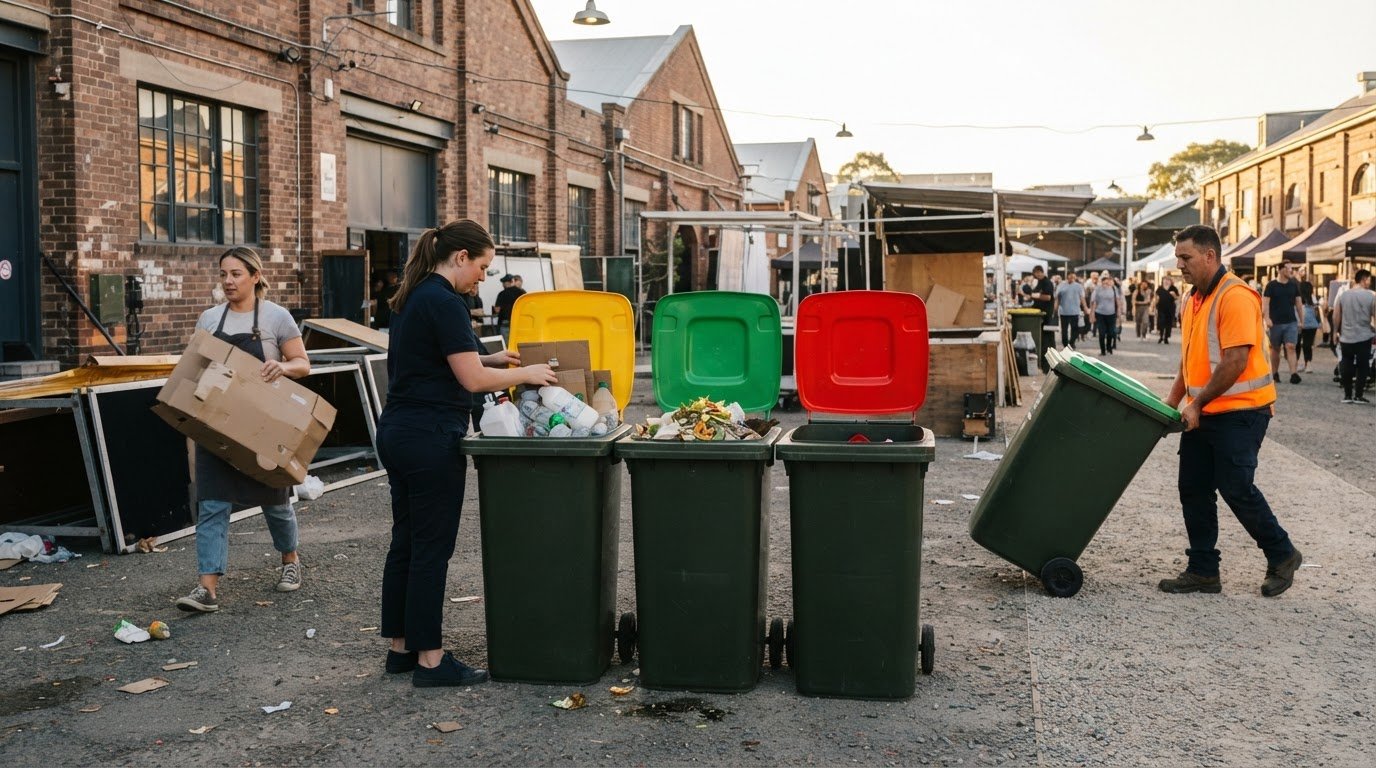
Plan your outdoor setup. Prepare a stall structure, table, product display, signs and payment equipment. Bring suitable weights and weather protection where needed, and arrange the layout so products and transaction space stay accessible. For food stalls, ask organisers about water access and food waste disposal, then align your setup with your food handling and cleanliness procedures.
Confirm local food requirements. Contact your local council or state or territory food authority about the rules that apply to your products and trading area. Some councils inspect market stalls for food safety practices. For coordinated support with market requirements and vendor logistics, plan your market with AMA Event Management.
AMA Event Management: Market Management and Vendor Coordination
AMA Event Management provides Market Management and Vendor Coordination for organisers planning a market or coordinating stallholders. This service can help bring vendor communication, event logistics and market organisation together.
AMA Event Management also manages Community Festivals and Fairs, Themed Brand Activations, and Corporate Conferences and Galas. For market organisers, clear coordination brings vendor needs and event planning into one process. For vendors, a professionally managed market offers an organised setting to present products and meet customers.
Planning a market or need support coordinating vendors? Contact AMA Event Management to discuss your event.
Shape your next market opportunity
Use each market to guide the next stage of your business. Before choosing another event, decide what you want it to achieve: introducing your work to a new audience, strengthening brand recognition or creating a more distinctive customer experience. A clear purpose helps you decide which opportunities deserve your time.
Your approach to how to run a successful market stall can evolve as your business grows. A well-planned stall may be part of a broader event presence, from community participation to a themed brand activation. Consider how your products and presentation support your business’s direction, rather than treating every market as a standalone day.
If you’re planning a market or considering a larger event opportunity, contact AMA Event Management to discuss the next step. A considered plan can help you move forward with purpose and confidence.
Frequently Asked Questions
How do you pick the right market to be a stall holder at?
Choose a market whose audience is likely to value what you sell. Consider the event’s focus, the other product categories represented and whether the setting suits your range. For example, handmade homewares may fit an event centred on independent makers better than one focused on fresh produce. Also check practical factors such as trading hours and unloading access.
How do you deal with bad weather, at outdoor markets?
Plan for the weather before trading. Bring shelter and a way to secure lightweight display items. Check the forecast before leaving, then adjust what you bring and how you arrange the stall. Protect delicate products from rain and direct sun, and store spare packaging in a dry container. Follow the organiser’s instructions if conditions affect the event or setup.
How much stock do you recommend I bring to a market?
Bring enough variety to make your display inviting, while retaining stock for later orders or wholesale enquiries. Use records from previous markets to see which products sold and which remained. For a first event, prepare a balanced selection rather than relying on a single popular item. Keep backup stock organised so you can replenish the display without interrupting customer conversations.
How do I choose the right Australian market for my stall and target customers?
Start by defining your intended customer, then assess whether the market’s theme and audience are a good match. A Sydney maker of children’s clothing, for example, might prioritise an event likely to attract families. Review the organiser’s event description and stallholder mix, and consider whether the location and trading schedule suit your customers. A strong match matters more than choosing an event simply because it is busy.
What permits, licences and council rules apply to market stalls in Australia?
Requirements depend on the market, council area and products you sell. Ask the market organiser about trader conditions, then identify any local permits or food rules that apply. The Australian Government’s Australian Business Licence and Information Service can help identify business requirements. In NSW, stalls selling unpackaged, ready-to-eat or potentially hazardous food need a trained, certified food safety supervisor on-site.
How do I price products for a market stall to cover costs and make a profit?
Build each price from the cost of making or buying the product, packaging, payment charges and a fair share of market expenses. Then include the profit your business needs to keep trading. Consider how customers perceive the item’s quality and value, and keep prices consistent across comparable products. If you sell goods by weight, length or volume, account for Australian trade measurement requirements.

Comments