

Sustainable event management in Australia: energy, ESG and credible claims
A sustainable event is planned for its full footprint, not just its waste bins. In Australia, sustainable event management practices consider the event lifecycle, from planning and procurement through delivery and post-event reporting. For events in Sydney and Melbourne, ISO 20121 provides an international framework for managing event sustainability, while credible practice depends on measurable actions and clear evidence.
It’s easy to focus on visible choices, such as recycling stations or digital programmes. A sound approach also considers energy use, carbon impacts, supplier decisions, accessibility and community outcomes, then reports what the event achieved.
This guide explains how to put those elements into practice, including ways to manage energy and emissions, apply environmental, social and governance (ESG) principles, and make sustainability claims that are specific and supportable. It also outlines how ISO 20121 can help organise the work, so event decisions connect to practical goals rather than broad promises.
Table of Contents
1. What is Sustainable Event Management?
A sustainable event follows a lifecycle framework: procurement, planning, delivery and post-event review. This sequence helps stakeholders set waste goals early, engage suppliers and assign clear responsibilities. An average conference attendee generates approximately 1.89 kg of waste per day, making disposal a practical event-planning priority in Sydney and Melbourne.
Food is another useful starting point. End Food Waste Australia estimates that up to 30% of catered food at Australian events goes uneaten. Forecast portions against registrations, offer vegetarian meals and prioritise local, seasonal produce to reduce food miles. Plan for suitable surplus food to be donated, and separate unavoidable scraps for composting rather than landfill. Agree on these arrangements with caterers, venue staff and waste contractors before event day.
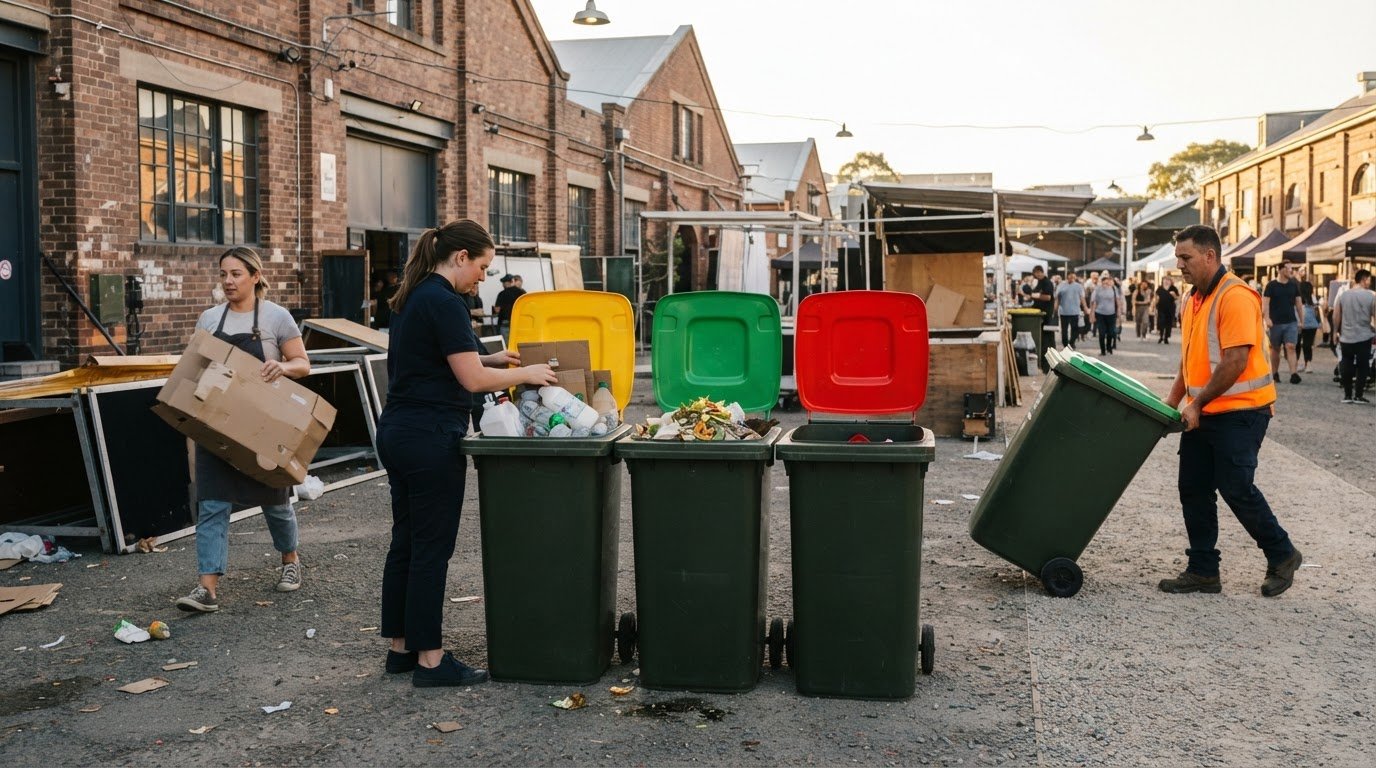
A suggested planning estimate is two 240L bins per 500 patrons per meal. For events in Sydney or Melbourne, plan collection points around the site layout and confirm which materials the chosen contractor accepts. Separate landfill, recycling and organics streams, label bins clearly and place them where attendees need them. If collection arrangements don’t match the streams, separated materials may become contaminated.
There’s no single cost comparison between sustainable and conventional events in Australia. Costs depend on labour, infrastructure, collection arrangements and the event’s waste streams. A plan that adds sorting or recovery services may require extra coordination, while avoiding unnecessary materials can reduce disposal needs. The balance depends on the event design and services required.
Common pitfalls include over-ordering food, unclear bin signage and choosing waste streams that cannot be collected. These gaps can undermine waste separation and leave teams without reliable figures for reporting. Build responsibilities and collection requirements into supplier planning before the event.
After delivery, record waste generated and diverted from landfill, alongside energy use and carbon output. Compare results with the targets set during planning, then debrief stakeholders and identify specific improvements for the next event. This evidence turns waste decisions into a documented basis for continuous improvement.
2. Energy efficiency and carbon management
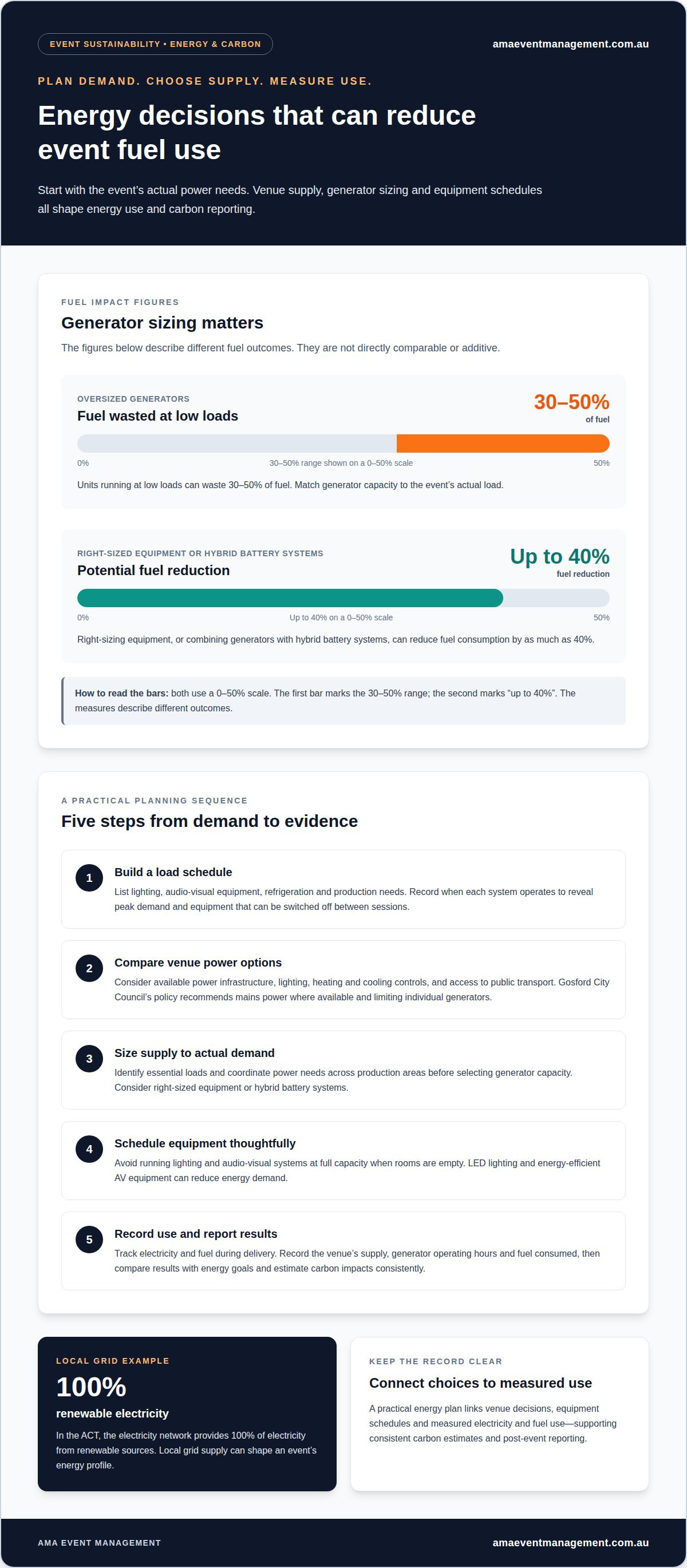
Energy planning starts with a load schedule, not a generator booking. List lighting, audio-visual equipment, refrigeration and production needs, then record when each system operates. This reveals peak demand and equipment that can be switched off between sessions. It also helps align energy decisions with attendee expectations and the event’s values.
Venue choice matters. Compare available power infrastructure, lighting, heating and cooling controls, and access to public transport. Gosford City Council’s policy recommends mains power where available and limiting individual generators. In the ACT, the electricity network provides 100% of electricity from renewable sources. Local grid supply can therefore shape an event’s energy profile.
Size generators to the actual load. Oversized units running at low loads can waste 30-50% of fuel. Right-sizing equipment, or combining generators with hybrid battery systems, can reduce fuel consumption by as much as 40%. These figures make accurate demand planning more than a technical detail. It helps prevent unnecessary fuel use while preserving reliable power for event operations.
During event planning, group equipment by operating period and identify essential loads. Schedule lighting and audio-visual systems to avoid running at full capacity when rooms are empty. LED lighting and energy-efficient AV equipment can reduce energy demand. For outdoor community events, coordinate power needs across production areas before selecting generator capacity.
Track electricity and fuel use during delivery, then compare results with the event’s stated energy goals. Record the venue’s supply, generator operating hours and fuel consumed. Use these records to estimate carbon impacts consistently across events. For corporate events, this creates a clearer basis for reporting and supplier discussions. A practical plan connects venue decisions, equipment schedules and measured use, helping teams deliver a lower-energy event without overlooking operational needs.
3. Environmental, socio-cultural and governance (ESG) principles
ESG principles connect environmental responsibility with people, decision-making and accountability. For an event, translate each principle into a practical action: reduce resource consumption, support an inclusive attendee experience and assign an owner to report progress. This makes sustainability part of event decisions, rather than a separate statement about values or reputation.
Environmental choices include tracking energy, water, waste and transport impacts. At the planning stage, set a target for each material impact and include relevant criteria in supplier briefs. For example, a brief can request information about a supplier’s sourcing, resource use and waste processes. During delivery, record actual results against targets, then report what changed and why.
Social responsibility concerns who benefits from an event and whether people can participate safely and comfortably. Build accessibility into venue layouts, communications and attendee services. Consider cultural perspectives, including Indigenous perspectives, when shaping event content and engagement. Supporting small businesses and engaging local communities can also connect economic activity with tangible community benefits.
Governance provides the structure behind these commitments. Name the person responsible for each target, define how suppliers contribute, and keep records that support post-event reporting. The ICMS subject EVT804A teaches students to assess the impacts, risks and opportunities of sustainable event practices. It also identifies stakeholder wellbeing, inclusivity, and Indigenous and cultural perspectives within a sustainable event management system.
Environmental claims can influence how attendees view an organiser, but broad promises are difficult to assess. A specific statement, such as describing a measured waste outcome, gives stakeholders a clearer basis for understanding performance. Keep supporting records, explain the scope of each claim and avoid implying that one action makes an entire event sustainable.
Use a short ESG review at each planning milestone: identify impacts, assign responsibility, gather evidence and report outcomes. This helps teams connect environmental, social and economic considerations while keeping decisions traceable. A post-event review can show which actions worked, where participation needs improvement and what the next event should change.
4. ISO 20121 and substantiating sustainability claims
ISO 20121 is an international standard for an event sustainability management system. It gives organisations guidance for identifying impacts, setting objectives and managing improvement. Treat it as a framework for decisions, not a claim that an event is automatically sustainable. A useful system assigns responsibilities, records evidence and considers environmental impacts, social responsibility and operational requirements.
For Australian events, ISO 20121 provides a voluntary management framework, while relevant obligations depend on the event and organisation. Australia has begun mandatory climate-related financial disclosures for large entities. Those disclosures are not an event certification, so distinguish organisational reporting duties from the practical management of an individual event.
Certification costs depend on the chosen scheme, event scope and evidence review. ACTS Sustainable Events Accreditation is designed for smaller conferences, seminars, workshops and retreats with up to 300 participants. Its foundational level requires 15 mandatory actions; two-star certification adds 5 actions, and three-star adds 10. Accreditation applies to one event, and an ACTS-accredited reviewer audits submitted evidence.
Build a sustainability plan in a clear sequence: set measurable goals during planning, identify impacts, assign owners and include relevant criteria in supplier briefs. Then record evidence during delivery, evaluate results after the event and revise the plan for the next one. Include energy, waste, transport, accessibility and stakeholder engagement where relevant. This process turns knowledge into practical actions and a more positive event experience.
Substantiate each public claim with evidence that matches its wording. A claim about reduced emissions should state its scope and measurement basis; a claim about social outcomes should identify the action and supporting records. Avoid broad terms such as “green” or “eco-friendly” without clear explanation. Use ISO 20121 to structure responsible management, then report both progress and limitations transparently.
Discuss your event planning to align practical delivery with clear sustainability objectives.
AMA Event Management
AMA Event Management helps bring sustainability priorities into the practical planning and delivery of events in Sydney and Melbourne. Through Market Management and Vendor Coordination, Community Festivals and Fairs, Themed Brand Activations, and Corporate Conferences and Galas, event logistics and supplier coordination support clear planning decisions. This is useful when environmental goals need to work alongside audience needs, event operations and stakeholder expectations.
For a market, festival or corporate event in Sydney or Melbourne, sustainable outcomes depend on coordinated decisions across suppliers, infrastructure and delivery. Clear priorities help teams plan responsibilities, consider resource use and keep operations aligned with the intended experience. Contact AMA Event Management to discuss your event.
Make your next event’s priorities practical
For sustainable event management practices in Australia, the next step is to shape broad intentions around the event itself. A community gathering, market and themed activation each bring different audiences, suppliers and operating needs. Clear, event-specific priorities help keep sustainability relevant to the experience, rather than treating it as a separate set of promises.
AMA Event Management offers Market Management and Vendor Coordination, Community Festivals and Fairs, and Themed Brand Activations in Sydney, Melbourne and across Australia. These event formats benefit from coordinated planning that connects suppliers, operations and audience expectations. A useful starting point is to define what matters most for the event, then build those priorities into how it is organised and delivered.
If you’re planning a market, festival or brand activation and want to discuss the event’s requirements, contact AMA Event Management. A considered plan gives your team a clear direction and a practical foundation for the work ahead.
Frequently Asked Questions
What is Sustainable Event Management?
Sustainable event management integrates environmental, social and operational considerations into decisions across an event’s lifecycle. For example, organisers can consider how a venue’s access, supplier choices and attendee experience fit together, rather than treating sustainability as a separate activity. The approach also includes reviewing outcomes afterwards, so future events can build on evidence and address gaps identified during planning or delivery.
How do you reduce event waste?
Start by preventing waste at its source: avoid unnecessary giveaways, use digital communications and plan quantities against likely attendance. At a registration desk, for example, offer printed materials only where attendees need them. Then provide clearly labelled collection points for materials accepted by the event’s waste service. A post-event review can identify which items created avoidable waste and inform purchasing decisions next time.
What does ‘eco-friendly events’ mean?
‘Eco-friendly events’ is a broad description, not proof of a specific environmental outcome. A useful claim should name the action and explain its scope, such as reducing printed programmes or using a particular waste-sorting system. Organisers can support claims with records from planning and delivery. Avoid wording that suggests an event has no environmental impact unless evidence substantiates that precise meaning.
Why are sustainable venues important?
A venue affects how an event uses resources and how attendees reach and experience it. For a conference, accessible public transport can help reduce reliance on individual car trips, while suitable room controls can support more considered energy use. Venue layouts also influence waste collection and accessible movement. Assessing these practical features early helps align the space with the event’s needs and sustainability objectives.
What are sustainable event management best practices in Australia?
Useful sustainable event management practices in Australia begin with measurable goals suited to the event, its location and its audience. Include sustainability considerations in supplier briefs, consider accessibility and cultural inclusion, and record relevant outcomes during delivery. For a public festival in Sydney or Melbourne, this could mean planning transport information and inclusive attendee access alongside environmental targets. Report results clearly, including areas that need improvement.
How can event organisers measure and reduce event carbon emissions in Australia?
Set the event boundary first, then gather activity records for electricity, generator fuel, transport and relevant supplier operations. Separate each source so the team can see where emissions arise and choose practical reductions, such as efficient equipment or travel planning. Keep the method consistent between comparable events. Report the scope, assumptions and results plainly, and avoid claims that extend beyond the data collected.


Comments