

Event Waste Management in Sydney for Collection and Recycling
A waste plan succeeds or stalls on who owns each task. An event waste management plan in Sydney should estimate likely waste, recycling and organics, arrange separate collection, and assign responsibility for bins, vendors and post-event reporting. Clear roles help organisers reduce landfill and keep the plan workable on event day.
It’s easy to focus on the number of bins, but collection, signage and regular monitoring matter just as much. If responsibilities are unclear, recycling can become contaminated and overflowing bins can disrupt the event.
This article explains how to estimate event waste, organise recycling and organics collection, and reduce landfill through practical planning. It also sets out how to assign responsibilities across the event team, vendors and waste contractors, so each part of the plan has clear ownership.
Table of Contents
Event waste collection, recycling and landfill reduction
Effective event waste collection links bin placement, sorting, transport and final treatment. Separating recyclable materials and food scraps can keep recoverable resources out of landfill.
Collection and transport
A waste plan maps each stream from disposal to collection, transport and treatment. Organisers arrange separate collection for recycling and green waste, then identify where residual rubbish will go. Plan collection routes around site access, loading areas and the event layout. A clear handover helps prevent separated materials from being mixed during removal.
Food waste, sharps and hazardous items need different controls. A professional team keeps sharps and hazardous waste away from public bins, restricts access and arranges suitable handling through the event’s waste procedures. Food scraps go into a separate organics stream where collection and processing are arranged.
Bin placement and signage
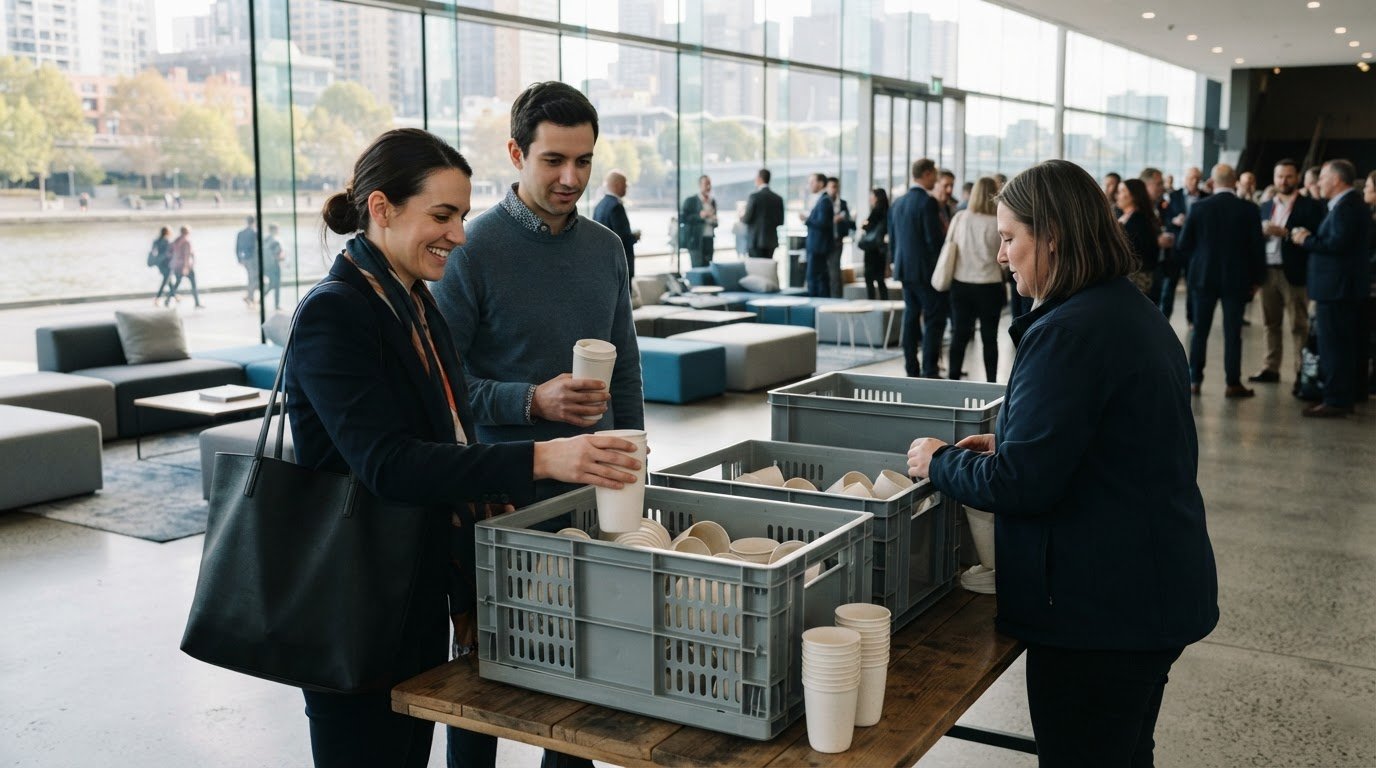
Place clearly labelled bins where people naturally finish food or drinks, such as dining areas, exits and vendor zones. Where practical, group recycling, organics and general waste bins so attendees can sort items at the point of disposal. Signs should name accepted materials in simple language. Staff announcements can reinforce the same instructions during busy periods.
Match packaging to the facilities provided. If vendors use compostable packaging, the organics stream must accept it; otherwise, attendees may contaminate recycling or general waste. For cans and PET bottles, an event can set a recovery target, such as the 80% example target in the plan.
Collection scheduling
Schedule collection around attendance patterns, service access and the expected fill rate of each stream. A busy food area may need more frequent checks than a quiet entrance. Staff should monitor bins and arrange emptying before overflow blocks walkways or encourages incorrect disposal. Include pack-up in the schedule, when temporary event materials enter the waste streams.
Coordinate collection times with vehicle access and the event timetable. Decide where sorted materials will wait for removal, ensuring storage does not obstruct operations. After the event, arrange bin audits and record waste, recycling and organics by volume or weight.
Sorting and recycling
Keep recycling, organics and residual waste separate during transport and disposal. Contamination can reduce the value of recovered materials, so record contamination levels against the event’s targets. Request collection results by waste type and volume or weight, then use them to improve future arrangements.
For eligible drink containers, an on-site Return and Earn collection point can encourage returns rather than disposal. Make its location clear in signs and announcements, and keep returned containers separate from general recycling when collection arrangements require it. Careful sorting and measured results together show where landfill can be reduced.
Estimating waste, recycling and organics generation
Estimate likely waste by stream before setting collection arrangements. Records from previous events offer a practical starting point for planning bins and services.
Waste and organics estimates
Use records from previous events to estimate what the next event may generate. Compare waste, recycling and organics volumes from events with similar formats, attendance patterns and food service. A conference with catered meals, for example, will produce different materials from a short public meeting. Record these differences so estimates reflect the programme, not just expected attendance.
If past records are limited, build an estimate from the event schedule, vendor mix and planned packaging. Separate likely food scraps from general waste and recyclables. This gives the collection plan a clearer basis for allocating capacity across streams.
Recycling and general waste streams
Keep recyclable materials distinct from residual general waste in the estimate. Consider what attendees and vendors will discard, such as drink containers, cardboard packaging and food scraps. Count a material in a stream only if the event’s collection and processing arrangements accept it. This avoids assuming that every item labelled recyclable will be recovered.
Map each stream to its source. Food service may generate organics and packaging, while registration areas may produce paper and general rubbish. This breakdown helps the team plan suitable bin types and explain sorting requirements to vendors.
Waste diversion
Estimate diversion by identifying materials that can be reused, recycled or composted instead of sent to landfill. Composting requires suitable organics collection and processing, while recycling depends on accepted materials and clean sorting. Include these conditions in the plan rather than assuming all separated waste will be diverted.
Compare post-event volume or weight results with the original estimate. The difference can reveal whether a stream was under-sized, contaminated or used less than expected. For a conference, coordinated conference planning can align the programme, vendors and waste requirements from the outset.
Waste services for permanent venues and one-off events
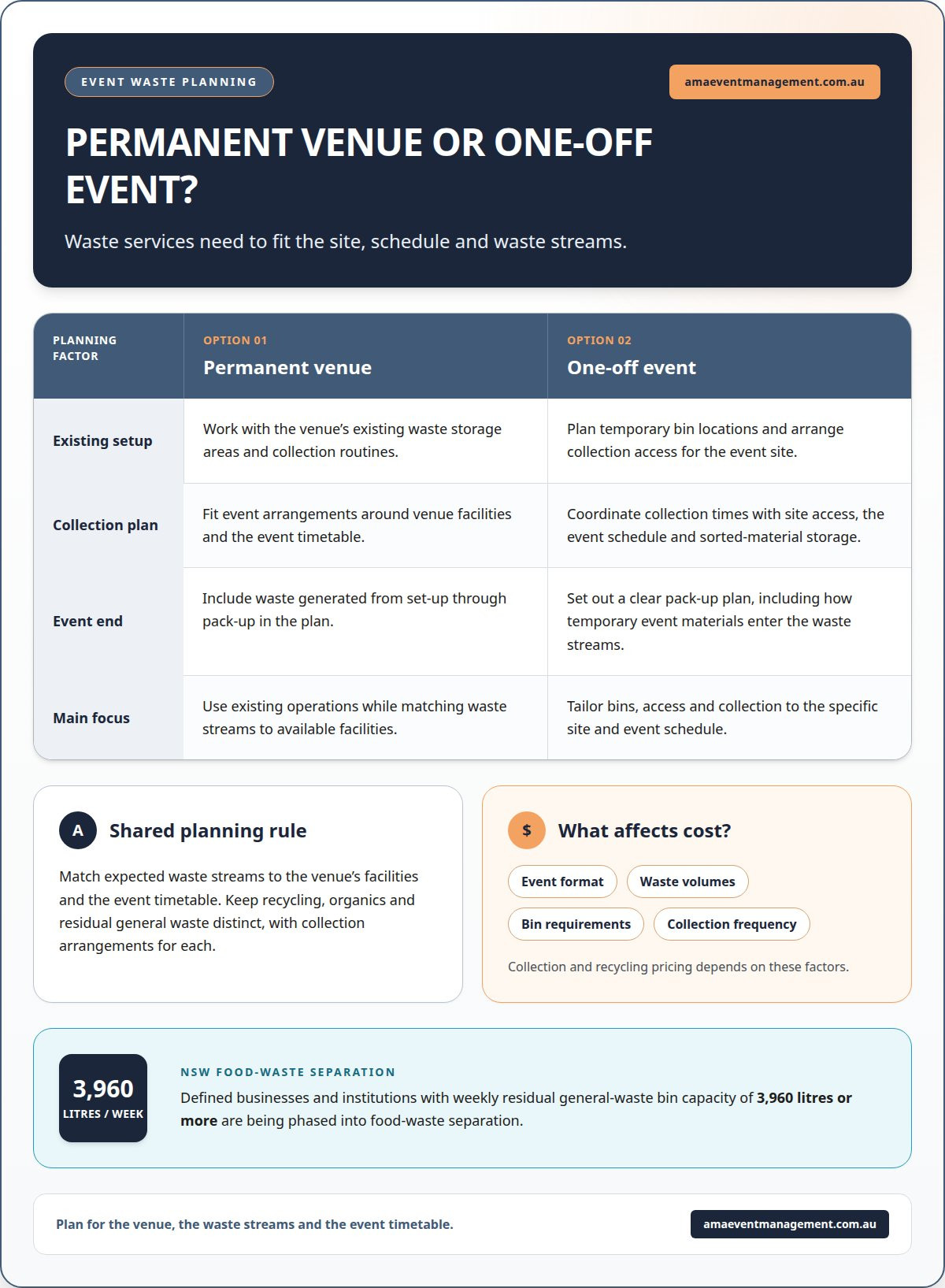
Permanent venues can integrate waste services with existing operations, while one-off events need arrangements tailored to their site, schedule and waste streams. Collection and recycling costs depend on factors such as event format, waste volumes, bin requirements and collection frequency; pricing is provided after a quote request.
Collection and recycling costs
A permanent venue may already have waste storage areas and collection routines that the event plan needs to accommodate. A one-off event may require temporary bin locations, collection access and a clear pack-up plan. In either case, match expected waste streams to the venue’s facilities and event timetable.
In NSW, defined businesses and institutions with weekly residual general-waste bin capacity of 3,960 litres or more are phased into food-waste separation requirements from 1 July 2026. The corresponding thresholds are 1,980 litres from 1 July 2028 and 720 litres from 1 July 2030. In-scope premises need dedicated source-separated food organics collection, with weekly collection as the baseline.
Bins, recycling stations and staff
Event waste contractors are the relevant providers for hiring bins and recycling stations, arranging collection and supplying event waste staff. For Sydney and Melbourne events, the service plan should account for site access, venue facilities, event hours and the materials generated. The location and existing venue services shape how temporary collection points and staff fit into the event layout.
Low-waste practices can include reusable crockery and glassware, RSVP-based catering estimates and a planned destination for leftover food. For example, a conference can use reusable serviceware and coordinate food recovery while vendors follow consistent packaging requirements. These choices connect sustainability goals with practical event operations.
For food and drink service, align packaging with the waste streams available at the venue. State which materials go into recycling, organics or general waste, and explain how collection works during the event. This helps permanent venues maintain their routines while one-off events establish clear procedures for set-up, service and pack-up.
Responsibilities for implementing a waste management plan
For outdoor events in the City of Sydney, lightweight single-use plastics are banned in Sydney and New South Wales. Build waste responsibilities around that restriction and each site’s collection arrangements.
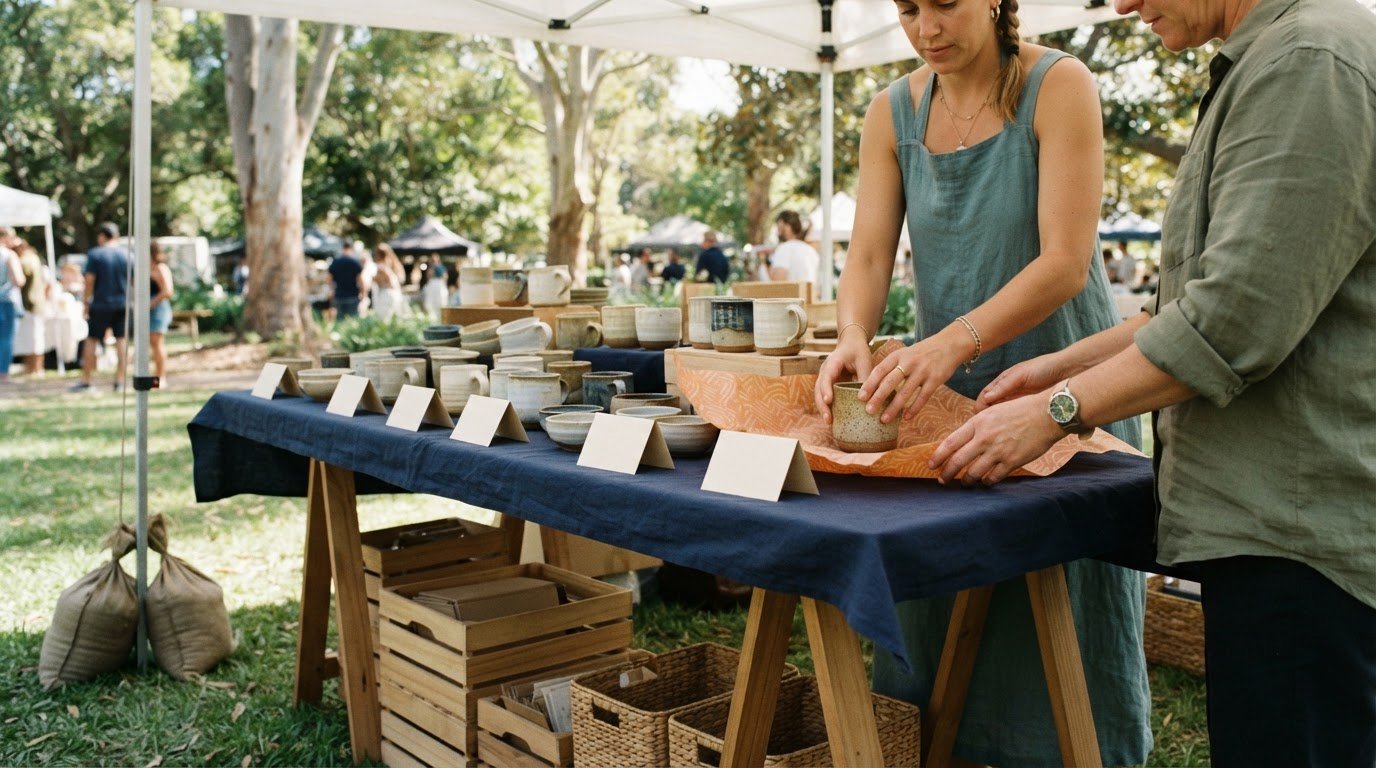
Start by assigning clear ownership. Event organisers coordinate the plan, while management, stallholders, council, waste contractors and visitors each support its waste goals. For a market, stallholder requirements can cover packaging, sorting and disposal. Name who oversees each task rather than leaving duties vaguely shared across the team.
Assign an on-site lead to monitor bins, arrange collection and organise replacements when bins are full. Give that person a clear contact route to the waste contractor and authority to act when a collection point needs attention. Staff and volunteers also need instructions on which streams they monitor and how to report overflowing or incorrectly sorted bins.
Before gates open, brief staff and stallholders on the agreed procedures. A food vendor, for example, should know which packaging belongs in each stream and whom to notify when a collection point fills. Public signs and announcements can reinforce those instructions for visitors. This connects the plan’s requirements with the people making disposal decisions.
After the event, assign staff or volunteers to decontaminate bins and complete an audit. The waste contractor can provide collection results by waste type and volume or weight. Record contamination against the event’s targets, then use the findings to adjust responsibilities before the next event. This creates a practical handover from event-day operations to post-event review.
A useful responsibility schedule identifies the task, owner and handover point for each stage: set-up, live operations and pack-down. For example, the on-site lead can oversee bin replacement during the event, while a designated close-down team handles bin decontamination afterwards. Coordinate event responsibilities through a clear plan for your next Sydney event.
AMA Event Management
AMA Event Management coordinates logistics and stakeholders for markets, festivals, activations, conferences and galas. This helps align event operations, vendor requirements and the attendee experience, including when waste planning forms part of the wider event.
For a market or community festival, clear vendor coordination helps communicate sorting arrangements and packaging expectations. For a conference or brand activation, organisers can incorporate waste responsibilities into the wider event plan, from set-up through pack-down. Share the event format, venue arrangements and sustainability priorities so they can be considered alongside the programme.
Contact AMA Event Management to discuss planning an event with waste responsibilities built into its coordination.
Make waste planning part of the next event decision
Bring waste responsibilities into event planning early, while the programme, suppliers and site arrangements are still being shaped. An event waste management plan for Sydney can then sit alongside the wider operational decisions, with clear ownership built into the event rather than added at the last minute.
AMA Event Management coordinates markets and vendors, community festivals and fairs, and themed brand activations. This event coordination helps connect operational requirements with vendor expectations and the attendee experience. Waste collection and processing remain distinct parts of the plan, shaped around the event’s needs.
Your next step is to outline the event format, venue arrangements and priorities for waste reduction. With those decisions in view, the planning conversation can focus on how responsibilities fit into the overall event. Contact AMA Event Management to discuss your event. A clear plan gives your team a practical foundation to move forward with confidence.
Frequently Asked Questions
What should an event waste management plan include in Sydney?
Set out how waste will be managed from event set-up through pack-down. Include waste streams, collection arrangements, responsible roles, vendor requirements and attendee communications. Add a response process for full or contaminated bins, plus a post-event review of collection results. For example, a food vendor should know whom to contact if its designated disposal point becomes unusable.
Are event organisers in Sydney required to have a waste management plan?
Whether a formal plan is required depends on the event site and its approval conditions, so there is no blanket answer for every Sydney event. Treat waste planning as part of the event’s operational documentation. For a public event, clarify how waste arrangements meet site conditions, access requirements and collection responsibilities before finalising the schedule.
How does a professional estimate waste and recycling volumes for a Sydney event?
Start with waste records from comparable events, then consider the format, programme, vendors and food service. A conference with catered breaks, for instance, has different waste sources from a market with take-away stalls. Divide the estimate by stream and compare it with collection results after the event. Observed performance can help refine future service needs.
Which waste streams should a professional event team separate at a Sydney event, including food waste and FOGO?
Common streams include recyclables, residual general waste and food organics, with garden organics separated where the service accepts them. FOGO means food organics and garden organics. Confirm which materials the receiving service accepts, especially food-contaminated packaging. Sharps and hazardous items need separate handling procedures and should not go in attendee-facing bins.
How can a professional event team manage single-use plastics and reusable serviceware in NSW?
Include material requirements in vendor instructions and choose serviceware that fits the event’s reuse and recovery arrangements. Reusable plates, cutlery and cups need a defined return point, collection process and washing arrangement. If disposable alternatives are used, align them with available waste streams and explain disposal clearly. Vendor briefings can help keep unsuitable packaging out of recycling and organics.
What permits, site approvals or waste arrangements are needed for a Sydney public event?
Approval requirements depend on the event location, site manager and proposed activities. Identify bin locations, temporary storage, vehicle access and collection timing, then fit these arrangements to the site’s operating conditions. For a public-space event, include the details in the relevant event documentation and coordinate responsibilities with the land manager, council and waste contractor as applicable.
Comments