

Outdoor Festival Coordination in NSW: The Architect’s Guide to Large-Scale Logistics
A successful large-scale event isn't built on a wing and a prayer. It's constructed with the same structural integrity as a Sydney CBD skyscraper. For those tasked with outdoor festival coordination NSW presents a unique set of challenges, from the intricacies of the Music Festivals Act to the precise "User Pays" policing fees that can shift a budget overnight. You've likely felt the weight of these regulatory requirements or the pressure of managing hundreds of stallholders while trying to maintain a cohesive brand experience. It's a complex environment where even a minor oversight in site management can ripple into a significant logistical hurdle.
We understand that your goal is a high-impact community event that runs without a hitch, and that requires a stabilising force behind the scenes. This guide offers a clear roadmap for mastering NSW festival logistics with the precision of a meticulous architect. You'll learn how to mitigate risk through expert oversight, navigate the latest council DA fee structures, and ensure your health and medical plans meet the rigorous 2026 standards. We'll break down the process into logical steps so you can move from feeling overwhelmed to feeling completely in control of your event's success.
Table of Contents
The Landscape of Outdoor Festival Coordination in NSW
Successful outdoor festival coordination NSW requires a disciplined fusion of operational logistics, public safety, and a distinct creative vision. It's about building a temporary city from the ground up. In New South Wales, this task involves managing unpredictable coastal weather patterns and the high-pressure complexities of urban density. A methodical approach is essential to track the thousands of moving parts involved in a community festival. Today's audiences expect more than a simple stage and stall setup. They seek immersive environments that tell a story through themed activations and bespoke site design. This shift toward high-impact engagement means every logistical choice must support the overall patron experience.
The Role of the Event Architect
We view large-scale event delivery through an architectural lens. This framework moves beyond simple scheduling to create a rigorous structure for every moving part. Effective coordination requires high-level oversight of multiple specialist contractors, from lighting technicians to waste management teams, ensuring they work in unison. Maintaining a composed, stabilising presence ensures that stakeholders feel secure, even when timelines are tight. It's this quiet confidence that allows an event manager to act as a reliable anchor. By applying a structured methodology, you transform a complex plan into a frictionless reality that feels effortless to the attendee.
Why NSW Festivals Demand Local Expertise
Navigating the regulatory environment in New South Wales requires a deep understanding of specific Local Government Areas (LGAs). Each council maintains its own set of requirements for noise limits, traffic management, and land use. For instance, managing a major event like the Sydney Festival involves a different set of logistical pressures than a regional community fair in the Riverina. Local expertise provides access to established vendor networks, which significantly reduces transport costs and logistical friction. Whether you're operating in the heart of the Sydney CBD or a regional town centre, success depends on adapting your strategy to the local context. Understanding these nuances allows for smoother approvals and a more authentic connection with the local community.
A seasoned expert stays several steps ahead of potential challenges. This foresight is particularly valuable when dealing with NSW's diverse terrain and varying infrastructure capacities. We don't just plan for the best-case scenario; we build resilience into the event's foundation. This level of precision ensures that the creative vision remains the focus, rather than the logistical hurdles. When you combine local knowledge with a disciplined management style, the result is a high-impact event that runs without a hitch.
Navigating NSW Regulatory Compliance and Council Approvals
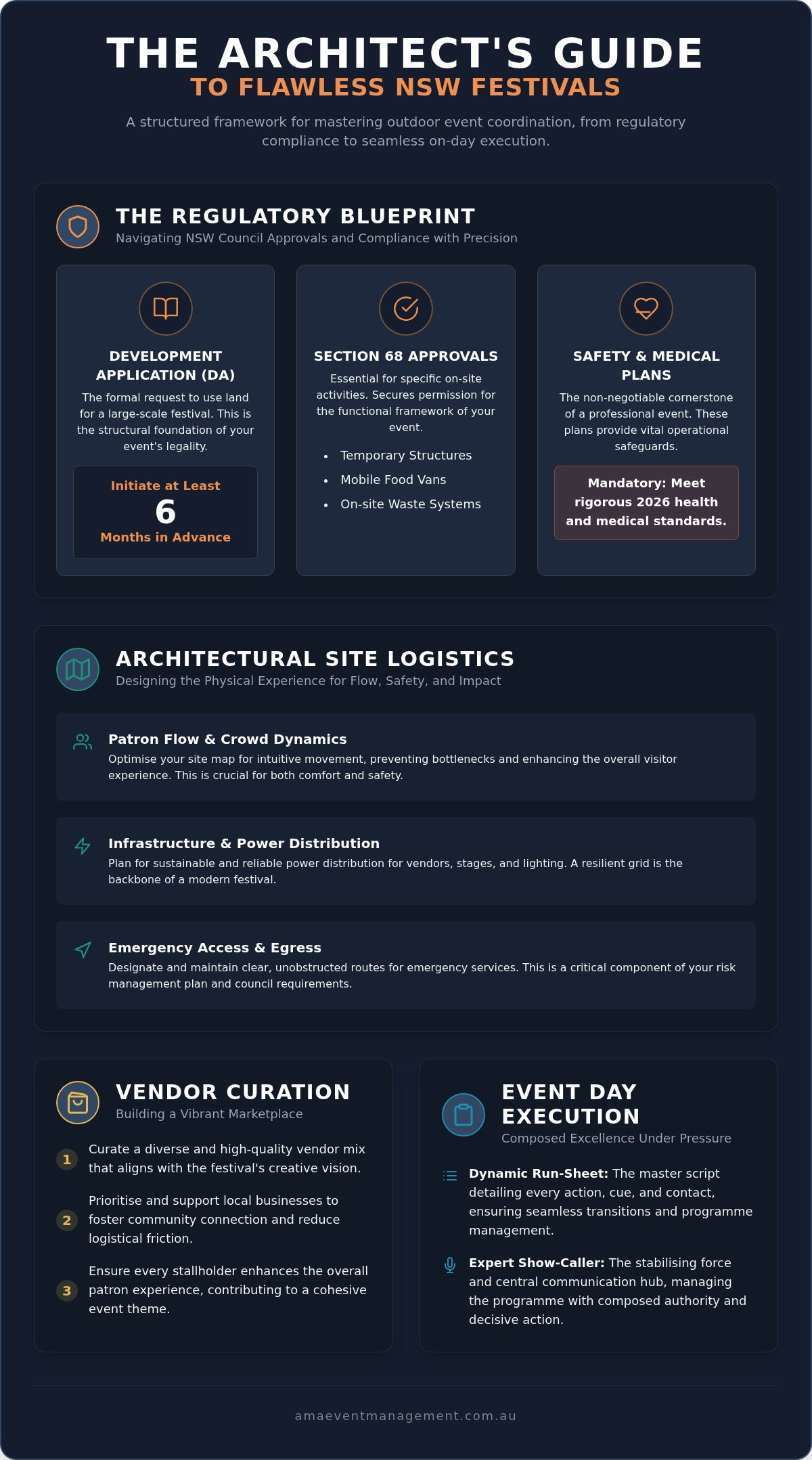
Managing the regulatory landscape is the most demanding phase of outdoor festival coordination NSW. Success requires more than just filling out forms. It involves a strategic understanding of how different agencies interact. You must secure a Development Application (DA) or verify if your event qualifies as exempt development under the State Environmental Planning Policy (SEPP). Additionally, Section 68 approvals are vital for activities like installing temporary structures or operating mobile food vans. The NSW Vibrancy Reforms for outdoor events have streamlined some of these processes, but a methodical approach to the paperwork remains essential for a frictionless experience.
Council Liaison and Stakeholder Management
A Development Application (DA) is a formal request for permission to use land for a specific purpose, such as a large-scale festival, within the NSW planning framework. We recommend initiating this process at least six months in advance. This timeline allows for genuine collaboration with council event officers and provides a buffer for public exhibition periods. Addressing community concerns early through noise abatement strategies and clear communication prevents friction during the approval stage. Our team focuses on building these partnerships to ensure your community festival gains the necessary support from all local stakeholders.
Safety and Emergency Planning
Safety is the cornerstone of any professional operation. A robust Risk Management Plan must satisfy insurers and authorities by detailing everything from crowd density monitoring to emergency egress. To support these safety measures with remote monitoring technology, you can visit Jobcam to explore their solar-powered surveillance towers. For events with significant infrastructure, temporary structures must meet Australian Standards for wind loading and structural integrity. Coordination with external agencies is equally critical. For instance, the NSW Police "User Pays" system for special events carries a rate of $155.70 per hour per officer as of 2026. Budgeting for these fixed costs, alongside Transport for NSW traffic management requirements, ensures no financial surprises on event day.
Environmental health protocols are non-negotiable. Every food vendor must comply with the Food Act 2003, and your waste management plan should prioritise sustainability to align with modern council expectations. On-site supervision plays a vital role in maintaining these standards. By remaining calm under pressure, the event manager monitors weather alerts and crowd flow in real-time. Methodical briefing of all staff and volunteers ensures everyone understands the emergency protocols. This level of oversight transforms a complex set of regulations into a safe, high-quality experience for every attendee.
A site map is more than a simple drawing. It serves as the blueprint for movement, safety, and engagement. For professional outdoor festival coordination NSW, precise spatial planning ensures that patron flow feels intuitive while maintaining unobstructed emergency access routes. Every infrastructure element must be placed with intent. We balance the use of silent generators with sustainable energy options to power themed activations without disrupting the festival's atmosphere. Managing "back of house" logistics is equally vital. Vendors must be able to restock and operate without crossing patron paths or causing site congestion. This separation of front and back of house functions creates a polished environment that feels effortless to the attendee.
Infrastructure Procurement and Installation
Quality remains the cornerstone of a successful build. Sourcing professional-grade marquees, staging, and amenities reflects the high standards of a well-managed event. For site preparation requiring specialised machinery like tracked chippers or mini excavators, Ayr Tracked Plant & Equipment Hire provides a benchmark for the technical excellence that organisers should look for when securing plant equipment. A disciplined bump-in schedule is the only way to avoid site congestion during the critical installation phase. We oversee technical production with a focus on precision, ensuring sound and lighting enhance the creative vision rather than distracting from it. This level of oversight prevents technical failures and keeps the operation running smoothly. A seasoned expert stays several steps ahead, anticipating how wind loading or terrain might impact temporary structures. Precision in the build phase ensures safety on event day.
Waste Management and Sustainability
Modern community expectations demand a sophisticated approach to environmental impact. A methodical waste diversion strategy is essential for meeting NSW "green event" guidelines and protecting the local landscape. Dedicated site cleaners play a vital role in maintaining a polished environment throughout the festival's duration. By prioritising sustainability, you align with council values and build long-term trust with the community. This isn't just about bins. It involves a structured system that manages waste from the moment it's generated until it leaves the site. A clean site is a safe site.
Amenity and Accessibility Planning
True inclusivity requires deliberate planning from the earliest stages of site design. Accessible pathways and facilities must be integrated into the core layout rather than added as an afterthought. We calculate the precise number of amenities required based on projected attendance figures to ensure a comfortable experience for every guest. Compliance with the Disability Discrimination Act (DDA) is a legal and ethical requirement that ensures all members of the community can safely and equitably enjoy public event spaces in NSW. This methodical approach ensures that your festival is welcoming to everyone, regardless of their mobility needs. High standards in accessibility reflect the professional integrity of the event organisers.
Methodical Vendor Coordination and Stallholder Engagement
Vendors represent the vibrant lifeblood of any community event, yet their integration requires a high level of logistical precision. For effective outdoor festival coordination NSW organisers must balance creative curation with strict compliance. We don't just fill spaces; we curate a vendor mix that supports local businesses and enhances the festival's specific theme. This process begins months in advance with a meticulous application phase. By managing the expectations of stallholders from the first point of contact, we ensure the event day runs with professional composure. Clear communication strategies ensure that every participant feels supported and informed, which is essential for a harmonious site environment.
The Stallholder Journey
A seamless experience for patrons begins with a structured night market stallholder application to maintain quality control across the site. Providing clear site maps and arrival instructions reduces on-day confusion and prevents vehicle congestion during the critical bump-in window. We focus on building long-term relationships for recurring markets in NSW, which helps to create a reliable network of high-quality vendors. Applicants for NSW food stalls must provide a current Food Business Notification, a valid Public Liability Insurance certificate of at least $20 million, and proof of electrical tagging for all on-site equipment. These documents are verified well before the first stall is set up, ensuring that every vendor is fully compliant with local health and safety regulations.
Vendor Support and Quality Control
Our on-site supervisors ensure that stall presentation meets the professional standards of the brand. We handle vendor enquiries with a composed authority that resolves potential issues before they escalate into disruptions. This oversight extends to technical safety, including monitoring power loads and verifying site safety during peak attendance hours. Precision in coordinating vehicle movements and load-in times is non-negotiable to maintain a safe environment for both staff and the public. We implement a strict schedule for vehicle egress, ensuring that no vendor vehicles move until the site is cleared of patrons. This methodical approach protects the integrity of the event and the safety of the community.
By acting as a stabilising force, we allow vendors to focus on their craft while we manage the complex operational framework. This partnership approach fosters a sense of security and reliability, encouraging vendors to bring their best work to your festival. If you're looking to elevate your next community event with expert oversight, explore our services for professional vendor coordination.
Composed Excellence: Executing a Seamless Festival Experience
The transition from a static plan to a dynamic environment is the true test of outdoor festival coordination NSW. On event day, the run-sheet evolves into a living document that dictates every movement across the site. This schedule must be followed with absolute precision to maintain the festival's rhythm. A dedicated show-caller acts as the conductor of this operational orchestra, ensuring that every element of the programme is delivered on time and according to the creative vision. By maintaining a broad strategic view, the show-caller anticipates transitions before they occur, allowing the event to flow naturally for the attendees.
A professional presence on-site serves as a stabilising anchor for staff, vendors, and stakeholders. In a high-pressure environment, your team looks to the event manager for direction and certainty. We don't rely on high-energy hype; instead, we project a quiet confidence that reassures everyone involved. This grounded approach ensures that even the most complex schedules are executed with a sense of order. When the lead organiser remains unfazed, that composure ripples through the entire event team, creating a secure and polished atmosphere for the public.
On-Site Supervision and Problem Solving
Unexpected challenges are an inherent part of large-scale events, but they don't have to cause a disruption. We adopt a "composed guide" approach to problem-solving, resolving issues with minimal friction. Effective communication loops are vital here. We establish clear channels between security, medical, logistics, and management teams to ensure everyone stays informed in real-time. This level of oversight is particularly important when managing the seamless integration of themed brand activations into the broader festival flow. Every activation must feel like a natural part of the environment rather than an isolated stall.
Closing the Loop: Post-Event Logistics
The work doesn't end when the final patron leaves the site. A disciplined approach to the bump-out and site restoration is essential for maintaining positive relations with local councils and landowners. We manage the removal of infrastructure and waste with the same methodical precision used during the build phase. This thoroughness ensures the venue is returned in pristine condition, which is a hallmark of professional management. Following the event, we conduct a methodical review of data and logistical performance to inform future strategies for community festival organisers in Australia.
Final budget reconciliation and transparent reporting provide the client with a clear picture of the event's success. We gather feedback from all stakeholders, including vendors and local authorities, to identify areas for refinement. This commitment to post-event evaluation ensures that each festival builds upon the success of the last. By closing the loop with professional integrity, we reinforce our role as a reliable partner in the delivery of sophisticated community experiences.
Building the Future of NSW Festivals
Mastering the complexities of large-scale events requires more than just a plan; it demands a disciplined, architectural approach to every moving part. By prioritising rigorous council compliance, precise site mapping, and methodical vendor engagement, you transform a high-pressure environment into a seamless community experience. We've explored how a composed presence and structured logistics act as a stabilising force, ensuring that the creative vision remains the primary focus for your attendees.
For those seeking expert oversight in outdoor festival coordination NSW, the path to success is built on meticulous attention to detail and seasoned industry knowledge. With over 20 years of experience and a specialised focus on NSW council regulations, our team maintains a Red Dot standard of meticulous site management that mitigates risk and delivers excellence. We're here to act as your reliable anchor, guiding your project from the initial DA submission through to a successful post-event restoration.
Contact the team at AMA Event Management to organise your next NSW festival with composed excellence. We look forward to helping you build a high-impact event that resonates with your community and runs without a hitch.
Frequently Asked Questions
What are the essential permits for outdoor festival coordination in NSW?
Essential permits include a Development Application (DA) or an exemption under the State Environmental Planning Policy (SEPP), alongside Section 68 approvals for temporary structures and food vans. You'll also need a liquor licence from the Independent Liquor & Gaming Authority if alcohol is served. Our team manages these applications to ensure full compliance with NSW council requirements. This methodical approach prevents last-minute delays and ensures your event meets all legal standards.
How far in advance should I start planning a large-scale community festival?
We recommend starting the planning process at least six to twelve months before your preferred date. This timeline allows for the complex approvals required for outdoor festival coordination NSW, such as council DA exhibition periods and police "User Pays" assessments. Early planning also secures high-quality vendors and infrastructure providers. A disciplined project timeline ensures every logistical detail is addressed, from power distribution to waste management, without the stress of a rushed execution.
Can you help with the stallholder application process for night markets?
Yes, we provide comprehensive management of the stallholder application process, from the initial enquiry to site allocation. Our team handles the verification of essential documentation, including public liability insurance and food safety certificates. By implementing a structured application system, we maintain high standards of quality and variety across the market. This oversight allows you to focus on the creative vision while we manage the complex administrative and logistical needs of your vendors.
What is the role of a professional event management agency in NSW council approvals?
An agency acts as a stabilising force by serving as the primary liaison between your event and the local council. We prepare the technical documentation required for DAs and Section 68 approvals, ensuring all risk management plans meet council standards. Our expertise in navigating different Local Government Areas (LGAs) reduces the administrative burden on your team. This professional oversight streamlines the approval process and builds a collaborative partnership with council event officers.
How do you manage site safety and risk during an outdoor festival?
Site safety is managed through a rigorous Risk Management Plan that addresses crowd density, emergency egress, and weather alerts. We provide on-site supervision to monitor the site in real-time and act as a composed guide during any incidents. Our team coordinates with security and medical providers to ensure a rapid, disciplined response to any situation. Methodical briefings for all staff and volunteers ensure that safety protocols are followed consistently throughout the event.
What infrastructure is typically required for a festival with over 10,000 guests?
Large-scale events require robust infrastructure, including high-capacity power distribution, professional staging, and extensive site amenities. You'll need a precise number of toilets and hand-washing stations based on projected attendance to ensure DDA compliance. We coordinate the procurement of quality marquees, fencing, and waste diversion systems. A disciplined bump-in schedule ensures that these elements are installed safely and efficiently, creating a polished environment that can handle high patron volumes without site congestion.
How do themed activations improve community engagement at festivals?
Themed activations transform a standard event into an immersive experience that resonates with the community. These bespoke installations create interactive touchpoints that encourage longer stay times and social sharing. By integrating brand storytelling into the physical layout, you build a deeper connection with your audience. Our creative team designs these activations to align with your festival's theme, ensuring they enhance the overall atmosphere rather than feeling like a separate commercial addition.
Do you provide on-site supervision for the entire duration of the event?
We provide end-to-end on-site supervision, from the first infrastructure delivery until the final site restoration is complete. Our team acts as a stabilising anchor, managing the run-sheet and coordinating with all vendors and contractors in real-time. This visible, professional presence ensures that any logistical challenges are resolved immediately. By maintaining oversight throughout the entire duration, we guarantee a seamless experience for both the organisers and the community attendees.


Comments