

What Is Included in Event Management Services? A Practical Guide
What if the biggest event risk isn’t one missed detail, but a gap between the people responsible for it? If you’re wondering what is included in event management services, the answer can feel unclear: planning, supplier coordination and on-the-day delivery often overlap, while some responsibilities remain with the client. A clearly defined scope connects these moving parts and makes ownership clear.
Event management brings decisions, logistics and live oversight together around the needs of a particular event. This guide explains the typical work across the event lifecycle, from shaping the brief and managing the budget to coordinating suppliers and overseeing delivery. You’ll also see how to compare the scope with your event’s needs and identify where client responsibilities fit.
For a corporate conference, community festival, brand activation or private celebration, the right scope depends on the event’s purpose and scale. AMA Event Management brings planning, vendor coordination, logistics and on-site supervision together, drawing on Amanda’s more than 20 years of industry experience. The sections ahead explain how those responsibilities can work as one coordinated service, with clear roles from planning through to event day.
Table of Contents
What Is Included in Event Management Services from Brief to Event Day?
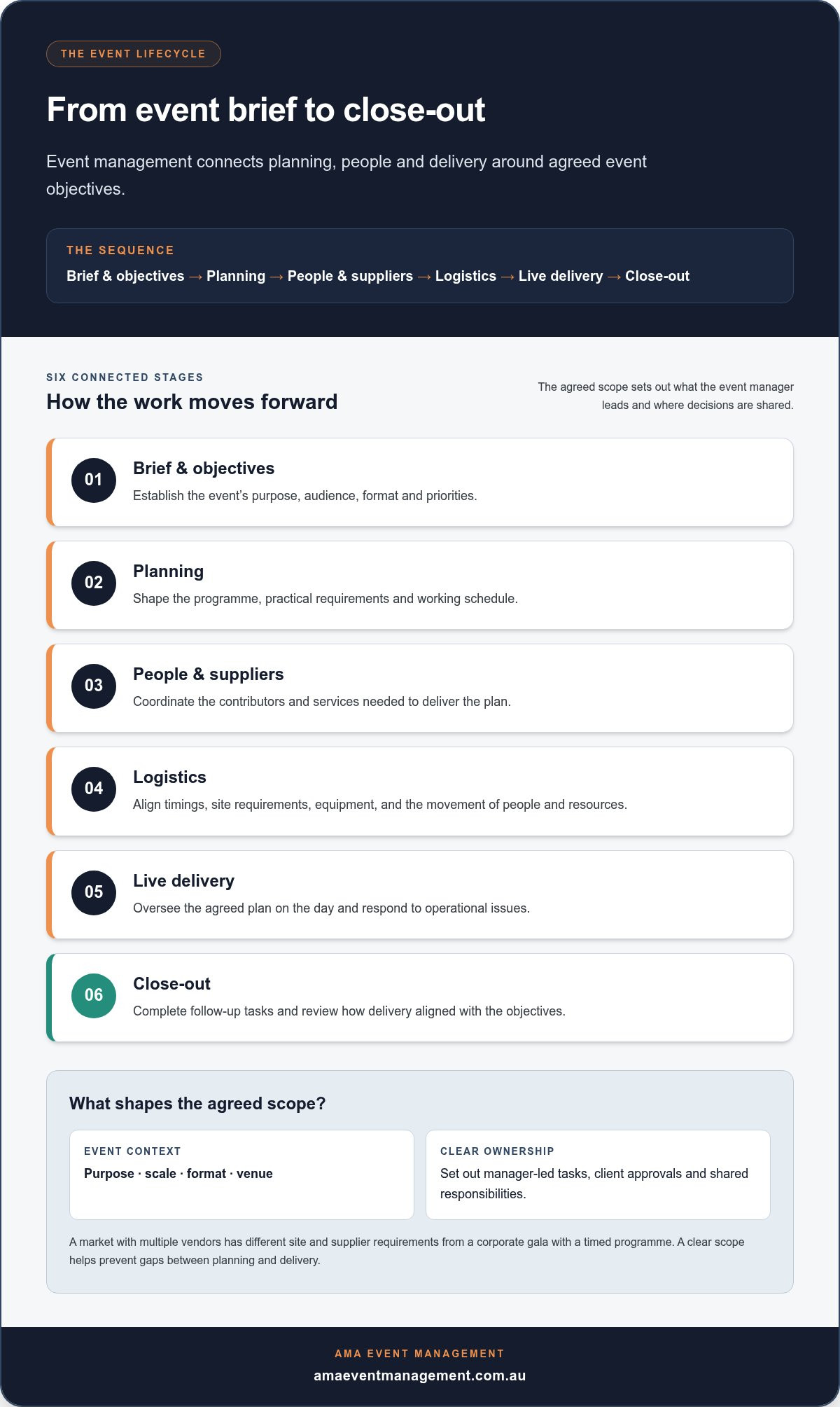
Event management coordinates planning, people and delivery around agreed event objectives. It turns an initial brief into a workable plan, aligns the people and suppliers involved, and oversees delivery through to close-out. So, what is included in event management services? The scope can cover decisions and logistics across the full event lifecycle, rather than just a single booking or task.
Event management brings together the processes needed to plan and deliver an event. In practical terms, that lifecycle may include:
Brief and objectives: Establish the event’s purpose, audience, format and priorities.
Planning: Shape the programme, practical requirements and working schedule.
People and suppliers: Coordinate the contributors and services needed to deliver the plan.
Logistics: Align timings, site requirements, equipment, and the movement of people and resources.
Live delivery: Oversee the agreed plan on the day and respond to operational issues.
Close-out: Complete follow-up tasks and review how delivery aligned with the objectives.
Inclusions depend on the event’s purpose, scale, format, venue and agreed scope. A market with multiple vendors has different site and supplier requirements from a corporate gala with a timed programme. A clear scope sets out which tasks the event manager leads, which decisions need client approval and where responsibilities are shared. This helps prevent gaps between planning and delivery.
How is event management different from event coordination?
Event management generally covers broader involvement, from interpreting the brief and making planning decisions to organising logistics and overseeing delivery. Event coordination focuses on aligning tasks, suppliers and timings within an agreed plan. Put simply: event management shapes and oversees the delivery approach, while event coordination keeps the moving parts aligned within it. A client may need end-to-end management for one event and more focused coordination for another, depending on the plan already in place and the support required.
Which event types can these services cover?
The work adapts to the event’s format and intended outcome. Corporate conferences and galas call for structured programmes and carefully aligned logistics. Community festivals and markets rely on coordinated vendors and site activity, with market management central to organised operations. Brand activations are shaped around the experience a business wants to create, while private celebrations call for planning tailored to the occasion and hosts. AMA Event Management works across these formats, adjusting coordination and oversight to suit each brief.
Which Planning, Supplier and Logistics Tasks Can Be Included?
To understand what is included in event management services, look at how the work is grouped. A clear scope connects the event brief to planning decisions, supplier activity and practical site delivery. The exact tasks depend on the event, but separating them into workstreams makes it easier to see who is responsible for each part.
From event brief to workable plan
Planning starts by translating the event’s objectives, audience, format and priorities into decisions the team can act on. For a conference, that could mean shaping a programme around key sessions and attendee movement. For a market, the plan may need to account for vendor requirements and how activity is arranged across the site.
The brief then becomes a working structure of tasks, deadlines, responsibilities and connected workstreams. As details develop, the scope helps the team track decisions, flag changes and identify the approvals needed. This keeps adjustments visible and makes it easier to understand their effect on the wider plan.
Brief and priorities: Document the event’s purpose, intended audience, format and practical requirements.
Planning and responsibilities: Set out workstreams, milestones, task ownership and approval points.
Budget oversight: Track planned event expenditure against the agreed budget as decisions and requirements progress.
Supplier coordination, budgets and site logistics
Vendor procurement may include identifying suppliers relevant to the agreed scope, coordinating their contributions and keeping communication aligned with the plan. When incorporating complex technical services—such as engaging Miami Video Production to deliver event livestreams—an event manager connects supplier requirements with timings and site arrangements, while budget management provides oversight of planned expenditure. It supports informed decisions, but doesn’t promise that costs will be reduced.
Practical logistics bring the plan into the physical space. Depending on the event, these may include a site plan, access arrangements, delivery timings, equipment placement, and bump-in and bump-out coordination. For example, a delivery schedule can clarify when suppliers need access and where their items belong, reducing clashes between teams working on site.
An event manager connects suppliers, timelines and site logistics to the event’s objectives, so each workstream supports the same delivery plan.
Stakeholder communication is part of that connection. A shared schedule can show key timings, responsibilities and dependencies, while regular updates help the client and suppliers work from the same information. If a requirement changes, the team can identify which tasks, timings or budget decisions may also need attention.
AMA Event Management brings budget management, vendor procurement, logistics and on-site supervision together around the event brief. For projects involving a busy vendor programme, explore market management and vendor coordination as an example of how planning and site requirements can be connected.
How Do Event Management Inclusions Change by Event Type?
The answer to what is included in event management services depends on what the event needs to achieve. A conference, a public market and a private celebration may all need supplier coordination, but their priorities, timings and levels of oversight differ. The table below shows how a project’s objectives and agreed scope shape the service mix.
These are examples, not fixed packages. The final mix reflects the event’s purpose, format and scale, as well as the responsibilities agreed with the client. A single event can also combine priorities, such as a gala that includes a brand reveal or a community festival with a coordinated performance programme.
Corporate events and themed brand activations
For conferences and galas, attention centres on how the programme unfolds and how suppliers fit into its timing. A change to one session or production element can affect other parts of the schedule, so clear coordination supports a composed delivery. The corporate gala planning guide offers a format-specific example of the considerations involved.
A themed brand activation has a different emphasis. Its concept, styling and interactive elements need to work together in service of the brand’s objectives, rather than operate as disconnected features. The scope can align creative direction with supplier and delivery requirements. Explore the themed brand activation guide for more on planning an immersive experience.
Community markets, festivals and private celebrations
For markets and festivals, the site and vendor experience are central. Planning may address how the site is arranged, how vendors are coordinated and how activity supports a welcoming community environment. Market-specific scope can vary with the site and the event’s objectives. The community market management guide explores these considerations.
Private celebrations call for a more personal balance of priorities. Planning can reflect the hosts’ preferences through tailored styling and coordinated delivery, with oversight shaped around the occasion. For those organising events abroad or looking to Party Dienstleister buchen (book party service providers), step-by-step vendor checklists offer practical guidance on securing caterers, DJs and photographers without stress. Across all four formats, the useful comparison is not simply the task list. It’s whether the proposed responsibilities directly support the event’s objectives and are clearly included in the agreed scope.
What Should Clients Clarify About Roles, Scope and Event-Day Delivery?
Hiring an event manager doesn’t automatically transfer every decision or responsibility. The manager can coordinate agreed workstreams and oversee delivery, while the client may retain authority over budget decisions, approvals or organisational priorities. Clear boundaries prevent delays, duplicated instructions and assumptions about who will act when plans change.
Use this sequence to review the scope before work begins:
Objectives: Confirm what the event needs to achieve and which priorities will guide decisions.
Deliverables: List the work the event manager will lead, the outputs expected and any key milestones.
Roles: Assign ownership for budget decisions, supplier instructions, stakeholder communication and approvals.
Approvals: Identify who can approve changes, how decisions will be recorded and who steps in if an approver is unavailable.
Event-day oversight: Define the manager’s site responsibilities, decision-making authority and escalation pathway for delivery issues.
A shared project plan and central schedule give the client, event manager and suppliers one reference point. Record agreed deliverables, responsibilities, key timings and changes as they occur. This makes it easier to see how a decision affects other workstreams and reduces the risk of stakeholders acting on conflicting information.
How to define responsibilities before the event
Separate coordination from client decision-making. The event manager may coordinate supplier communication and track tasks, while the client retains approval of expenditure or decisions that affect the organisation’s objectives. Note who provides information, who gives final approval and who communicates changes to suppliers. A written record of these roles and milestones keeps expectations clear as planning progresses.
For events in Sydney or Melbourne, site and local authority requirements depend on the location and event. Confirm the requirements for the specific event, and make clear in the project plan who is responsible for relevant submissions, approvals or site conditions. Don’t rely on assumptions based on a different venue or event format.
What on-site management can cover on event day
On-site management can include supervising the agreed site plan, monitoring the schedule and coordinating suppliers and event stakeholders. If a delivery runs late or a programme item shifts, the event lead can assess the practical impact, communicate the change and follow the agreed decision pathway. The scope should state which issues the manager can resolve directly and which require client approval.
Also distinguish management from the services and facilities it coordinates. Catering and venue arrangements should be identified as separate scope items, with clear responsibilities for each. For example, the project plan can specify who is arranging these services and how their requirements fit the site schedule. That detail helps close gaps between planning, suppliers and delivery.
For a clearly defined scope across planning and live delivery, plan your event with AMA Event Management.
How AMA Event Management Brings Event Services Together
The useful question isn’t only what is included in event management services, but how those inclusions work together for your event. AMA Event Management brings planning, logistics, supplier coordination and on-site supervision into an approach shaped around the event brief. This gives decisions and delivery a shared direction, while keeping responsibilities connected as the plan moves towards event day.
A coordinated approach across different event formats
Each event has its own objectives, so the mix of support changes with the format. A corporate conference or gala may call for careful programme and supplier coordination. A community festival or market has a different operational focus, with vendor coordination and site logistics shaping delivery. For a themed brand activation, planning reflects the intended brand experience, while a private celebration is tailored to the hosts’ priorities.
Once objectives are clear, AMA can align the relevant planning, vendor procurement, logistics and on-site supervision. The value lies in holding these responsibilities in view together. A supplier’s timing affects the schedule, site arrangements affect delivery, and changes can affect other workstreams. One coordinated view helps keep those relationships visible, rather than leaving separate tasks to be managed in isolation.
AMA’s work spans corporate conferences and galas, community festivals and markets, themed brand activations, and bespoke private celebrations. The event brief, rather than a standard template, guides the scope. Founded by Amanda, the business draws on more than 20 years of industry experience across these event formats.
From a clear brief to a composed event day
A well-organised brief gives the planning and delivery team a practical reference point. It captures the event’s objectives, priorities and agreed responsibilities, helping the team understand what decisions guide the work and how the moving parts fit together. For events in Sydney and Melbourne, that shared direction supports consistent communication between the client, suppliers and event stakeholders.
As delivery approaches, AMA coordinates relevant logistics and provides on-site supervision within the agreed scope. This connects the schedule with what is happening at the event, giving stakeholders a clearer view of timings and responsibilities. Attendees experience the event itself, not the planning behind it; thoughtful coordination helps carry the planned experience through to delivery.
Your event doesn’t need to fit a preset formula. Outline its purpose, format and priorities, then explore a management scope tailored to those needs. Discuss your event with AMA Event Management and take the next step towards coordinated planning and delivery.
Set Your Event Up for a Clear Next Step
Before planning moves ahead, decide what a successful event should achieve and where you most need support. That gives you a practical basis for shaping the scope, setting priorities and keeping decision-making focused. Rather than treating what is included in event management services as a fixed checklist, use it to identify the responsibilities that will make the greatest difference to your event.
A clear starting point can be simple: note your event’s purpose, key priorities and any areas of delivery that feel difficult to manage internally. From there, you can have a focused conversation about the support that fits your plans. The aim is a considered scope that gives your team confidence while keeping ownership and expectations clear.
Ready to take that next step? Discuss your event with AMA Event Management and explore a tailored approach to planning and delivery. With the right structure in place, you can move towards event day with greater clarity and confidence.
Frequently Asked Questions
What is included in full-service event management?
Full-service event management can span planning, budget management, supplier procurement, logistics and on-site supervision, depending on the agreed brief and event format. For example, one project might include coordinating a programme and vendor timings, while another needs more focus on site operations. “Full-service” describes a broad management role, not an assumption that every supplier or venue service is included. The agreed scope defines what the manager coordinates and delivers.
Does event management include finding and managing suppliers?
Yes, vendor procurement and coordination can form part of event management. This may involve sourcing suppliers relevant to the brief, aligning their requirements with the event schedule and keeping communication connected as plans develop. For instance, if a supplier’s setup time affects access for another team, the schedule needs to account for both. The project scope sets out procurement, instruction and payment responsibilities between the client and event manager.
Does an event manager stay on site during the event?
An event manager can provide on-site supervision to oversee schedules, logistics and supplier coordination. That support can be useful if a programme change affects supplier timings or a site arrangement needs attention. The event’s scale, format and agreed responsibilities shape the on-site role, including which decisions the manager can make and which need client approval.
What is the difference between event planning and event management?
Event planning develops the event approach, schedule and requirements; event management coordinates those plans through suppliers, logistics and delivery. In practice, the terms can overlap, so the label alone doesn’t explain what a client will receive. For example, one scope might focus on developing the plan, while another also covers supplier communication and live oversight. Compare the responsibilities, deliverables and decision points agreed for your event to understand the distinction.
Do event management services include catering and venue hire?
Event management doesn’t automatically mean catering is provided or that a venue is included. The management scope can identify who is responsible for catering and venue arrangements, and how those arrangements fit the event logistics. For example, an event manager may align a supplier’s delivery with the site schedule without providing that supplier’s service. The agreed inclusions should distinguish management and coordination responsibilities from catering, venue arrangements and other separately delivered services.
How are event management services tailored to different events?
Objectives, audience, format, scale, site needs and delivery priorities shape the management scope. A conference may centre on programme flow, while a community market needs close attention to vendor and site coordination. A brand activation focuses on connecting the experience with brand objectives; a private celebration reflects the hosts’ priorities. For events in Sydney or Melbourne, AMA Event Management structures its work around the brief and the practical requirements of the event.

Comments