

Community Festival Organisers Sydney: A Methodical Guide to Public Event Success
- Ever After Expo
- 1 day ago
- 11 min read
A successful community festival is not built on hype, but on a disciplined, architectural framework of logistical precision. Finding the right community festival organizers Sydney committees can partner with means looking beyond the surface level of entertainment to the structural integrity of the planning process. You likely understand the immense pressure of managing diverse stakeholder expectations while navigating the intricate web of NSW regulatory requirements. It's a high-stakes environment where a single oversight in traffic management or a delay in a council permit application can compromise months of hard work.
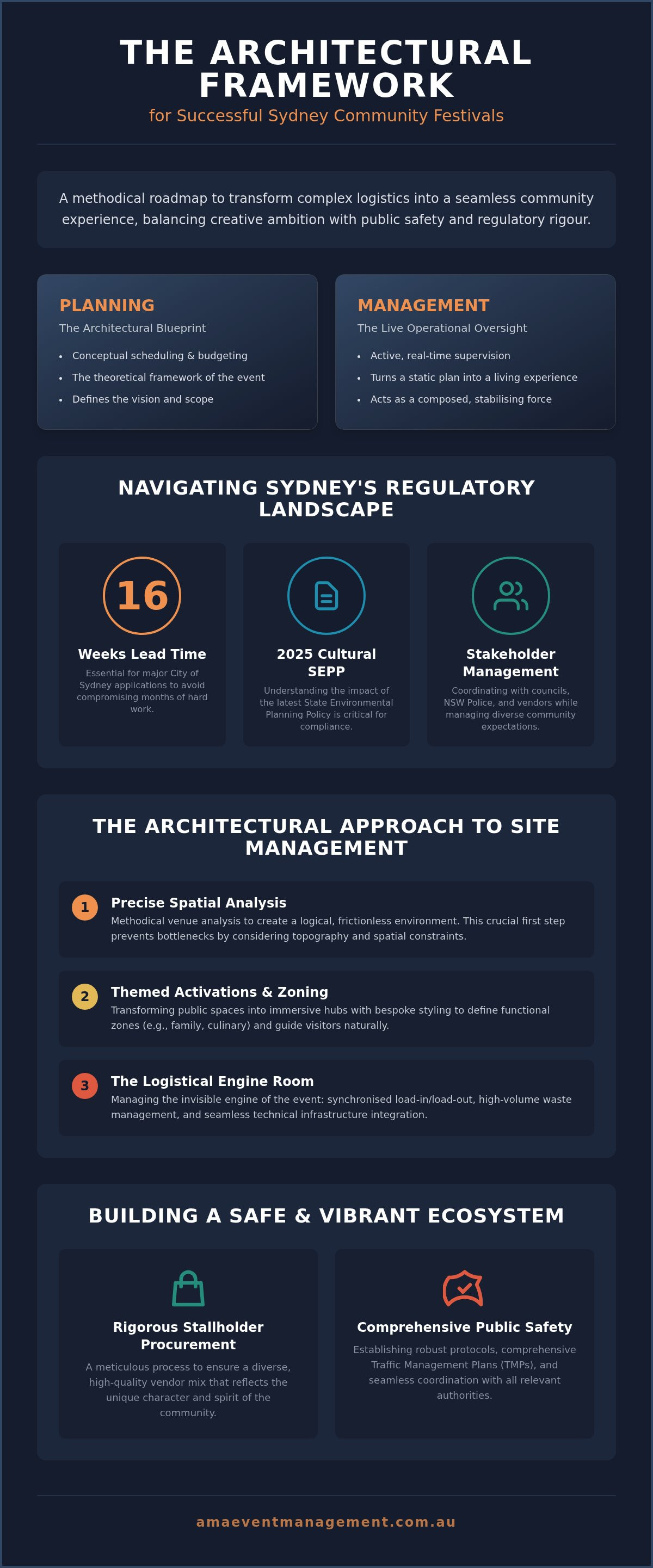
This guide provides a methodical roadmap to public event success, showing you how a composed, expert-led approach transforms complex logistics into a seamless experience for your community. We will explore the impact of the 2025 Cultural State Environmental Planning Policy (SEPP), essential 16-week lead times for major City of Sydney applications, and the strategic vendor coordination required to deliver a safe, memorable event. By the end, you'll have the clarity needed to lead your next project with quiet confidence and professional rigour.
Table of Contents
Defining the Scope of Community Festival Organisers in Sydney
Event management at the community level is a complex discipline that requires far more than a creative eye. It is the deliberate alignment of an artistic vision with rigorous safety protocols and logistical precision. For community festival organizers Sydney councils and committees rely on, the primary objective is to create a secure environment where public engagement can flourish without disruption. This role encompasses the entire event lifecycle, from initial site selection and vendor procurement to the constant stream of stakeholder communications required to keep a project on track. It's a high-stakes position where the organiser acts as the central anchor for a multitude of moving parts.
Sydney’s unique precinct dynamics demand a bespoke approach to every event. Whether you're planning a street fair in the Inner West or a large-scale celebration in the CBD, you must understand the specific expectations of local residents and the stringent requirements of various local government areas. Professional oversight acts as a critical safeguard against the risks inherent in public gatherings. This includes the delicate balance of managing noise levels near residential areas, coordinating with NSW Police, and ensuring waste management strategies are robust enough to handle high-volume foot traffic. Professional management isn't just an advantage; it's a necessity for protecting the reputation of the hosting committee and the safety of the public.
The Difference Between Planning and Management
Planning is the architectural blueprint of the festival. It involves conceptual scheduling, budgeting, and the theoretical framework of the day. Management, however, is the active oversight of every moving part during the live event. A disciplined approach ensures that the gap between the plan and the reality remains narrow. Without this active supervision, even the most well-designed schedule can collapse under the weight of unforeseen challenges. Real-time management turns a static plan into a successful, living experience.
The Stabilising Force in High-Pressure Environments
In the heat of a live event, an organiser serves as a "composed guide" who remains unfazed by the pressures of large crowds and vendor demands. This meticulous mindset prevents logistical bottlenecks and ensures that community engagement objectives aren't lost in the shuffle. By maintaining a stabilising presence, professional managers allow stakeholders to focus on the success of the celebration rather than the stress of the operation. They anticipate issues before they escalate, ensuring a frictionless experience from start to finish.
The Architectural Approach to Festival Logistics and Site Management
A festival site is more than a collection of stalls; it is a temporary, functional ecosystem. For community festival organizers Sydney relies on, site management begins with a precise spatial analysis of the venue. This architectural approach ensures that every marquee, stage, and waste station is positioned with purpose. It considers the natural topography of Sydney’s parks and the narrow constraints of its heritage streets to create a logical, frictionless environment for thousands of attendees. This methodical planning prevents the logistical bottlenecks that often plague less structured events. On-site supervision is the final, essential layer, providing the oversight needed to ensure that technical infrastructure and creative elements integrate without conflict.
Transforming Public Spaces with Themed Activations
Effective site management uses creative design to turn a standard public park or street into a vibrant community hub. This process involves sourcing and installing interactive decor that encourages participation rather than passive observation. By using bespoke styling, organisers can define different zones within a festival, such as family areas or culinary precincts, ensuring the event feels cohesive. These themed elements serve as landmarks, guiding visitors through the space naturally. You can learn more about themed brand activation Sydney to understand how this styling process builds a narrative for your community.
Site Logistics: The Engine Room of the Festival
Logistics are the invisible engine room of any successful public event. Managing load-in and load-out schedules requires precision to minimise disruption to local Sydney residents and businesses. This includes coordinating the delivery of marquees, staging, and heavy-duty flooring, while ensuring that power and water connectivity are robust enough for peak demand. Organisers must follow a structured Event Planning and Delivery Guide to manage transport, security, and waste protocols effectively. Strategic placement of facilities is vital for accessibility and natural crowd flow, preventing bottlenecks during high-traffic periods. This level of detail is why many committees choose to partner with professional festival managers who can oversee these complex moving parts with composed authority.
Managing the Stallholder Ecosystem: Vendor Coordination for Sydney Markets
Stallholders are the heartbeat of any community festival or market fair. They provide the texture, flavour, and variety that draw crowds and create a festive atmosphere. However, a vibrant marketplace doesn't happen by accident. It requires community festival organizers Sydney vendors can trust to provide a stable, well-managed environment. This begins with a rigorous selection process that balances product diversity with high presentation standards. By moving beyond a "first-come, first-served" model, organisers ensure the festival reflects the local community's character while maintaining a high-quality experience for visitors. This disciplined approach protects the event's reputation and ensures its commercial viability.
The Stallholder Application Process
A disciplined approach to vendor procurement starts with a structured application. This process serves as the first filter for quality control and logistical planning. When developing a night market stallholder application, efficiency is paramount. Organisers must collect essential data early, including Public Liability Insurance (PLI) certificates, power requirements, and specific site footprints. For instance, in 2026, daily fees for food stalls at major Sydney locations like Chatswood Mall Market are approximately $592, while non-food stalls sit at $224. Clear communication regarding these costs and expectations prevents friction during the event lifecycle. Selection criteria should prioritise local relevance and product quality, ensuring every stall contributes to the festival's overall narrative.
Vendor Coordination on Event Day
The transition from planning to live execution is where the value of a meticulous architect becomes clear. On event day, vendors require clear site maps and arrival protocols to avoid congestion. This is particularly vital in Sydney’s narrow heritage streets or busy civic spaces where space is at a premium. Organisers must verify that all food vendors have current health permits and that their equipment complies with three-phase or single-phase power safety standards. Managing these moving parts requires a proactive stance, anticipating issues before they impact the public. For a deeper look at this level of professional oversight, consult our guide on community market management Australia.
Beyond the immediate logistics, professional vendor coordination fosters long-term community bonds. Recurring markets and night markets provide small businesses with a reliable platform to grow within the NSW economy. When organisers provide consistent, disciplined management, they create a stabilising force that benefits both the vendors and the local residents. This methodical oversight ensures that the market fair remains a safe, profitable, and memorable fixture on the Sydney event calendar, year after year.
Navigating Council Regulations and Public Safety in NSW
Securing the necessary approvals for a public event in New South Wales is a layered process that requires foresight and a deep understanding of local governance. While the Cultural State Environmental Planning Policy (SEPP) introduced in September 2025 has streamlined the process by allowing many community festivals on public land without a development application, the regulatory burden remains substantial. For community festival organizers Sydney committees partner with, the focus shifts from planning approvals to operational permits. This involves meeting the City of Sydney’s strict application deadlines; major events require a lead time of at least 16 weeks, while minor events must be submitted 6 weeks in advance to avoid the $670 short-lead application fee.
Public safety is the non-negotiable foundation of any successful gathering. Developing a comprehensive Traffic Management Plan (TMP) and pedestrian safety protocols is essential for managing the flow of attendees through Sydney’s busy urban centres. This task requires active liaison with NSW Police and emergency services to ensure a coordinated response to any incident. Pre-event safety audits and engineering certifications for temporary structures, such as large-scale staging or lighting rigs, must be completed with total accuracy. These steps provide a safety net that allows the creative elements of the festival to take centre stage without compromising the well-being of the public.
Compliance and Risk Management
Risk management is about more than ticking boxes; it's about creating a secure environment through disciplined oversight. Most Sydney councils now require a minimum of $20 million in Public Liability Insurance (PLI) for even small-scale events. For gatherings under 1,000 attendees, premiums for a one-off event in 2026 typically range between $275 and $475. Beyond insurance, organisers must manage Work Health and Safety (WHS) obligations for all staff and vendors. Implementing crowd control measures that feel welcoming yet remain strictly disciplined ensures that the atmosphere stays positive while safety standards are upheld.
Working with Local Authorities
Success in the public sphere often depends on the strength of your relationships with council planning departments. Navigating "Place Activation" requirements is a common request from modern councils, as they seek events that truly revitalise local precincts. This requires a methodical approach to noise ordinances, waste management, and environmental sustainability goals. Organisers must ensure that power access, which costs approximately $97 for single-phase and $231 for three-phase per day at City of Sydney sites, is managed safely and according to code. If you find the regulatory framework overwhelming, you can engage expert assistance for your Sydney festival to ensure every compliance requirement is met with professional rigour.
Why Experience Matters: The AMA Event Management Difference
Experience in the public event sector isn't merely a record of past projects; it's the ability to anticipate a logistical challenge before it manifests. AMA Event Management, led by Amanda with over 20 years of industry experience, provides this foresight to every partnership. As community festival organizers Sydney committees rely on for stability, we act as a reliable anchor in a high-pressure environment. Our approach eschews high-energy hype in favour of composed excellence, ensuring that councils and community groups feel secure throughout the planning process. Being a privately owned, Australian small business allows us to understand local Sydney nuances that larger, corporate firms might overlook.
A Seasoned Perspective on Sydney Events
Having a founder with two decades of hands-on experience offers a distinct strategic advantage. It means we've navigated every possible scenario, from sudden weather shifts to complex regulatory changes. This history allows us to remain entirely unfazed by the inevitable challenges of live public events. We focus on the structural integrity of the project, ensuring that every moving part is integrated with precision. For a deeper understanding of this disciplined methodology, you can explore our approach to community festival organisers Australia wide. This perspective ensures that your event isn't just managed; it's architected for success.
Your Partner in Immersive Experiences
Our role extends beyond basic logistics to the creation of truly memorable community celebrations. We believe that a successful festival should be both seamless and immersive, reflecting the unique heart of the local area. By focusing on polished, professional execution, we deliver high-impact festivals that leave a lasting positive impression on attendees. Whether you're coordinating a recurring market or a large-scale fair, our team provides the sophisticated oversight required for a frictionless experience. You can contact our team to discuss your next project with a bespoke private event planner Sydney residents trust for extraordinary celebrations. We're here to guide you through every step with quiet confidence and professional rigour.
Elevate Your Community Festival with Architectural Precision
A successful community event is the result of thousands of coordinated decisions. We've explored how a disciplined architectural approach ensures your site management is precise, your stallholders are well-integrated, and your regulatory compliance is absolute. By navigating the 2025 Cultural SEPP and managing the 16-week lead times required by local councils, you protect both your reputation and the safety of your attendees. This methodical framework is what separates a standard gathering from a truly memorable public experience.
When you choose to work with expert community festival organizers Sydney, you gain a partner who remains composed under pressure. AMA Event Management brings 20+ years of industry-leading experience to your project, acting as a stabilising force for large-scale NSW public events and recurring local markets. This level of professional oversight turns a complex logistical puzzle into a seamless celebration that your community will value for years to come.
Partner with Sydney’s most meticulous community festival organisers to ensure your next project is delivered with polished, professional rigour. Your vision deserves the security of a seasoned expert who is always several steps ahead.
Frequently Asked Questions
What do community festival organisers in Sydney actually do?
Community festival organizers Sydney based act as the central logistical hub for public celebrations. They manage the intersection of creative vision, site management, and vendor procurement while ensuring all regulatory requirements are met. This role involves constant oversight of moving parts, from initial site analysis to on-site supervision on event day, providing a stabilising force that allows community committees to focus on their engagement goals rather than operational stress.
How much lead time is required to organise a community festival in NSW?
Lead times depend on the scale of the event, but the City of Sydney requires a minimum of 16 weeks for major events as of May 2026. Minor event applications are due at least 6 weeks before the start date. Submitting an application with less than 4 weeks' lead time incurs a short-lead fee of $670. Starting the planning process 6 to 12 months in advance is recommended to ensure all permits and quality vendors are secured.
Do I need a permit from Sydney City Council for a small local fair?
Yes, you generally require operational permits even if a full development application is not necessary. Under the 2025 Cultural SEPP, many community festivals on public land are exempt from development applications, but you must still secure venue hire and activity permits. For commercial users in iconic parks like Hyde Park, hourly rates are $345, while not-for-profit organisations are often exempt from hire fees but must still pay application charges.
How do you handle stallholder applications and vendor selection?
Vendor selection is managed through a rigorous, data-driven application process that prioritises quality, safety, and community relevance. We collect essential documentation early, including $20 million Public Liability Insurance certificates and specific power requirements. By using a structured selection framework, community festival organizers Sydney committees partner with ensure a diverse mix of stallholders that enhances the festival's atmosphere. This methodical approach prevents logistical friction on event day and maintains high presentation standards across the marketplace.
What safety and insurance requirements are mandatory for public events in Sydney?
Mandatory requirements include a minimum of $20 million in Public Liability Insurance and a comprehensive Work Health and Safety (WHS) plan. For events with 301 to 500 attendees, indicative insurance premiums in 2026 start at approximately $540. Additionally, all temporary structures require engineering certifications, and food vendors must possess valid health permits. These protocols provide the structural integrity needed to protect both the public and the event's hosting committee.
Can you help with traffic management and NSW Police liaison?
We develop comprehensive Traffic Management Plans (TMP) and manage all necessary liaisons with NSW Police and emergency services. Large-scale public gatherings in Sydney require coordinated pedestrian safety protocols to manage high-volume foot traffic safely. By acting as the primary point of contact for local authorities, we ensure your event adheres to all safety mandates. This professional oversight reduces the risk of traffic failures and ensures a secure environment for every attendee.
How does AMA Event Management handle themed styling for festivals?
Our approach to styling involves the creation of bespoke, themed activations that turn public spaces into immersive environments. We focus on interactive decor and strategic zoning to guide the crowd flow and encourage community participation. Each activation is designed to reflect the festival's specific narrative, moving beyond simple aesthetics to provide a polished, high-impact experience. This methodical styling ensures the event feels cohesive and professional from every vantage point.
Why should we hire a professional organiser instead of using volunteers?
Professional organisers provide the risk mitigation and 20+ years of experience that volunteers typically lack. While volunteers are vital for community spirit, managing complex NSW regulations and large-scale logistics requires a seasoned expert who remains unfazed by pressure. Hiring a professional ensures your event is architected for success, preventing costly "day-of" failures. It transforms a high-stress operation into a seamless experience, allowing your committee to celebrate alongside the community.


Comments