

Cost of Hiring an Event Planner in Melbourne: A Practical 2026 Guide
The biggest event doesn’t always require the biggest planning fee. The cost of hiring an event planner in Melbourne depends on the responsibilities involved, not just guest numbers. A community festival, corporate conference or private celebration can each call for a different level of planning, supplier coordination and on-site oversight.
If you’re finding it difficult to compare planning, coordination and full-service management, start by looking beyond the headline fee. A quote is useful when it shows what work it covers, who is accountable for delivery and which details still need to be scoped. Venue access, supplier requirements and the event programme can all shape the budget, so early estimates may change as those details become clearer.
This guide explains the main factors behind a tailored event planning fee and how to compare proposals by scope and accountability, rather than price alone. You’ll also learn what to prepare for a productive planning conversation. AMA Event Management brings more than 20 years of industry experience to planning, procurement, budget oversight and delivery, with the scope shaped around your event objectives.
Table of Contents
What shapes the cost of hiring an event planner in Melbourne?
It’s understandable to feel uncertain about your event budget before the venue and supplier requirements are settled. There isn’t one universal Melbourne rate for planning. A tailored fee reflects the agreed scope, the work involved and the responsibilities the planner takes on. The cost of hiring an event planner in Melbourne therefore depends on more than guest numbers.
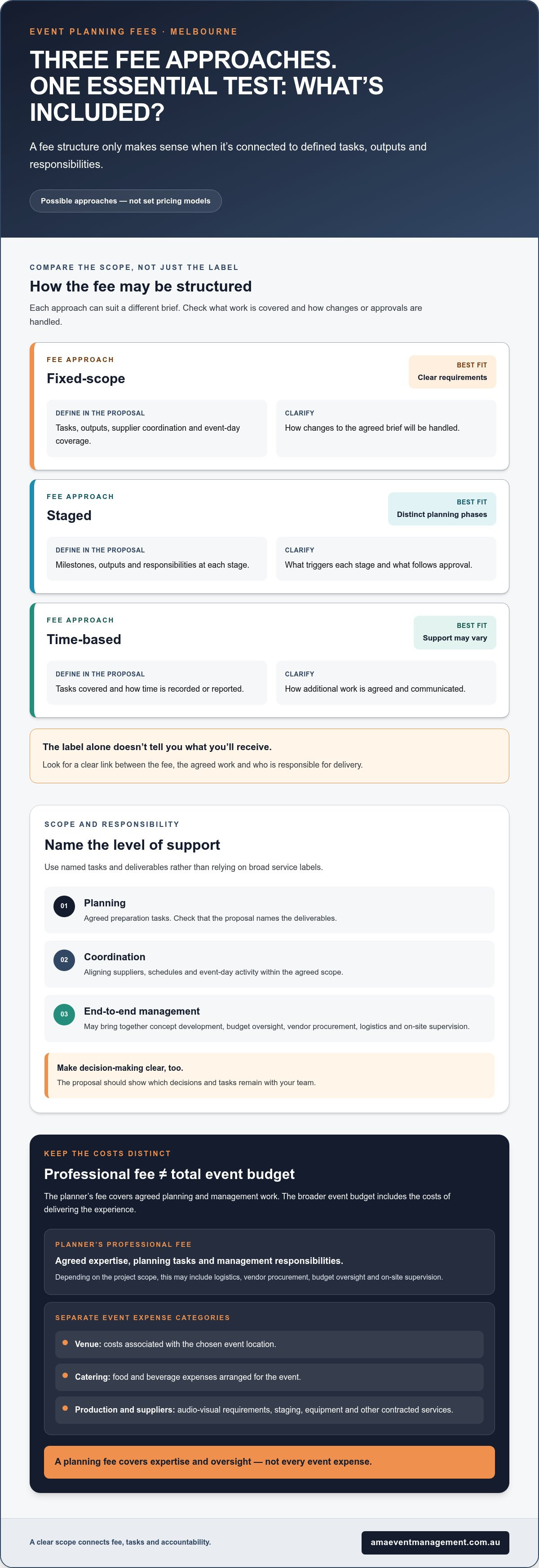
Start by separating the planner’s professional fee from the event budget. The fee covers agreed planning and management work; venue, catering, production and supplier charges are separate expense categories. A planner may manage procurement and budget oversight for these elements, but their costs are not part of the professional fee.
Which event details influence a tailored planning fee?
Format, duration, locations and delivery complexity all shape the scope. A single-session corporate gathering may need a focused run sheet and supplier coordination. A multi-day conference or public festival can involve broader logistics, more event elements and sustained oversight. These are different workloads, even when guest numbers are similar.
Guest numbers affect practical requirements such as registration, access, staffing and attendee communication. Multiple venues or suppliers add coordination work, as can combining presentations, entertainment or activations. These moving parts reflect the wider Event management principles involved in planning and delivering an event.
Scale alone doesn’t determine complexity. A smaller gathering may still need detailed supplier coordination, careful access planning or work connected with approvals, depending on its format and location. A clear scope accounts for these responsibilities rather than assuming a low guest count means little planning.
What is the difference between a planner’s fee and the event budget?
The professional fee pays for agreed planning and management responsibilities, such as logistics, vendor procurement, budget oversight and on-site supervision where these form part of the project. The event budget covers the broader costs of delivering the experience. Keeping the two separate makes it easier to see what the fee pays for and what other expenses the event may require.
Planner’s professional fee: agreed expertise, planning tasks and management responsibilities.
Venue: the costs associated with the chosen event location.
Catering: food and beverage expenses arranged for the event.
Production and suppliers: items such as audio-visual requirements, staging, equipment or other contracted services.
A planning fee covers expertise and oversight, not every event expense. Before comparing proposals, look for a clear connection between the fee and the tasks, outputs and delivery responsibilities included. That distinction gives you a practical starting point for setting a budget and defining the event scope.
Event planner fee structures: what does the quoted scope cover?
Once you understand the work involved, look at how a proposal presents its fee. Fixed-scope, staged and time-based approaches are all possible ways to price planning work. The labels alone don’t tell you what you’ll receive. For the cost of hiring an event planner in Melbourne to be meaningful, the proposal should link its fee structure to defined tasks, outputs and responsibilities.
Each approach can suit a different brief. Broader forces also shape how events are planned and delivered. Australian event management market trends provide useful context, but your proposal should be specific to your event.
Use this comparison as a starting point. It describes possible structures, not set pricing models.
How do planning, coordination and full-service management differ?
Planning covers agreed preparation tasks, so look for named deliverables rather than relying on the word “planning”. Coordination focuses on aligning suppliers, schedules and event-day activity within the agreed scope. End-to-end management can bring together concept development, budget oversight, vendor procurement, logistics and on-site supervision. The proposal should also show which decisions and tasks remain with you, so there’s no uncertainty about who is responsible for each part.
What should a clear event-planning proposal spell out?
A useful proposal sets out responsibilities, milestones, meeting frequency, supplier coordination and the extent of event-day coverage. It should also state assumptions and exclusions, so you can distinguish the planner’s work from venue, catering, production and other event expenses. If a deliverable depends on a decision or information from your team, the proposal can specify that handover. This level of detail makes different scopes easier to compare fairly.
AMA Event Management tailors project-based planning to your objectives and agreed scope. Depending on the project, this can include logistics, budget management, vendor procurement and on-site supervision. If you’re defining the support your event needs, discuss a tailored event-management scope with AMA.
How to compare event planner quotes in Melbourne fairly
A fair comparison starts with a like-for-like brief. If one proposal covers supplier procurement and event-day supervision while another focuses on preparation, their headline fees describe different levels of responsibility. To assess the cost of hiring an event planner in Melbourne, compare the outputs, decisions and delivery tasks attached to each proposal.
Use this five-step process:
Standardise the brief. Give each planner the same event format, objectives, estimated guest numbers, location and timing.
Map inclusions. Record the tasks, deliverables and stages of work each proposal covers.
Compare exclusions. Note which responsibilities and event expenses sit outside each scope.
Check oversight. Identify who coordinates suppliers, manages schedule changes and makes or approves decisions during delivery.
Assess fit. Consider whether the proposed approach suits your event’s complexity and the support your team needs.
Event format matters to the brief. A corporate gala, for instance, may involve a different mix of suppliers and delivery requirements from a conference. These corporate gala planning considerations can help you describe the format and scope clearly before comparing proposals.
Which inclusions should Melbourne clients compare line by line?
Look for specific descriptions of budget management, vendor procurement and site coordination, rather than broad phrases such as “event support”. Where relevant, compare run sheets, attendee communications, supplier liaison and event-day supervision. Check who approves changes and who leads if a supplier issue or schedule disruption arises. Clear ownership helps you see whether a lower fee also leaves more delivery work with your team.
How should local logistics appear in the event brief?
Record the proposed location, access conditions, event hours, bump-in timing and any requirements involving multiple sites. Melbourne’s CBD, Docklands and Southbank are possible location examples, but each venue has its own practical context. Include known site rules, access restrictions and permit requirements in the brief. These details help proposals account for the coordination involved at the actual location.
Keep the comparison focused on scope, accountability and fit, not price in isolation. A proposal is easier to evaluate when it shows what the planner will deliver, what your team will manage and how the event will be overseen. For organisations handling complex supplier tenders or seeking to streamline vendor proposals, rightcostiq.com provides specialised RFP management and negotiation support to optimise procurement outcomes.
How to control your event budget without cutting essential support
A controlled budget starts with the purpose of the event, not a list of attractive extras. Decide what guests need to experience, what the event must achieve and which delivery requirements can’t be compromised. This gives you a practical basis for discussing the cost of hiring an event planner in Melbourne, because it shows where planning and management effort will make a difference.
Before seeking a proposal, sort requirements into three groups:
Essential: event objectives, audience needs, suitable access, safety considerations and the core elements required to deliver the event.
Valuable additions: production, styling or engagement features that support the objective but could be adjusted.
Optional: enhancements that can be removed or deferred without undermining the event’s purpose.
This is especially useful for creative briefs. If immersive storytelling, staging or interactive elements are part of the concept, themed brand activation planning can help clarify how those choices contribute to the audience experience and what work they require.
Which event requirements should take priority?
Protect the essentials first: the event objective, audience access and needs, and requirements for safe, orderly delivery. Then match staffing, supplier involvement and production to the format. A single-session gathering may not need the same operational setup as a multi-part activation. Include a contingency category in the overall budget so unexpected changes have a place in your planning, without assuming a standard percentage applies to every event.
Next, review optional items one by one. Ask whether each enhances the intended experience, supports a stated objective or adds coordination work. This doesn’t mean removing all creative elements. It means understanding their role and making deliberate trade-offs, such as simplifying a production feature to preserve resources for a priority guest requirement.
How can a client prevent scope changes from creating surprises?
Document the agreed deliverables, decision-makers, milestones and process for approving changes. If the event gains another location or more suppliers, those adjustments may add planning, communication and on-site coordination. Ask for proposed changes to identify the affected tasks and budget categories clearly, so you can understand the impact before approving them.
Keep one current budget, organised by event component, and record each approved change against the relevant category. This creates a reliable reference for your team and planning partner, rather than leaving decisions scattered across emails or working documents. It also helps distinguish a revised requirement from an unplanned expense.
A clear brief and disciplined change process help protect essential support while keeping discretionary choices visible. If you’re ready to shape a project scope around your objectives and priorities, discuss your event-management requirements with AMA.
What happens when you hire AMA Event Management in Melbourne?
Working with AMA Event Management starts with understanding what your event needs to achieve and what support will help deliver it. The project scope is shaped around clear objectives, agreed responsibilities and budget oversight, linking the planning work to the decisions and delivery tasks your event requires. This gives you a practical way to consider the cost of hiring an event planner in Melbourne: as a reflection of the agreed work, rather than a one-size-fits-all figure.
AMA plans and delivers corporate conferences, community festivals, themed brand activations and bespoke private celebrations. Depending on the project, agreed responsibilities can include vendor procurement, event logistics, budget management and on-site supervision. Founder Amanda brings more than 20 years of industry experience to this work, helping guide planning with a structured view of the moving parts and details that need attention.
What information helps scope an event-management project?
A useful starting brief gives a clear picture of the event and the support you’re seeking. Share the objective, intended audience, preferred date, location and anticipated guest numbers. Note confirmed requirements, budget parameters, existing supplier commitments and who will make decisions. It also helps to distinguish tasks your internal team will retain from responsibilities where you’d value event-management support.
You don’t need every detail settled before beginning a planning conversation. Separate what’s confirmed from what’s still under consideration, such as a developing programme or an undecided event element. That distinction helps define the work without treating early assumptions as final commitments. It also gives everyone a clearer basis for discussing priorities and how the scope may develop.
How does a tailored scope make the next step clearer?
A tailored scope translates the brief into defined work, milestones and outputs. It can set out how planning tasks progress, which responsibilities sit with AMA and what event-day support is agreed. This shared structure helps both parties make delivery decisions against the same objectives, rather than relying on assumptions about what a general service label includes.
As the project takes shape, the agreed scope also provides a reference point for reviewing new requirements. If an event element changes, you can assess which tasks or responsibilities are affected and make an informed decision about the next step. Clear ownership and milestones give your team a steadier way to coordinate decisions as planning moves towards delivery.
Bring your event objective, known requirements and questions about responsibilities into the conversation. Discuss your Melbourne event with AMA Event Management to explore a project scope shaped around your event and the support it needs.
Turn your event idea into a clear next step
The most useful starting point isn’t a perfect plan. It’s a clear view of what you want the event to achieve and which decisions your team is ready to make. Before discussing the cost of hiring an event planner in Melbourne, write down the outcome you’re aiming for, what’s already settled and what still needs direction. That short brief can turn an uncertain conversation into a practical one.
Think about where you want to stay closely involved and where you’d value someone taking the lead. This helps shape a working relationship around your priorities, rather than asking you to fit a preset approach. You can begin with a preferred date, a broad sense of the audience and the questions you need answered. The details can develop from there.
When you’re ready to put that brief into motion, discuss your Melbourne event with AMA Event Management. A considered first step can make the planning ahead feel more manageable.
Frequently Asked Questions
How much does it cost to hire an event planner in Melbourne?
There isn’t one standard fee for every event, so the cost of hiring an event planner in Melbourne depends on the work and responsibilities agreed for your project. A concise brief helps clarify what the planner will manage, how much support your team needs and what sits outside the professional fee. For a useful estimate, outline your event format, location, anticipated attendance and any confirmed suppliers or requirements.
What is usually included in an event planner’s fee?
An event planner’s fee covers the specific planning and management tasks set out in the proposal. Depending on the brief, that could include developing a delivery plan, coordinating suppliers, maintaining event documentation or providing on-site oversight. For example, a proposal might include a detailed run sheet but leave attendee communications with your internal team. Read the deliverables alongside the exclusions to understand exactly what the fee covers.
Is hiring an event planner worth it for a small event?
It can be worthwhile if a small event has details that would otherwise take substantial time or attention from your team. A private celebration with several suppliers, or a compact business gathering with a tight programme, may still need careful coordination. Consider the tasks you can confidently manage and the consequences of taking them on. The right level of support depends on complexity and your available capacity, not guest numbers alone.
What is the difference between an event planner and an event coordinator?
An event planner generally focuses on preparation and shaping the event, while an event coordinator typically concentrates on bringing agreed plans, suppliers and schedules together. In practice, these terms can mean different things across proposals. To distinguish the roles, check when the work begins, which decisions the professional handles and whether support continues through event day. Defined responsibilities are more informative than the job title alone.
Do event planners charge a percentage of the event budget?
Some planners may use a percentage-based fee, while others may price work through a fixed scope, stages or time-based arrangements. A percentage is not a universal approach, and the calculation basis can vary. Check whether it applies to the total event budget or a defined part of it, and how changes to the budget affect the fee. The proposal should explain the method clearly, without leaving the fee basis open to interpretation.
When should I hire an event planner for a Melbourne event?
Start the conversation once you can describe the event objective, even if the venue or programme isn’t final. Early planning support can help you map decisions, responsibilities and supplier requirements before commitments build up. For an event in Melbourne, include the likely location and timing, as these details can shape logistics. The same principle applies to events in Sydney: begin with the brief, then refine the scope as details become clearer.
Can an event planner manage suppliers and the event-day schedule?
Yes, supplier coordination and event-day schedule management can form part of an agreed event-management scope. AMA Event Management’s project-based work can include vendor procurement, logistics and on-site supervision, shaped to the event. For example, the agreed responsibilities might cover coordinating supplier arrival times and maintaining the schedule during delivery. The scope should make clear who handles changes, communicates with suppliers and escalates decisions if plans need to shift.


Comments