

DIY vs Hiring an Event Planner for Private Parties: How to Choose
What if the best choice for your private party isn’t the option that costs less on paper, but the one that lets you enjoy more of it? The decision between DIY vs hiring an event planner for private parties often starts with budget, but it should also account for the time you’ll spend coordinating suppliers and handling last-minute changes.
Planning it yourself gives you direct control over each detail, but the workload can be greater than expected. Professional support can take agreed logistics off your hands while keeping your priorities at the centre of the celebration. The right approach depends on the event’s complexity, the time you can realistically give to planning and how involved you want to be on the day.
This guide compares the responsibilities, time commitment and trade-offs of both options. You’ll see what you’ll need to manage, when a planner’s coordination can help, and how tailored planning can leave you more present during the celebration. The aim is a party that reflects what matters to you, without keeping you occupied by logistics from start to finish.
Table of Contents
DIY vs hiring a party planner: what's really at stake?
Planning your own party gives you direct control over decisions, spending and personal touches. Professional support can ease the pressure of keeping every moving part on track. The choice in DIY vs hiring an event planner for private parties isn’t just about who arranges the details. It’s also about how much time you want to spend coordinating them and how present you want to be once guests arrive.
DIY planning means you lead the process, from setting priorities and booking suppliers to preparing for the event day. Professional planning means an event planner organises agreed parts of the process, coordinates logistics and may oversee delivery on the day. Agree who owns each task rather than assuming it is covered.
The work reflects the broader principles of Event management, where planning and coordination bring different event elements together. For a private celebration, those elements might include the venue, suppliers, guest updates and schedule. Guest numbers matter, but they aren’t the only measure of workload. A smaller party with several suppliers, a detailed run sheet or a complicated set-up can still need careful coordination.
What does DIY party planning involve?
As host, you set priorities, make decisions and keep track of what has been agreed. You may compare and book suppliers, share practical information with guests, update the schedule and prepare items for the celebration. On the day, you could be answering supplier questions or resolving timing issues while also welcoming friends and family.
DIY can suit a party when you have time to organise the details and enjoy doing so. Consider the full timeline, not just the fun decisions such as a theme or menu. Are you comfortable keeping decisions, supplier arrangements and practical preparations moving alongside your other commitments?
What does a professional event planner take on?
A planner can bring structure to the process by organising the plan, coordinating suppliers and managing event logistics. On-site oversight can keep arrangements moving during the celebration, so you aren’t automatically the first point of contact for every practical issue.
Professional planning is coordinated delivery, not simply decoration. The planner’s role should reflect your priorities. You might retain decisions about the guest experience and key details while delegating supplier communication, schedule coordination or event-day oversight. Clear responsibilities help prevent gaps and keep you involved where you want to be.
Think about the experience you want as host. If you want to handle the details and stay closely involved throughout, DIY may feel rewarding. If you’d rather spend more of the celebration with your guests, coordinated support can protect your time and attention. Neither approach is automatically right. The balance depends on the party’s complexity, your available time and the responsibilities you want to carry.
What DIY planning and professional event planning each require
The workload of a private party builds over time. Venue research, supplier bookings and guest updates happen well before guests arrive, while decisions during set-up can affect how smoothly the celebration runs. With DIY planning, you’ll usually track these details yourself. With professional support, you can allocate responsibilities while retaining the decisions you want to make.
The workload behind a DIY private party
Start with the practical sequence: research a suitable venue, compare suppliers, make bookings and keep a record of decisions and costs. Then send invitations, monitor replies and update the guest list as plans change. Build a schedule that accounts for deliveries, set-up and key moments, with room to respond if something runs late.
On the day, you may need to answer supplier questions, confirm where items should go and make decisions when arrangements change. That can be manageable, but it can also compete with greeting guests and enjoying the occasion. Identify who will handle each task if you’re occupied or unavailable, rather than assuming everything will fall into place.
How a planner organises moving parts
A clear brief gives the planner a basis for organising the event around your priorities, from the guest experience to the practical schedule. They can coordinate agreed supplier communications, track logistics and align delivery timings. On-site supervision helps keep arrangements moving during the celebration, while you remain involved in the decisions you want to retain.
Clear role allocation reduces avoidable confusion by showing who makes each decision, shares each update and responds to each issue. Before planning progresses, agree who owns guest information, schedule changes and contingency decisions. An event planner coordinates the agreed logistics, while catering and venue arrangements remain separate considerations.
For a private event in Sydney or Melbourne, consider how venue access, supplier arrival times and the schedule fit together. Confirm practical details with the relevant venue and suppliers, and assign someone to communicate changes. These arrangements depend on the venue and event brief, so include them in the plan rather than leaving them until the day.
To compare the options, write down each task and assign an owner: you, a planner or a supplier. Include who will check the schedule, pass on guest updates and make decisions if a delivery or set-up plan changes. If structured coordination would help you stay present, bespoke private celebration planning can be shaped around your event brief and priorities.
That task-by-task view is central to DIY vs hiring an event planner for private parties. It shows whether you want to lead every detail, share responsibility or delegate specific logistics, without assuming a planner must take control of every choice.
DIY vs an event planner: compare the trade-offs for your celebration
Each approach gives you a different balance of control, time and attention. DIY keeps decisions and budget tracking in your hands, but the hours spent coordinating may reduce the time you have to enjoy the party. A planner’s fee varies with the scope of support, so compare it with the responsibilities you want to delegate rather than assuming every event needs full-service planning.
Complexity, not guest numbers alone, determines how much coordination a celebration may require. A gathering with a simple schedule and few suppliers can be straightforward to manage. A smaller event with detailed styling, several deliveries or a venue with specific set-up logistics may need more oversight.
Time: DIY means organising tasks and following up yourself. A planner can coordinate agreed logistics, leaving you more time for other priorities.
Budget control: DIY lets you track spending directly, but you’ll need to monitor commitments as plans develop. Professional planning adds a fee that varies by scope, so include it in your overall budget.
Expertise: You know what the occasion means to your guests. A planner brings event coordination experience and a structured approach to suppliers, schedules and logistics.
Flexibility: DIY keeps changes close to you, though you’ll also need to communicate them. With a planner, agree how decisions and updates will be handled so the arrangement reflects your preferences.
Host presence: Taking charge yourself can mean stepping away from guests to manage practical issues. On-site oversight can help you participate in more of the celebration instead of coordinating it.
When DIY can suit a private party
DIY may suit a contained celebration with a straightforward venue, a limited number of suppliers and a schedule that can adapt if timings shift. It works well if you have time to plan and enjoy hands-on creative control. A capable friend or family member can own defined tasks, such as welcoming a delivery, but agree on the plan and decision-making process beforehand. A helper can share the workload, but they still need clear responsibilities.
When professional planning can make a difference
Professional support can be valuable when the event involves multiple suppliers, a detailed run sheet, styling requirements or a venue with involved logistics. For example, coordinating venue access, supplier arrival times and set-up may take careful sequencing in Sydney or Melbourne, depending on the venue and event brief. If your availability is limited, agreed coordination can keep these details moving. On-site supervision can also help when you want to be present with your guests.
When weighing DIY vs hiring an event planner for private parties, consider the experience you want, not only the task list. If managing the tasks sounds satisfying and realistic, DIY may be the right fit. If you’d rather delegate defined logistics and focus on your guests, professional planning can be shaped around the support you need.
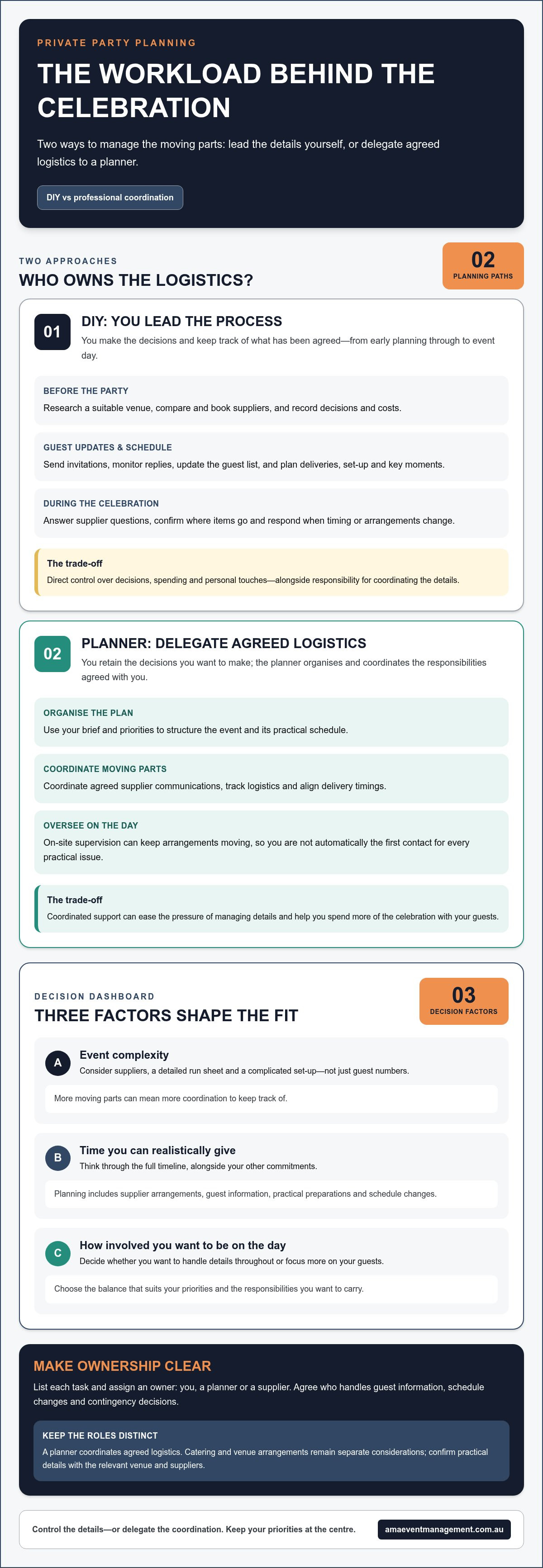
Decision framework for planning your private party
A practical decision starts with the celebration you want to host, then works backwards through the tasks and time required to deliver it. This grounds your choice in your priorities rather than a fixed guest-count rule. Use the steps below to decide which responsibilities you want to retain and where extra coordination could make the experience easier.
Define your priorities. Write down the purpose of the party and the experience you want guests to have. Identify what matters most, such as the atmosphere, food arrangements, entertainment or time with particular guests. This gives you a clear basis for deciding where to focus your effort.
List the tasks. Include venue requirements, supplier coordination, guest information, schedule planning, set-up and event-day decisions. Mark each item as essential or optional. For example, confirm practical access arrangements before spending time on extra styling or entertainment ideas.
Assess your time. Estimate the hours you can realistically give to planning alongside work and family commitments. Include follow-ups and preparation, not just booking time. If the event date is approaching and essential arrangements still need attention, decide whether to simplify the plan or share more of the workload.
Choose your support. Assign each task to yourself, a capable helper, a supplier or a planner. Specify who communicates schedule changes, coordinates set-up and makes decisions on the day. Then consider whether the remaining responsibilities leave you enough time to enjoy hosting.
Assess the party before choosing an approach
Record the venue, suppliers, essential timings and guest experience you’re planning for. In Sydney or Melbourne, venue access windows, loading arrangements and travel between locations may affect supplier schedules, so consider how these details fit together. For an outdoor celebration, include a weather contingency suited to the season and a clear alternative for the set-up or guest experience if conditions change.
Keep the plan proportionate. Separate must-haves, such as confirming arrival times and the order of key moments, from optional choices you can simplify if time becomes tight. This protects the parts of the celebration that matter most without turning every decision into another task.
Decide how much of the workload to own
Look at your calendar and estimate planning time honestly, allowing for work, family commitments and supplier follow-ups. Choose which decisions you want to make yourself, then allocate responsibilities for supplier communication, set-up and event-day questions. A helper can take on a defined task, while an event planner can coordinate agreed logistics and provide on-site supervision.
Set a clear point for reviewing your approach. If essential tasks are slipping, you’re spending more time coordinating than enjoying the preparation, or you expect to be occupied with logistics during the party, additional support may improve the experience. AMA’s bespoke approach can shape private celebration planning around your priorities. Discuss planning your private celebration with AMA to consider what coordination would best fit your event brief.
Make your private party easier to enjoy with tailored event planning
The right choice depends on the kind of celebration you’re planning, how much time you can give it and how involved you want to be as host. A straightforward event may be comfortable to manage yourself. If supplier coordination, detailed logistics or event-day decisions could take you away from your guests, professional support can help shift that responsibility.
AMA Event Management plans bespoke private celebrations in Sydney and Melbourne, shaping event logistics and coordination around the host’s priorities. Founder Amanda brings more than 20 years of industry experience to the planning process. The approach is built around the celebration you want and the responsibilities you’d prefer to keep or hand over.
What to expect from tailored planning
Start with the purpose of the occasion, the atmosphere you want to create and the practical requirements that will shape the event. These might include venue arrangements, supplier needs, timings and how much you want to participate in decisions. A clear brief gives the planning process direction and separates essential logistics from details that can remain flexible.
From there, planning can align supplier coordination, event logistics and on-site oversight with the agreed scope. You can stay involved in the choices that matter to you while defining who will manage practical communication and delivery. Clear expectations keep the plan connected to your priorities as details develop.
Keep the host experience at the centre
Before deciding between DIY vs hiring an event planner for private parties, define what a successful celebration feels like from your perspective. Perhaps you want to welcome guests without interruptions, enjoy the speeches or be present for a particular moment. Those priorities help determine which tasks you should own and which could be coordinated on your behalf.
Agreeing responsibilities in advance gives everyone a clearer role. You can retain creative decisions and personal touches, while agreed logistics and on-site supervision are managed as part of the plan. This doesn’t remove you from the process. It helps you choose where your attention will have the greatest value, including during the celebration itself.
A bespoke plan can be useful when the event’s complexity, your available time or your preferred level of involvement makes managing every detail less appealing. If you have the time and enjoy handling arrangements, you may prefer to plan independently and seek support only for defined responsibilities. The decision should serve the experience you want, not a fixed idea of what a party requires.
Explore AMA’s bespoke private event planning to see how coordination can be shaped around your priorities.
Choose the celebration you want to experience
Before you commit to a planning approach, picture yourself during the celebration. Are you happy to step away to handle practical questions, or would you rather stay with your guests while someone else oversees the agreed logistics? Your answer can guide your next step more clearly than a rule based on party size.
Write a short brief describing how you want the occasion to feel, which details matter most and what you’d prefer not to manage. That gives you a useful starting point for deciding whether to plan independently, share tasks or bring in professional coordination. The choice in DIY vs hiring an event planner for private parties should support your experience as host, not add pressure to create a perfect event.
For a celebration shaped around your priorities, get in touch with AMA Event Management about bespoke private event planning. Founder Amanda brings more than 20 years of industry experience, and AMA plans private celebrations and coordinates event logistics. Share your event brief and the responsibilities you’d like to keep or hand over.
Frequently Asked Questions
Can I plan a private party myself?
Yes, you can plan a private party yourself if you have time to manage the arrangements. Start with a task list that gives each item an owner and due date, then review it as plans change. For a celebration with one venue and a small supplier group, a shared checklist can keep decisions visible. If tasks begin slipping, reconsider how much you want to manage personally.
Is hiring an event planner worth it for a small private party?
It can be worthwhile if coordinating the event would otherwise take you away from the occasion. A modest guest list might still involve several delivery windows, a venue with limited access or a tightly timed programme. Consider how much time you’d spend resolving those details and whether you want to be the person guests and suppliers approach. In Sydney or Melbourne, venue-specific arrangements can influence the level of support that makes sense.
How much does it cost to hire a private party planner in Australia?
There isn’t one standard fee for every private party in Australia. The cost depends on the event brief and agreed scope, including the planning, logistics and on-site support required. Ask for a proposal that sets out the responsibilities covered, so you can compare it with the work you’d otherwise handle yourself. Consider your available time and the value of having agreed coordination, not just the fee in isolation.
What does an event planner do for a private party?
An event planner turns your brief into a coordinated plan and manages the responsibilities agreed for the celebration. For example, the planner may align supplier arrival details with the schedule and oversee the planned set-up on the day. You remain central to the vision and key decisions. Before planning begins, agree how updates will be shared and how schedule changes will be approved.
Can I hire an event planner without handing over every decision?
Yes, planning can be collaborative. You can retain decisions such as the guest experience, theme or key personal touches while asking the planner to coordinate specific logistics. Set out which decisions need your approval and which practical matters the planner can manage within the brief. This suits hosts who want to shape the celebration without overseeing every supplier message or schedule update.
How far in advance should I start planning a private party?
Start once you have a likely date and a sense of the celebration’s requirements. The lead time depends on factors such as the venue, supplier arrangements, season and complexity. Starting earlier gives you more opportunity to make decisions in sequence. If the timeline is short, prioritise essential arrangements and key timings before spending time on optional details.
Who manages problems during a DIY party on the day?
If you’re managing the event yourself, decide in advance who will respond to practical issues. A nominated helper could handle a late delivery or direct a supplier to the agreed set-up area while you stay with guests. Give them a contact list, the current schedule and clear authority for routine decisions. For anything requiring your judgement, agree how they should reach you without interrupting an important moment.


Comments