

Event Budget Template for Small Business Australia: Build a Clear Plan
An event budget can be accurate on Monday and misleading by Friday. Attendance changes, supplier quotes are updated and GST assumptions get mixed into totals, making it harder to see what the event is really expected to cost. A practical event budget template for small business Australia should do more than list expenses. It should stay useful as plans change.
It’s understandable to want one clear figure before committing to an event. But a single total can hide the difference between an estimate, a confirmed commitment and money already spent. This guide gives you a copyable budget structure for event income, costs and GST assumptions, plus a straightforward way to compare estimates, commitments and actuals. You’ll learn how to update the sheet when attendance or supplier plans shift, and how to spot when vendor, logistics and on-site demands call for professional coordination.
Table of Contents
What an event budget template for an Australian small business should do
An event budget sets out the income you expect an event to generate and the expenditure you plan to incur. It gives the project a financial frame of its own, separate from your business’s annual budget and recurring operating costs. An event budget template for small business Australia should help you assess whether the event fits its purpose, make informed decisions before committing funds and keep track of the financial position as delivery progresses.
Treat it as a working control sheet, not a prediction that every cost or result will unfold as planned. Its value is in making assumptions visible: which income depends on ticket sales or stallholder fees, which costs are still estimates, and which decisions could change the overall plan. Keep GST assumptions clear, too. For background on the tax, see Goods and Services Tax (Australia). The right treatment for your business depends on its circumstances.
How an event budget differs from your business budget
Your business budget covers the wider operation, while an event budget isolates the income and costs tied to one activity. Keep event-specific items, such as promotion, production, supplier fees and ticket revenue, distinct from ongoing expenses like rent or regular software subscriptions. If an ongoing business cost increases because of the event, record the event-related portion and explain how you allocated it.
Let the event’s purpose guide its financial targets. A product launch might prioritise audience reach and lead generation, while a paid workshop may focus on covering delivery costs through registrations. Those goals shape which spending is essential and which income assumptions need closer attention.
Business.gov.au distinguishes a budget, which sets out expected income and expenses for a period, from a forecast, which is updated as actual results and current information become available. For an event, the budget is the initial plan; the forecast reflects what you now expect based on developments such as revised quotes or registration numbers. Keep both concepts visible so a changed outlook doesn’t erase the original plan.
Who should use this small business event budget template?
This structure can help an owner plan a launch, workshop, client event or community activity. Scale it to the event: a compact gathering may need only a few well-defined lines, while an event with multiple suppliers, public stalls or a more involved site set-up needs greater detail. Use the template as a starting point and tailor it to the decisions your event requires.
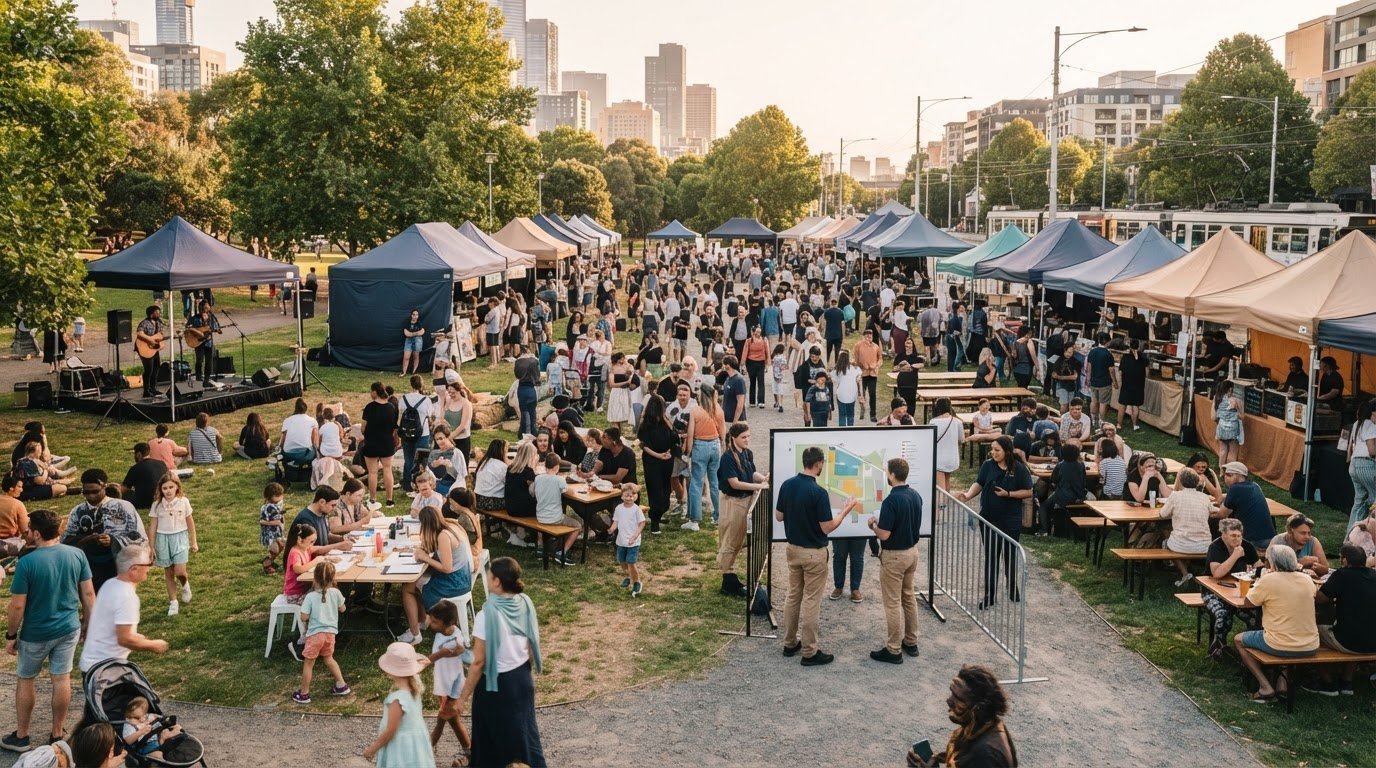
For events involving vendors or public stalls, include relevant income, such as stallholder fees or ticket sales, alongside site-related costs. Depending on the event, those costs might include access, equipment, signage, waste management or power. Listing them separately shows which parts of the plan depend on attendance, vendor participation or site requirements, rather than hiding them in one broad “event costs” figure.
This makes the budget useful to more than the person entering figures. Owners can weigh options, colleagues can see which assumptions need attention, and anyone coordinating suppliers can follow how decisions affect the event’s financial plan.
Build your event budget template: income, costs and spreadsheet columns
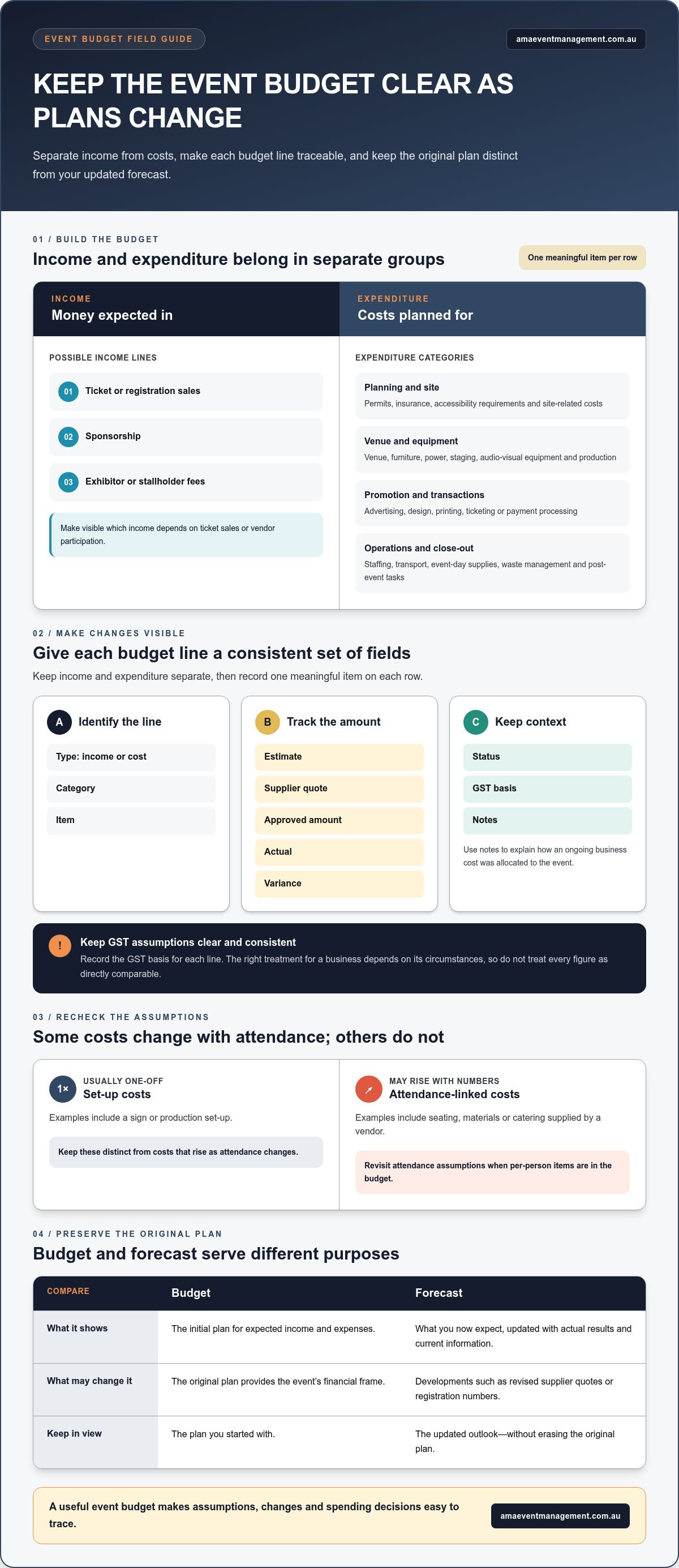
Set up the sheet so each amount has a clear purpose and status. Keep income separate from expenditure, then group costs by planning, venue, suppliers, promotion, operations and post-event close-out. Use one row for each meaningful item instead of combining unrelated costs. That makes it easier to see what is included, what has changed and where follow-up is needed.
Which income and expense categories belong in the template?
Choose categories that reflect how the event is funded and delivered. Income might include ticket or registration sales, sponsorship and exhibitor or stallholder fees, where relevant. For a market or public event, connect vendor-related income with the site requirements needed to deliver it. AMA’s community market management guide explores how vendor coordination and site planning fit together.
On the expenditure side, consider which of these apply to your event:
Planning and site: permits, insurance, accessibility requirements and any site-related costs.
Venue and equipment: venue expenses, furniture, power, staging, audio-visual equipment and production.
Promotion and transactions: advertising, design, printing, ticketing or payment-processing costs.
Operations and close-out: staffing, transport, event-day supplies, waste management and post-event tasks.
Separate one-off costs, such as a sign or production set-up, from costs that rise with attendance, such as seating, materials or catering supplied by a vendor. This shows which figures may need to be recalculated if expected numbers change.
How should a small business structure the spreadsheet?
Use a consistent set of columns for income and expenditure. Copy this event budget template for small business Australia layout into a spreadsheet and adapt it to your event:
Type (income or cost) | Category | Item | Estimate | Supplier quote | Approved amount | Actual | Variance | Status | GST basis | Notes
Enter one item per row, such as “audio equipment” rather than “production and equipment”. Record the supplier’s quoted amount separately from your estimate, then enter the approved amount once the spending decision is made. A status field can distinguish planned, quoted, approved, committed and paid items. Use notes for the quote date, attendance assumption, responsible person or reason for a change.
For GST, use a dedicated field or clearly state whether figures are GST-inclusive or GST-exclusive. Apply that assumption consistently, and flag any item that needs separate treatment rather than mixing unlike totals. The appropriate approach depends on your business’s circumstances, so use your accounting guidance when setting the method.
A well-structured sheet supports the coordination of vendors, budgets and delivery. AMA Event Management provides professional event coordination, including budget management, vendor procurement and on-site supervision. Find out more about professional event coordination.
Estimate event costs realistically and plan for changes
Early in planning, some figures will be firm and others will be working assumptions. Keep them visibly separate. An estimate helps shape the initial plan, but it isn’t a supplier’s confirmed price or an approved commitment. In your event budget template for small business Australia, record the basis for each figure so you can revisit it when new information arrives.
How do you estimate event costs before receiving final quotes?
Start with known requirements, then identify the items still being priced. Use current supplier quotes where available and note their date, what the quoted scope includes and any expiry. If a quote excludes delivery, set-up or equipment, record that exclusion instead of assuming it’s covered. For items without a quote, write down how you estimated the amount and what needs to happen before it can be confirmed.
Flag costs that can change with attendance, venue access, event duration or production choices. For example, a longer event may affect staffing or equipment needs, while restricted site access may change delivery or set-up arrangements. Use these as prompts to check assumptions, not as reasons to add an arbitrary amount.
How to read each budget stage
Estimate: A planning figure based on the information currently available.
Confirmed quote: A supplier’s quoted amount for a stated scope, recorded with its date and any exclusions.
Approved commitment: The amount accepted for spending after the business has made its decision.
Actual spend: The amount incurred or paid, recorded against the relevant item.
For instance, a seating line might begin as an estimate based on expected attendance. Once the supplier provides a quote, record its scope and date. After approval, enter the authorised amount. During or after delivery, capture the actual spend. Comparing these stages shows where a change occurred without losing the original planning basis.
Attendance is a key assumption for per-person items. If your expected numbers change, review costs such as catering supplied by a vendor, seating, name badges or workshop materials. Keep the assumed quantity beside the estimate, so you can tell whether a revised total comes from a changed quantity or a different supplier price.
How should you allow for uncertainty without guessing?
A contingency is a deliberate planning allowance for uncertainty, not a substitute for estimating known costs. Add a clearly labelled line and describe what it may cover, such as a defined operational adjustment. Set its size according to the event’s uncertainties and your business’s risk tolerance. There’s no single amount that suits every event, and the allowance shouldn’t conceal costs you can identify and price.
Review the line as plans become clearer. A corporate gala may involve a different mix of suppliers and production decisions from a compact workshop. AMA’s corporate gala planning guide provides a related example of a more involved event context.
Track actual spending, GST assumptions and event budget changes
A useful budget keeps the original plan visible while showing what the event is now expected to cost. Budget variance is the difference between planned spending and actual spending for the same item or period. Tracking it helps you identify whether a gap comes from a changed decision, a revised supplier amount or an assumption that no longer holds.
Use a consistent review process whenever new information comes in:
Update actuals: Record costs from invoices, receipts or payment records against the matching budget line.
Compare with approved amounts: Check actual spending and outstanding commitments against what was authorised.
Explain variances: Add a short note describing the cause, such as a change in scope or quantity.
Revise the forecast: Update what you expect the event to cost overall, while retaining the approved amount and original estimate for comparison.
Don’t overwrite earlier figures when plans change. Keeping the estimate, approved amount and actual side by side creates a traceable record of how the budget developed. This is especially useful when the person updating the sheet isn’t the person who approved the spend.
How often should you update an event budget?
Review figures at meaningful decision points, such as when a supplier quote arrives, a commitment is approved or an attendance assumption changes. Set planning milestones for a broader review, and update actual costs promptly as invoices or payments are recorded. If a change could materially affect the event’s financial position, raise it through your business’s approval process before treating the revised amount as approved.
How should you handle GST in an Australian event budget?
Make the GST basis clear for each figure, or state a consistent inclusive or exclusive assumption for the sheet. Don’t assume one treatment applies to every business or transaction. Registration status and individual circumstances can affect how GST is handled, so check current Australian Taxation Office guidance or seek advice from your tax adviser before settling the approach.
Revisit the budget whenever a supplier quote changes, attendance expectations shift or an event decision alters the scope. A revised participant count may affect several related line items, while a production change could alter supplier commitments and the forecast. Add the date and reason for each update so the team can distinguish new information from an unexplained adjustment.
An event budget template for small business Australia works best when it records both the numbers and the decisions behind them. AMA Event Management provides event budget management and coordination, helping bring vendor commitments, budget changes and delivery into one plan. Explore event budget management and coordination.
Turn the event budget into a clear plan for delivery
A budget becomes useful on event day when it guides decisions, not just records figures. Before moving into delivery, make the approved spending plan clear to the people responsible for putting it into action. The event budget template for small business Australia should now connect financial decisions with owners, supplier commitments and a process for handling changes.
When does an event budget signal a need for extra coordination?
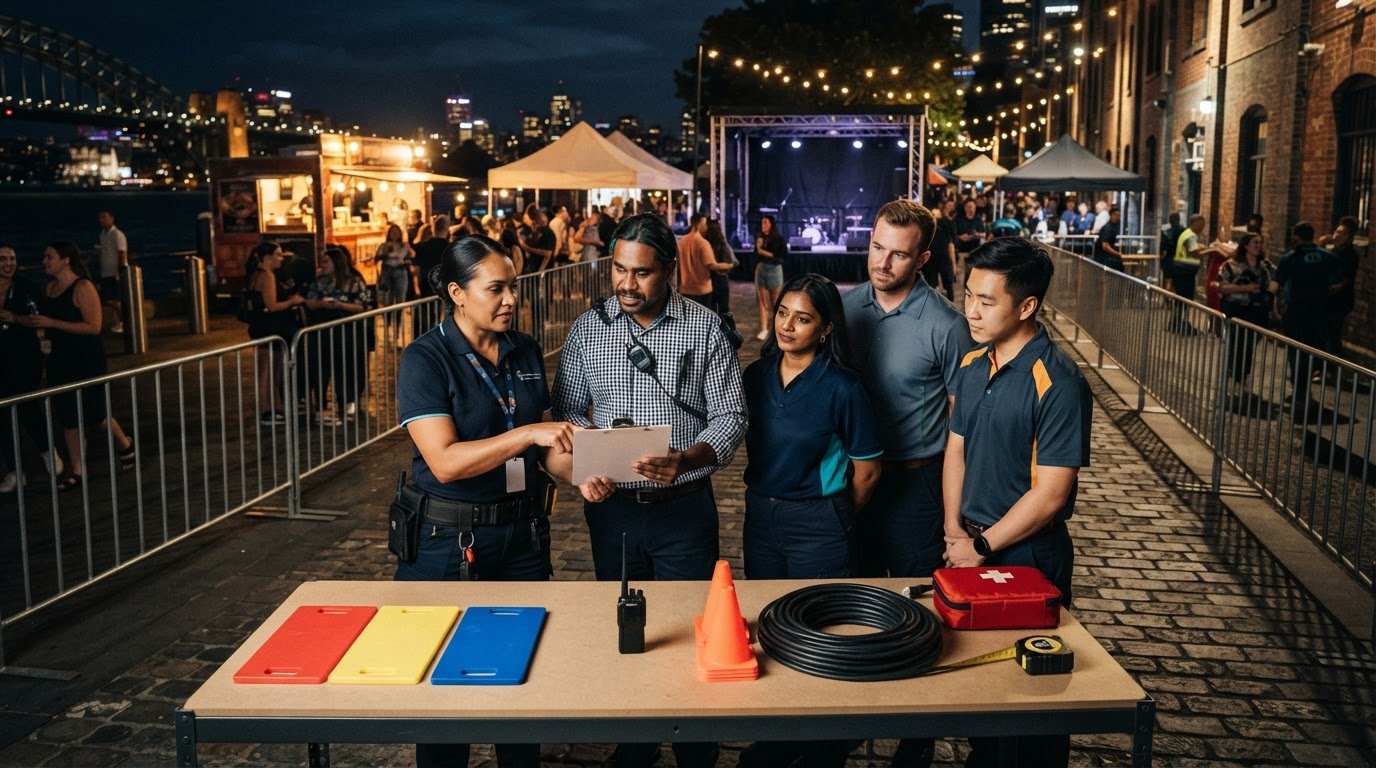
One supplier and a straightforward site may be manageable within a small team’s usual workload. Pressure can build when suppliers rely on one another, site access or set-up is complex, or decisions need to be made quickly on the day. These are practical signs to assess your team’s capacity, not a rule that every small business needs an event manager.
For example, a change to the event layout could affect equipment, access, staffing and timing at once. If team members are already balancing day-to-day responsibilities, tracking those dependencies alongside budget approvals can become difficult. Professional coordination brings budget management, vendor procurement and on-site supervision into a structured delivery plan, helping your internal team focus on its other responsibilities.
What should you prepare before moving into event delivery?
Bring the budget and delivery plan together in a short pre-event check. Confirm the event’s purpose and audience, the approved total and which supplier commitments are in place. Then identify what remains undecided, who owns each action and when estimates or assumptions will be reviewed. A named owner and review point help prevent open questions from disappearing into a spreadsheet.
Purpose and audience: State what the event needs to achieve and who it is designed for.
Approved budget: Summarise the authorised total and note any relevant GST assumptions.
Confirmed commitments: Identify approved supplier arrangements and the person managing each one.
Open items: Record unresolved estimates, decisions, responsible owners and review dates.
Change process: Set out how proposed changes are raised, approved and reflected in the budget.
Keep this check accessible to the people making decisions and coordinating delivery. If a change is proposed on the day, the team should know who can approve it and how to record the decision, rather than relying on an informal verbal update that may be missed later.
A clear event plan doesn’t require unnecessary process. It gives your team enough structure to make decisions consistently, keep commitments visible and respond calmly when the plan shifts. For small teams managing multiple vendors or involved site logistics, AMA Event Management’s planning and coordination support brings budget, procurement and event-day logistics together. Explore the support available and see how it fits your event.
Put your event plan into motion
Use the budget as a decision-making tool, not just a record of spending. As planning progresses, keep it connected to the people, suppliers and practical choices that will shape delivery. That’s how an event budget template for small business Australia can support confident decisions while leaving room to respond thoughtfully when plans shift.
If coordinating supplier commitments, financial oversight and event-day delivery is stretching your team, AMA Event Management provides professional event support, including budget management, vendor procurement and on-site supervision. The business is guided by founder Amanda, who has more than 20 years of industry experience.
Frequently Asked Questions
What should an event budget template include for a small business?
Include enough detail to show how each income or expense figure was formed and who is responsible for it. Alongside financial columns, add the event name, planning owner, last-updated date and a short assumptions area. For example, note whether projected registrations rely on a particular audience size or promotion plan. This context helps another team member understand and review the figures without relying on informal explanations.
How do I create an event budget in Excel or Google Sheets?
Start with separate tabs for income, expenditure and a summary, or use clearly separated sections on one sheet. Add a row for each budget item, then use spreadsheet formulas to total each category and compare actual spend with approved amounts. A variance formula can subtract the approved amount from the actual. Keep formulas consistent, protect cells containing calculations and save dated versions before substantial changes.
Should an Australian small business include GST in an event budget?
Yes, the budget should make its GST basis clear, but whether figures should be inclusive or exclusive depends on the business and transaction. Record the supplier invoice’s GST details and use a consistent method for comparing costs. Don’t assume every event expense receives identical GST treatment or that your business can claim an amount. Refer to current Australian Taxation Office guidance or your tax adviser for your circumstances.
How much contingency should I allow in an event budget?
There isn’t one contingency amount that suits every event. Decide what uncertainty the allowance is meant to cover, then consider how exposed the event is to changes and how much risk the business can absorb. For example, identify whether it is intended for a site adjustment or an unexpected operational need. Set a clear approval rule for using it, and don’t use contingency to disguise known, unpriced items.
What is the difference between an event budget and an event forecast?
The budget is the agreed reference plan; the forecast is your current view of the likely final result. Keep the approved plan intact, then update the forecast as attendance, supplier commitments or decisions change. This lets you explain both what the business authorised and what the event now appears likely to cost or earn. For example, a forecast can account for lower registrations without rewriting the original target.
How do I track actual event costs against my budget?
Match each invoice or receipt to the relevant budget line and record the transaction date, supplier and amount. Note whether a cost is paid, invoiced or committed but still awaiting an invoice, so the forecast doesn’t omit an obligation. Keep a reference to supporting documents in the sheet or file system. At close-out, reconcile the recorded figures with business records and explain material differences for future planning.
Can I use the same event budget template for different types of events?
Yes, keep the core structure consistent and tailor the categories and assumptions for each event. A community market in Sydney may need stallholder income and site-operation lines, while a Melbourne client workshop may focus on registrations, materials and room requirements. Use a fresh copy for each event, remove irrelevant rows and review assumptions rather than carrying figures forward automatically. This preserves useful comparisons without treating different events as identical.

Comments