

Event Management Agency Pricing Australia: The 2026 Guide to Fee Structures and Value
What if the management fee on your next event proposal isn't actually an expense, but your most effective insurance policy against a 20 per cent budget blowout? For many project leads, deciphering event management agency pricing Australia wide feels like a high-stakes exercise in guesswork. You're likely facing internal pressure to deliver a flawless execution while juggling the fear of hidden costs that only appear once the contract is signed. It's difficult to compare quotes when every agency seems to speak a different financial language, leaving you unsure if you're truly comparing apples to apples.
We believe that financial clarity is the foundation of a successful partnership. This guide provides a transparent framework for understanding how Australian agencies structure their fees for corporate and community projects in 2026. You'll discover realistic benchmarks for different event scales and learn how to identify the value that mitigates long-term financial risk. We'll break down the common pricing models and show you how to secure a partner who prioritises budget integrity as much as creative excellence.
Table of Contents
Decoding Event Management Agency Pricing in Australia
Understanding the financial structure of a complex project is the first step toward a successful outcome. Professional event management agency pricing Australia wide is rarely presented as a single, arbitrary figure. Instead, it's a composite of three distinct layers designed to provide transparency and ensure every dollar is accounted for. An Event management overview reveals that the profession involves far more than simple booking tasks; it encompasses the strategic oversight of a project's entire lifecycle. When pricing is structured correctly, it acts as a roadmap for the event's execution.
The Three Components of a Professional Quote
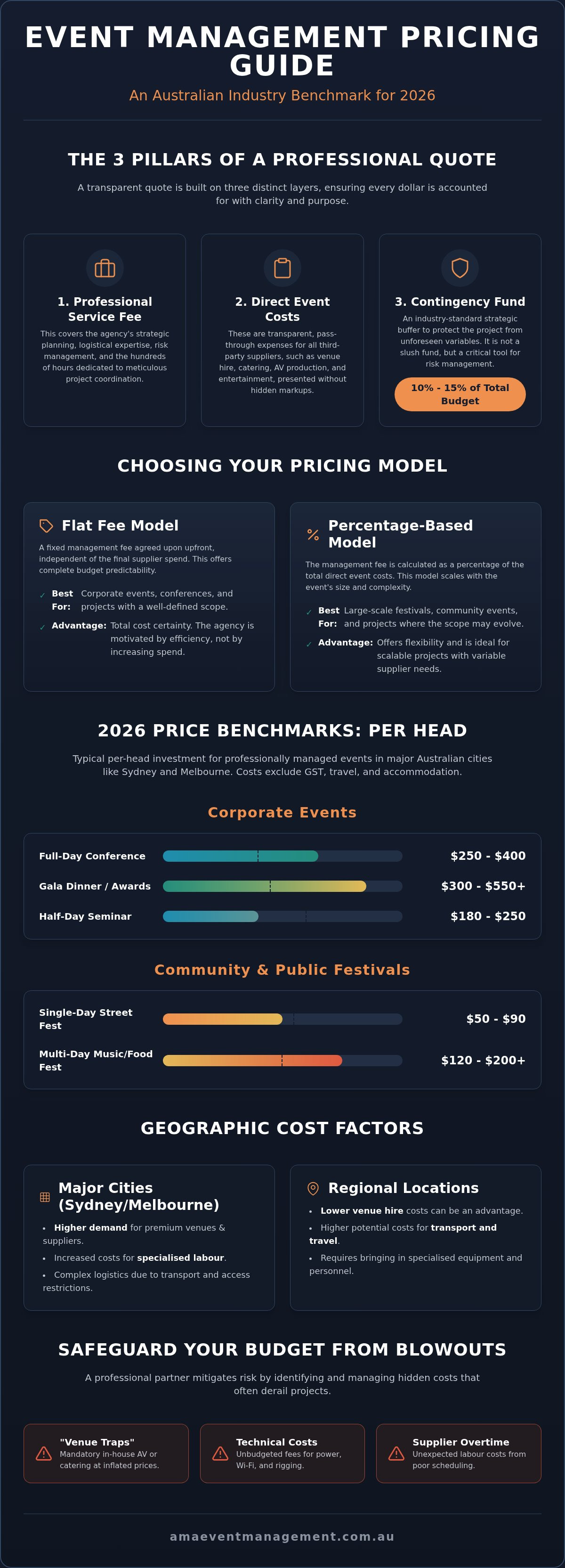
A disciplined agency quote is built upon three pillars. The first is the professional service fee. This represents the investment in the agency’s brainpower, logistical expertise, and the hundreds of hours required for meticulous planning. It's the cost of having a seasoned expert manage the moving parts so you don't have to. The second pillar consists of direct event costs. These are pass-through expenses for items such as catering, AV production, and venue hire. A transparent partner will itemise these clearly, ensuring you see exactly where the budget is allocated without hidden markups.
The third pillar is the contingency fund. In the Australian market, a 10 to 15 per cent contingency is the industry standard for responsible risk management. This isn't a "slush fund" for extra features. It's a strategic buffer that protects your project from unforeseen variables, such as sudden equipment failures or weather-related logistical shifts. Establishing this fund at the outset provides a sense of security and prevents the stress of last-minute budget requests.
Regional Price Variations: Sydney vs Melbourne vs Regional NSW
Geography plays a significant role in how budgets are formed across the country. In major hubs like Sydney and Melbourne, higher demand for premium venues and specialized labour often increases the baseline cost of production. Logistics in these cities require a sophisticated understanding of transport windows and strict venue access times. Conversely, when working with community festival organisers in Australia for regional projects in places like Penrith or regional Queensland, the challenges shift.
Regional events often involve lower venue hire costs but higher transport and travel fees for specialised equipment and personnel. These expenses must be transparently itemised to avoid surprises. A methodical approach ensures that whether your event is in a CBD ballroom or a regional park, the pricing reflects the specific logistical realities of that location. Precision is not accidental. It's the result of a disciplined process that values order and predictability over guesswork.
In the 2026 market, the focus has shifted from "lowest cost" to "highest value." Professional fees are an investment in risk mitigation. By engaging a partner who acts as a meticulous architect for your event, you're not just buying a service; you're securing the integrity of your project. This approach ensures that every logistical detail is integrated seamlessly, allowing you to focus on your strategic goals with total confidence.
Common Fee Structures: Management Fees vs Project Coordination
Selecting the right billing model is a strategic decision that impacts both budget control and the depth of agency involvement. While event management agency pricing Australia wide can seem varied, most professional engagements fall into two primary categories: flat fees or percentage-based structures. Each has its own merits depending on the project's scale and the required level of logistical oversight. Understanding these differences allows you to choose a model that provides the greatest financial security for your specific project.
When to Choose a Flat Fee Model
For many corporate gala planners in Sydney, the flat management fee is the preferred choice. This model offers total predictability, as the fee is agreed upon at the start of the project regardless of the final spend on third-party suppliers. It ensures that the agency's primary focus remains on logistical precision rather than increasing the total budget to boost their own fee. This structure is particularly effective for large-scale conferences where the scope is well-defined from the outset. It covers end-to-end management, from the initial concept and vendor coordination to on-site supervision on the day of the event. It's a disciplined approach that suits organisations with fixed annual budgets.
The Reality of Percentage-Based Billing
In contrast, percentage-based fees are frequently utilised for themed brand activations in Sydney. In this model, the agency charges a set percentage, typically between 10 and 20 per cent, of the total event budget. This aligns the agency’s effort with the complexity of the project. As the scale of procurement and vendor management grows, so does the level of oversight required. While this model is flexible, it requires a high degree of trust. Professional agencies maintain transparency by disclosing all supplier quotes and ensuring that any rebates or commissions are passed back to the client. This prevents the "hidden markup" that can often plague less disciplined pricing structures.
Hourly rates are usually reserved for smaller, bespoke styling tasks or short-term consultancy where the total scope of work is difficult to define. For more complex projects, some clients prefer a hybrid model. This combines a lower base fee with performance-based incentives linked to specific KPIs, such as ticket sales or attendee satisfaction scores. This approach can be a powerful way to ensure both parties are fully invested in the event's measurable success. While corporate budgets operate on a different scale, looking at the average Australian wedding cost can provide a useful baseline for understanding how individual service components are priced in the current market. However, for a corporate or community project, the focus shifts from personal preference to strategic ROI and risk mitigation. If you're currently weighing up which model best suits your upcoming project, consulting with an experienced project lead can help clarify the most efficient path forward.
2026 Price Benchmarks for Corporate and Community Events
Establishing a realistic budget requires more than just a cursory glance at previous years' spreadsheets. In the 2026 Australian market, per-head metrics remain a useful starting point for corporate gatherings, yet they only tell part of the story. Professional event management agency pricing Australia wide is influenced heavily by the specific demands of the sector, whether you are hosting a private gala in a Sydney ballroom or a sprawling community market in a regional centre. Having a clear understanding of these benchmarks allows you to set expectations that align with the current economic reality of the events industry.
Corporate Event Benchmarks (Sydney & Melbourne)
For corporate gatherings in major hubs, the scale of the event dictates the primary budget range. Small-scale corporate events for up to 150 people typically require an investment between $10,000 and $40,000. These projects usually focus on high-quality catering and essential AV. Mid-scale events, catering to 150 to 500 guests, often sit within the $40,000 to $120,000 bracket. At this level, the complexity of attendee management and venue logistics increases significantly.
Large-scale conferences or immersive galas exceeding 500 people frequently demand budgets from $120,000 to $300,000 and beyond. Multi-day expos add another layer of cost, as you must factor in complex transport logistics, accommodation blocks, and prolonged site management. For these high-stakes projects, the management fee reflects the intense oversight required to ensure every moving part integrates seamlessly without a single point of failure.
Community and Public Event Costs
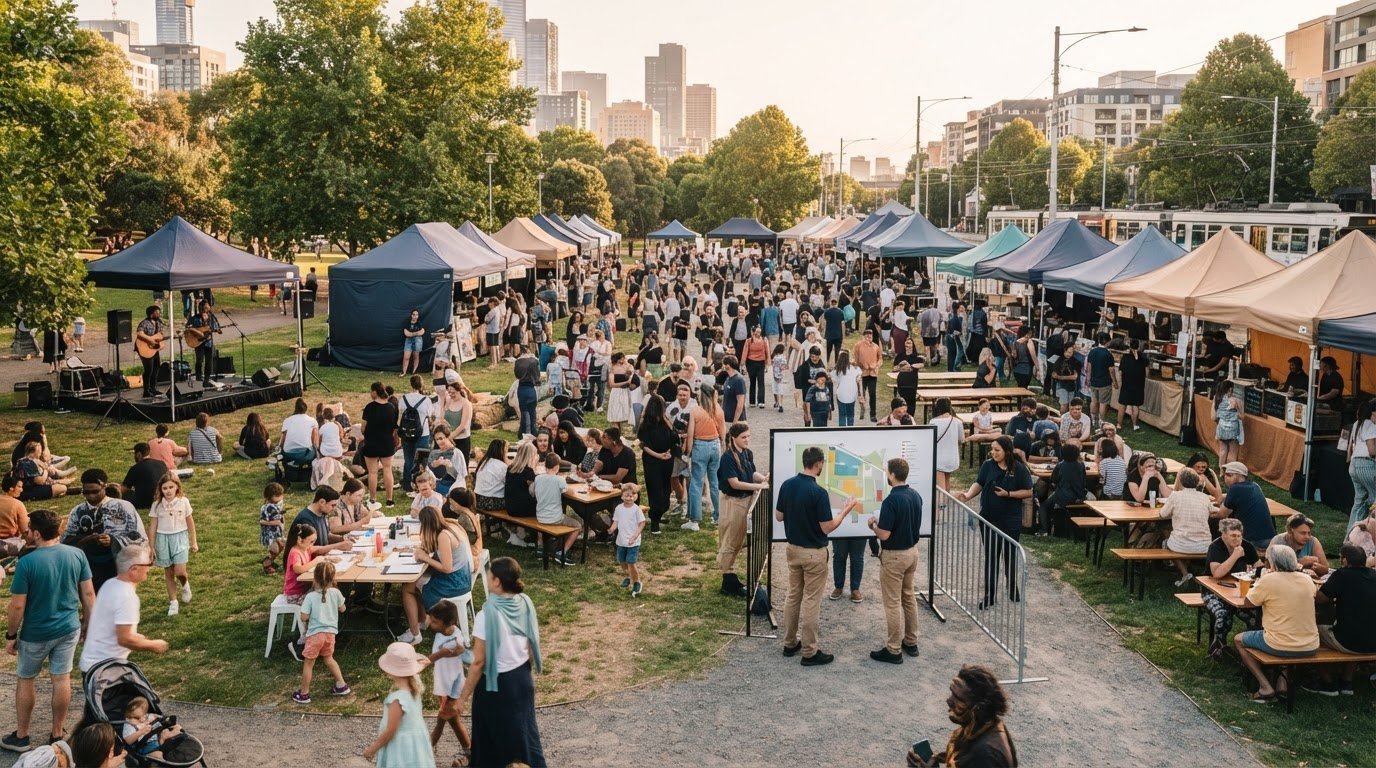
The financial framework used by community festival organisers in Australia differs from the corporate sector. These events often prioritise public engagement and site safety over individual guest amenities. Management fees for council-led festivals or local celebrations are often structured around a flat project fee that covers the extensive pre-event planning and on-site coordination required for public spaces.
When it comes to community market management in Australia, pricing is often linked to the scale of stallholder coordination and recurring frequency. Unlike a one-off conference, markets require ongoing vendor management and significant investment in site infrastructure. You must account for waste management, temporary power, and stringent public safety compliance. These costs are non-negotiable and essential for mitigating the legal and physical risks associated with public gatherings.
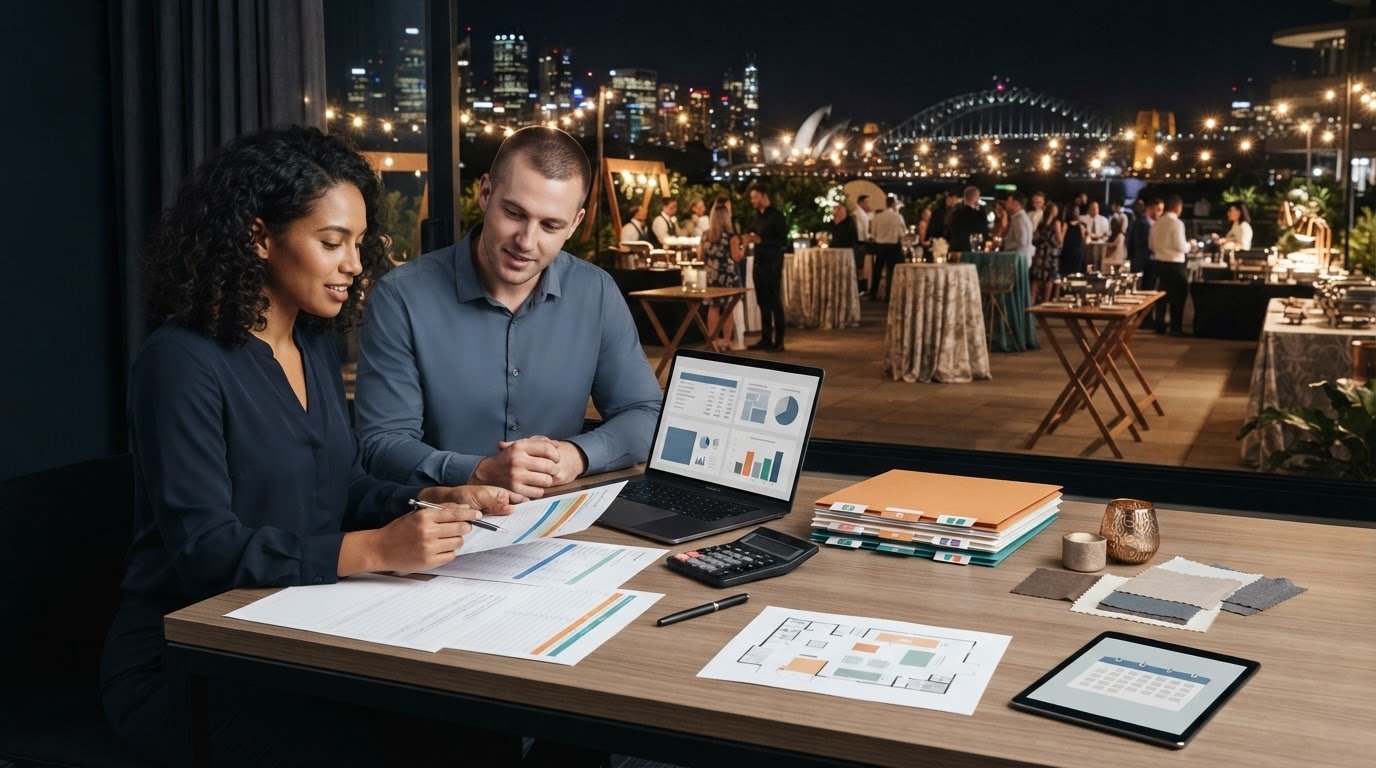
Bespoke private celebrations or high-concept brand activations often defy standard per-head metrics. If your project involves custom-built sets or immersive technology, the cost is driven by the complexity of the design and the labour required for the "build" rather than the guest count. In these instances, a detailed, itemised quote from a meticulous manager is the only way to ensure your vision is delivered within a controlled financial environment.
Beyond the Quote: Identifying Hidden Costs and Value-Adds
The initial proposal for a project is frequently just the starting point. While event management agency pricing Australia wide usually covers the obvious line items, the real complexity lies in the fine print of third-party contracts. A disciplined manager looks beyond the surface to identify "venue traps" that can derail a budget if left unchecked. These often include service charges, restrictive bump-in windows, and escalating minimum spends that aren't transparently disclosed during the initial site visit.
Uncovering Hidden Venue and Catering Expenses
Choosing between "dry hire" and "all-inclusive" packages requires a methodical evaluation of total value. An all-inclusive price might seem convenient, but it often hides high markups on catering and basic equipment. Conversely, dry hire offers greater control but necessitates a sophisticated understanding of logistics to manage separate vendors. You must also account for the Australian event calendar's seasonal surcharges. High-demand periods in Sydney and Melbourne can see venue costs spike significantly.
Labour rates represent another significant variable. Australian penalty rates for weekends and public holidays are a reality that must be factored into the original quote. A professional manager ensures these are itemised early, preventing the stress of unexpected overtime charges on the day of the event. Meticulous scheduling of bump-in and bump-out times is the most effective way to avoid these additional costs.
The Agency Value-Add: Procurement and Negotiation
The true value of an agency is often found in what they save you, not just what they charge. With over 20 years of experience, AMA Event Management leverages established supplier networks across NSW and Queensland to secure rates that are typically 10 to 15 per cent lower than market averages. We act as a protective barrier, ensuring you aren't paying a premium for "in-house" AV services that may not offer the best technical value for your specific needs.
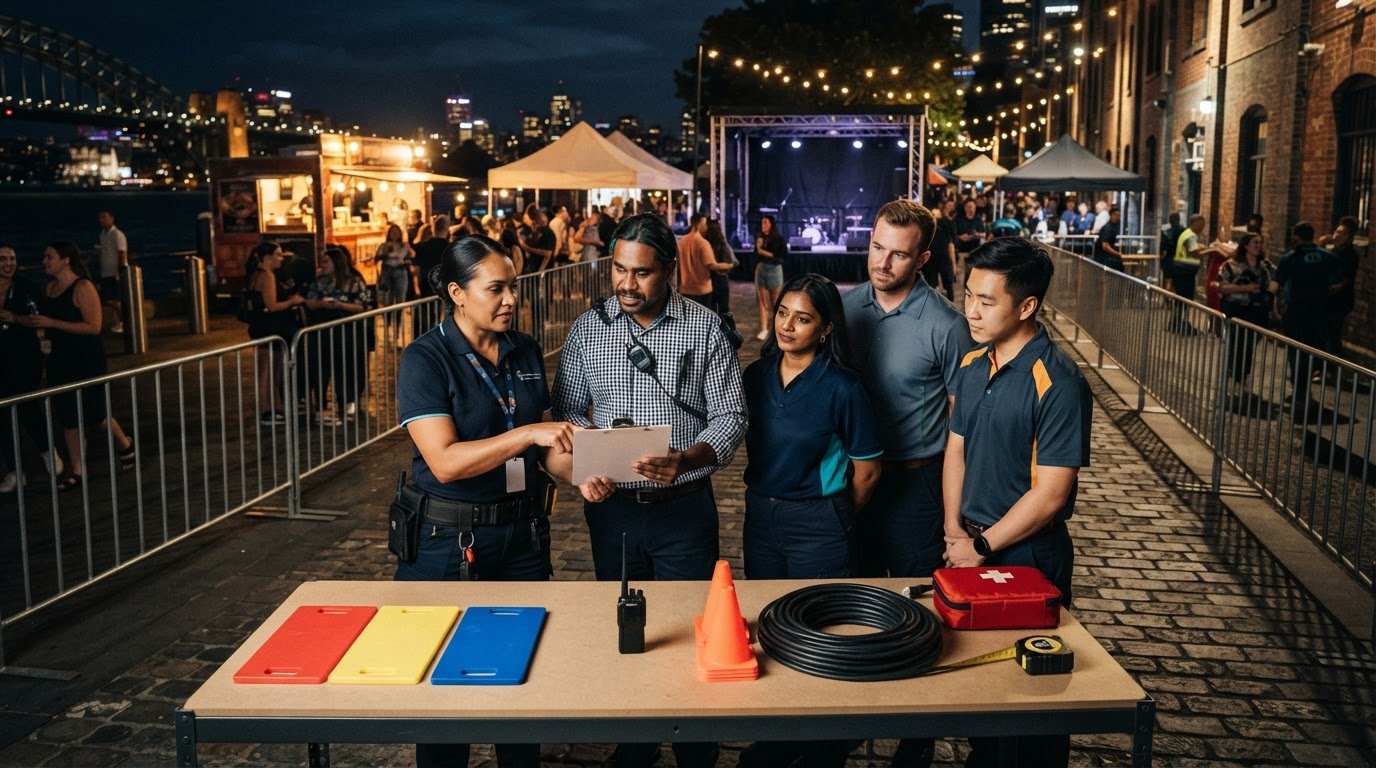
Risk mitigation is another essential value-add. This includes managing the costs of specialised insurance, council permits, and strict WHS compliance. A professional bespoke private event planner in Sydney acts as a stabilising force, ensuring these critical safety measures are handled with precision. To see how a professional audit can safeguard your next project, you can request a detailed budget review from our senior project team.
Why a Partnership with AMA Event Management Secures Your Investment
Selecting a partner for your project involves more than a simple comparison of line items on a spreadsheet. When evaluating event management agency pricing Australia wide, the most critical factor is the agency's ability to act as a stabilising force in high-pressure environments. At AMA Event Management, we view your budget as a structural foundation that must be protected through disciplined oversight. Our role is to ensure that the creative vision for your project is delivered without the financial friction that often accompanies complex logistics. We provide the professional anchor your organisation needs to navigate the complexities of the 2026 event landscape.
With over 20 years of experience managing everything from high-end corporate galas to sprawling community festivals, we've refined a process that prioritises order and predictability. We understand the nuances of the Australian market, from the strict compliance requirements of Sydney venues to the logistical challenges of regional Queensland. This seasoned perspective allows us to anticipate challenges before they impact your bottom line. It's a level of expertise that provides the relief of knowing your project is in the hands of a meticulous architect who is always several steps ahead.
Our Methodical Project Management Process
We begin every engagement with a rigorous feasibility study and budget architecture phase. This ensures that the financial parameters are realistic and grounded from day one. We define the project's scope, identify potential risks, and establish a clear timeline for execution. Following this, we move into strict vendor procurement. We leverage our established supplier network to ensure every dollar spent delivers maximum impact, avoiding the unnecessary markups often found with in-house venue services.
Our on-site supervision follows a "calm under pressure" philosophy. We manage the moving parts of the event day with quiet authority, ensuring that the integration of catering, AV, and guest flow is seamless. This methodical approach extends from Sydney to Brisbane, providing a consistent standard of excellence regardless of the location. We believe that transparency is the cornerstone of a successful partnership, which is why we remain committed to clear, itemised billing and honest communication throughout the project lifecycle.
Ready to Organise Your Next Event?
Whether you are planning a corporate conference or a large-scale community festival, your investment deserves the protection of a meticulous manager. Our proven track record with complex projects, such as the Aussie Night Markets, demonstrates our ability to handle high-volume vendor coordination and public safety compliance at scale. We invite you to a strategy session to discuss your 2026 project requirements and how we can provide a structured, transparent path to success.
Request a tailored event management proposal from AMA and discover the value of a partnership built on transparency, reliability, and logistical excellence. Let us help you deliver an extraordinary experience that remains firmly within your financial objectives.
Securing Financial Integrity for Your 2026 Project
Evaluating event management agency pricing Australia wide doesn't have to be a process defined by uncertainty. By understanding the three pillars of event costs and selecting a fee structure that aligns with your specific goals, you can transform your budget from a source of stress into a strategic asset. We've explored how professional oversight identifies hidden venue traps and how established supplier networks provide a level of procurement value that far exceeds the initial management fee.
With over 20 years of industry leading experience across Sydney, Melbourne, and Brisbane, AMA Event Management acts as the stabilising force your project requires. Our proven track record with large scale community festivals and complex night markets ensures that we possess the logistical precision to manage even the most demanding requirements. It's our commitment to transparency and methodical execution that allows our partners to focus on their guests with complete peace of mind.
Secure your 2026 event budget with a professional consultation. We look forward to helping you deliver a seamless and successful event that meets every one of your financial and creative benchmarks.
Frequently Asked Questions
What is the average management fee for an event agency in Australia?
The structure of event management agency pricing Australia wide generally follows a flat fee or a percentage of the total spend. For mid-to-large projects, management fees typically sit between 10 and 20 per cent of the total investment. Hourly rates for event marketing agencies in 2026 often range from $100 to $149 per hour. These fees cover the strategic planning, logistical oversight, and the hundreds of hours required for execution.
Do event management agencies charge a commission on top of supplier costs?
Professional agencies typically operate with a transparent pass-through model where supplier costs are billed at the negotiated rate. While some agencies may include a small markup for procurement handling, a disciplined partner will disclose any rebates or commissions received from vendors. It's essential to confirm these billing details during the initial proposal phase to ensure your budget remains itemised and free from hidden charges.
How can I avoid budget blowouts for my corporate event in 2026?
Establishing a 10 to 15 per cent contingency fund from the outset is the most effective way to safeguard your budget against unforeseen variables. Meticulous site management and early vendor procurement also prevent the common "23 per cent blowout" seen in self-managed events. By engaging an agency that acts as a stabilising force, you ensure that every logistical detail is accounted for before the contract is signed.
Is it cheaper to manage an event in-house or hire an agency?
Managing a project in-house may avoid a management fee, but it often results in higher overall costs due to a lack of procurement leverage. Professional agencies often save their clients between 10 and 15 per cent on third-party procurement through established supplier networks. When you factor in the internal staff hours required for complex logistics, hiring an agency is frequently the more cost-effective and lower-risk investment.
What hidden costs should I look for in a Sydney venue quote?
Carefully review venue proposals for service charges, loading dock fees, and strict bump-in or bump-out windows that can trigger overtime labour rates. Sydney venues often have complex access requirements that require specialised technicians or safety officers. You should also verify if the "in-house" AV and catering costs are mandatory, as these can sometimes be significantly higher than market rates for similar quality services.
How do agencies charge for community market or festival management?
Agencies managing community festivals or markets usually charge a flat project fee or a management fee per market day. This structure provides cost certainty for councils and community groups. It covers the complex requirements of vendor coordination, site infrastructure, and public safety compliance. Unlike corporate events, the fee reflects the high volume of individual stakeholders and the intensive on-site management required for public gatherings.
Does AMA Event Management provide services in Melbourne and Brisbane?
Yes, AMA Event Management operates extensively across New South Wales, Victoria, and Queensland. We have over 20 years of experience managing the specific logistical demands of Sydney, Melbourne, and Brisbane. Our established supplier networks across these regions allow us to maintain high standards of execution while mitigating the transport and travel costs often associated with interstate event management.
What is the standard contingency percentage for an Australian event budget?
A 10 to 15 per cent contingency is the recognised industry standard for a responsible Australian event budget. This buffer is not intended for scope creep or additional features. It acts as a protective layer for your event management agency pricing Australia, covering genuine emergencies such as weather-related shifts, technical failures, or sudden regulatory changes. Maintaining this fund ensures you remain unfazed by challenges during the high-pressure execution phase.
Comments