

Event Planning for Non-Event Managers: A Practical Guide
Updated: Oct 11
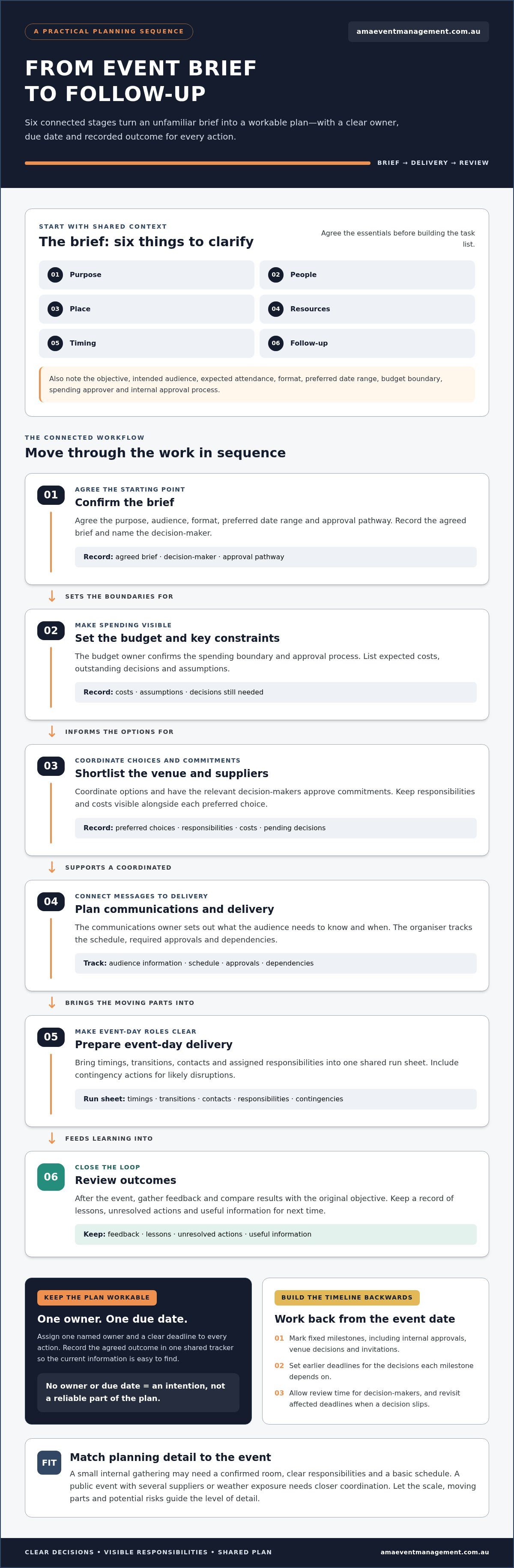
What if an event brief didn’t have to become a tangle of competing deadlines and decisions? If event management isn’t your role, it’s understandable to feel unsure about the budget, suppliers, approvals and details that could disrupt the day. Event planning for non-event managers becomes more manageable when you break the work into clear decisions and assign each one an owner.
This guide takes you from an unfamiliar brief to a practical plan. You’ll learn how to define the event’s purpose and audience, build a workable budget, coordinate suppliers and approvals, and track deadlines, responsibilities and risks. It also covers how to prepare a useful run sheet, decide what your team can manage internally and recognise when additional planning or on-site support could help. The aim is a calm, workable sequence from the first brief to event day, so you can keep the moving parts in view and make decisions with confidence.
Table of Contents
Event Planning: Define the Brief Before the To-Do List
Before building a task list, decide what the event needs to achieve. Event planning coordinates purpose, people, place, resources, timing and follow-up. The Event management overview describes it as applying project management to events. In practice, that means making clear decisions and keeping them organised, not learning specialist terminology or finding a perfect template.
A useful event brief clarifies purpose, people, place, resources, timing and follow-up. These six elements give your team a shared starting point and help determine how much planning is appropriate. A small internal gathering and a public community event have different audiences, logistics and risks.
For example, a team meeting might need a room, a confirmed agenda, basic refreshments and someone to capture actions. A public community event may involve more attendees, multiple suppliers, a programme and coordination across the site. The objective and expected attendance shape the format, resources and responsibilities in each case.
What should an event brief include?
Keep the first version concise. State the objective and what would make the event worthwhile, such as sharing a decision with staff or bringing local people together. Describe the intended audience, expected attendance, format and preferred date range. These details help narrow venue and timing decisions before you start booking or promoting.
Include the budget boundary, who can approve spending and the internal approval process. If a decision needs sign-off, name the decision-maker and note when approval is needed. This prevents work proceeding on assumptions that may have to be revisited. For event planning for non-event managers, the brief is a practical reference when new requests or questions arise.
How do you keep event planning manageable alongside your day job?
Make ownership explicit. Separate decisions that only the organiser or an authorised decision-maker can make, such as the event objective or budget, from tasks colleagues can own, such as gathering attendee numbers or reviewing draft materials. Delegation works best when each task has one named owner, a clear deadline and an agreed outcome.
Use one shared tracker for actions, owners, deadlines and decision status. A spreadsheet is enough if everyone knows where the current information lives. Set a regular check-in to review progress, resolve pending decisions and flag delays early. This makes small snags visible while there’s still room to adjust the plan.
Step-by-Step Event Planning: From Brief to Follow-Up
Once the brief is clear, move through the work in sequence. For event planning for non-event managers, a step-by-step workflow makes it easier to see what needs a decision, who will make it and what the team needs to record next. Assign one owner and a due date to every action. A task without an owner or due date is an intention, not a reliable part of the plan.
What are the main stages of an event plan?
Use these stages as a working checklist. The organiser coordinates progress, while approvals and specialist tasks remain with the people responsible for them.
Confirm the brief. Agree on the purpose, audience, format, preferred date range and approval pathway. Record the agreed brief and name the decision-maker.
Set the budget and key constraints. The budget owner confirms the spending boundary and approval process. Record expected costs, outstanding decisions and assumptions. UC San Diego’s guide to mastering your event budget offers further perspective on aligning spending with event goals.
Shortlist the venue and suppliers. Coordinate options and have the relevant decision-makers approve commitments. Record preferred choices, responsibilities, costs and outstanding decisions.
Plan communications and delivery. The communications owner sets out what the audience needs to know and when. The organiser tracks the schedule, required approvals and dependencies.
Prepare event-day delivery. Bring timings, transitions, contacts and assigned responsibilities into a shared run sheet. Include contingency actions for likely disruptions.
Review outcomes. After the event, gather feedback and compare results with the original objective. Record lessons, unresolved actions and useful information for next time.
How should you organise an event planning timeline?
Start with the event date, then mark fixed milestones such as internal approvals, venue decisions and invitations. Work backwards to set deadlines for the decisions each milestone depends on. Allow time for decision-makers to review options, not just time to complete the task.
Make dependencies visible. Invitations may rely on an approved date and venue, while supplier arrangements may depend on the final format. If an earlier decision slips, review the deadlines it affects instead of letting the delay pass unnoticed. A regular planning check-in can surface pressure points and assign the next action.
For a complex event or a team with limited capacity, event planning and delivery support can help coordinate logistics, suppliers and on-site responsibilities.
How to manage event budget, suppliers and risks without specialist experience
Not every event needs an elaborate plan. Match the detail to the event’s scale, moving parts and potential risks. A small internal gathering may need a confirmed room, clear responsibilities and a basic schedule. A public event with several suppliers or weather exposure needs closer coordination. In event planning for non-event managers, the aim is to make proportionate decisions, not create paperwork for its own sake.
Use this simple comparison to decide where to focus:
Essential: Include what’s needed to deliver the event’s purpose, such as a suitable venue, agreed programme and clearly assigned responsibilities.
Useful: Add elements that improve delivery or the attendee experience, such as extra signage or additional communications, when budget and capacity allow.
Optional: Defer enhancements that don’t materially support the objective, especially if they add cost or coordination without a clear benefit.
How can a non-event manager keep an event budget under control?
List cost categories before requesting or comparing supplier proposals. Depending on the event, these might include venue, equipment, staffing, communications and supplier services. Comparing the same categories makes it easier to see what each proposal covers and where costs differ.
Keep a live budget record showing the approved budget, committed spend, forecast total, remaining funds and a separate contingency allowance. Record who can approve spending and how changes to the event scope must be authorised. When a requirement changes, update the forecast and remaining funds before confirming it. This makes trade-offs visible and helps prevent unapproved commitments.
How should you assess suppliers and plan for risk?
Compare suppliers against the same written scope. Clarify what each will deliver, the timing, who is responsible for each task and what output or handover you’ll receive. Record agreed changes in writing so expectations stay aligned as planning progresses.
Identify risks early, then assign each significant risk an owner and a practical response. Consider whether attendance could change, a supplier might be delayed, weather could affect an outdoor event, or attendees may have access needs. Make the response specific enough to guide action, such as naming who will communicate a change or what alternative arrangement the team will consider.
Australian requirements can vary with the event and its location. Check relevant venue, local council and state guidance, and verify applicable safety, accessibility, privacy and permit information for your event context. Avoid relying on assumptions or guidance intended for a different type of event. A clear budget, defined supplier deliverables and owned risk responses give you control without overcomplicating the plan.
How to prepare the run sheet and stay in control on event day
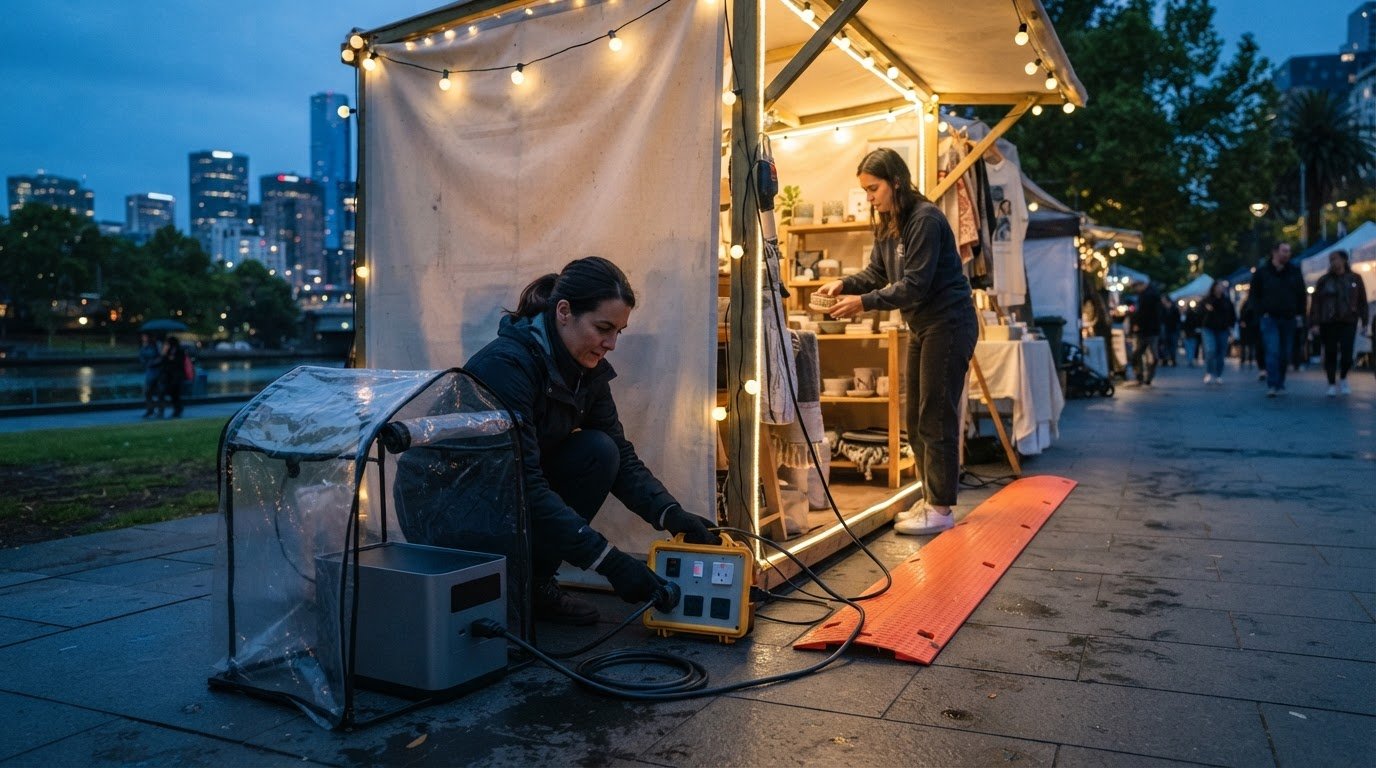
A run sheet is the shared timeline for event activities, transitions and the people responsible for each part. It turns the plan into clear actions, so staff, speakers, suppliers and venue contacts can see what happens next and where they need to be. For event planning for non-event managers, it’s a practical way to keep delivery orderly without relying on memory or a string of separate messages.
What belongs in an event run sheet?
Build the schedule around the full event-day sequence, not just the guest-facing programme. Include supplier arrival and access, setup, doors opening, activities and transitions, pack-down and departure. For each entry, record the timing, activity, location and owner. Add supplier arrival details, relevant contact information, access instructions and key handover points.
Keep the document readable and current. Use plain language, consistent time formatting and people’s names rather than vague labels such as “team”. Share the latest version with everyone who needs it, and make sure they know where to find updates. Brief each group on the details relevant to their role: speakers need their arrival time and programme slot; suppliers need access and setup information; venue contacts need timings and agreed arrangements.
Nominate one person to make operational decisions on the day. Set out an escalation route for issues they can’t resolve, such as a change requiring budget approval. This keeps instructions consistent and avoids conflicting decisions.
What should you check before guests arrive?
Bring the delivery team together for a short briefing. Confirm the current schedule, key contacts, communication method and escalation pathway. Revisit contingency actions, including who responds if a supplier is delayed or an activity needs to change. Clarify who can approve on-the-day adjustments, especially changes that affect timing, scope or spending.
Keep an eye on the next transition, not only the opening. If an activity runs late, the team should know who can decide whether to adjust the schedule and who needs to be informed. Keep the run sheet accessible to the operational lead and relevant team members, and update it when an approved change affects the plan.
If coordinating event-day logistics is stretching your team’s capacity, get support with event-day coordination.
Managing Events: When to Do It Yourself or Get Support
Not every event needs a professional manager. The right choice depends on how many decisions and workstreams need coordination, the event’s risk profile and your team’s capacity. A modest event can still be complex if it involves unfamiliar suppliers or several approvals, while a larger event may be manageable if the format is familiar and responsibilities are clear. In event planning for non-event managers, assess the workload rather than relying on guest numbers alone.
Which events can an internal team manage confidently?
Self-management may suit an event with a straightforward format, a familiar venue and clear internal ownership. Your team needs enough time to coordinate the work alongside regular responsibilities, and everyone should understand who approves decisions and who handles delivery.
Before committing to manage it internally, check that supplier scope, deadlines and event-day responsibilities are visible. If there’s a clear owner for each important task and a practical way to resolve issues, your team may be well placed to deliver the event. If key tasks have no owner, or the organiser is expected to make decisions without authority, address those gaps before the workload builds.
When can professional event management make planning easier?
Additional coordination capacity is useful when several suppliers, stakeholders or operational workstreams need to align and your team can’t provide consistent oversight. An event manager can take responsibility for planning, logistics, supplier coordination and on-site supervision, giving internal staff room to focus on their roles and priorities.
This support can suit different formats. A corporate conference may require coordination between programme, venue and suppliers, while a community festival may involve a range of site and vendor arrangements. AMA Event Management works across corporate conferences, community festivals, markets, themed activations and private celebrations. Founder Amanda brings over 20 years of industry experience to planning and delivery.
Use this simple test: if your team can name the owner, deadline and decision pathway for each major workstream, internal management may be workable. If responsibilities are unclear or coordination is stretching available capacity, bringing in support can help keep the plan moving.
If you’re weighing up support for an upcoming event, explore tailored event management support from AMA Event Management.
Turn your event brief into a plan you can deliver
Successful event planning for non-event managers starts with a clear brief, then moves through decisions in a practical order. Give every action an owner and deadline, keep the budget and risks visible, and use a shared run sheet to guide the team on event day. The level of planning should reflect the event’s complexity and your team’s capacity, not just its size.
You don’t have to manage every workstream alone. AMA Event Management supports planning, logistics, budget management, vendor coordination and on-site supervision for corporate, community, market, activation and private events. Founder Amanda brings over 20 years of industry experience to this work.
To discuss support for your event in Sydney or Melbourne, contact AMA Event Management about your event. With a clear plan and the right responsibilities in place, you can focus on what the event needs to achieve.
Frequently Asked Questions
How do you plan an event if you have never organised one before?
Start by clarifying the event’s purpose, audience, format, date range and budget boundary. Name the decision-maker, then give each planning action an owner and due date. Keep decisions, supplier commitments and risks in one shared tracker so you can see what’s settled and what needs attention. Event planning for non-event managers doesn’t require a perfect template; it needs a clear sequence and a way to follow up.
What are the first steps in planning an event?
First, agree on what the event needs to achieve and who it’s for. Estimate attendance, choose a suitable format and identify the preferred date range. Confirm the budget limit, who approves spending and how internal sign-off works before making commitments. These decisions create a basis for comparing venue and supplier options. For events in Sydney or Melbourne, include the location in early planning because local arrangements can affect your options and timeline.
How far in advance should you start planning an event?
Start as soon as the date, venue, approvals or suppliers could constrain your options. There’s no single lead time for every event: a familiar internal gathering may need less preparation than a public event with several suppliers and decisions. Work backwards from the event date, marking approval and venue milestones first, then allow time for reviews and changes. For Sydney and Melbourne events, account for the relevant venue and local council processes.
What should be included in an event planning checklist?
Include the agreed objective, audience, attendance estimate, format, preferred date and budget boundary. Track approval steps, venue and supplier decisions, communications, key deadlines, risks and the person responsible for each action. Add an event-day run sheet with timings, locations, transitions, contacts and responsibilities, followed by a post-event review. Keep the checklist current and record decision status so the team can distinguish confirmed plans from outstanding items.
Can you plan an event while working a full-time job?
Yes, if the event’s complexity fits your available time and responsibilities are shared. Set regular check-ins, use one tracker for actions and deadlines, and delegate tasks with clear owners. Keep decisions that need your authority visible, and identify early if supplier coordination or approvals are taking more time than expected. If planning begins to compete with essential work, consider whether another team member or event support can take on specific responsibilities.
When should you hire an event manager?
Consider an event manager when several suppliers, stakeholders or operational workstreams need coordination, or your team lacks capacity to oversee planning and delivery. Support can include logistics, budget management, vendor coordination and on-site supervision. AMA Event Management works across corporate conferences, community festivals, markets, activations and private celebrations. Founder Amanda brings over 20 years of industry experience. The decision depends on complexity and team capacity, not event size alone.
What happens if it rains during an outdoor event in Australia?
Plan a weather response before event day rather than deciding under pressure. Identify what can move indoors or under cover, who can approve a change, and how staff, suppliers and attendees will receive updates. Check the venue’s arrangements and relevant local guidance for your event location, including in Sydney or Melbourne. Put the agreed actions and decision contacts in the run sheet, then brief the delivery team so everyone knows the escalation pathway.


Comments