

Event Project Management: Strategic Guide for 2026
Updated: Sep 9
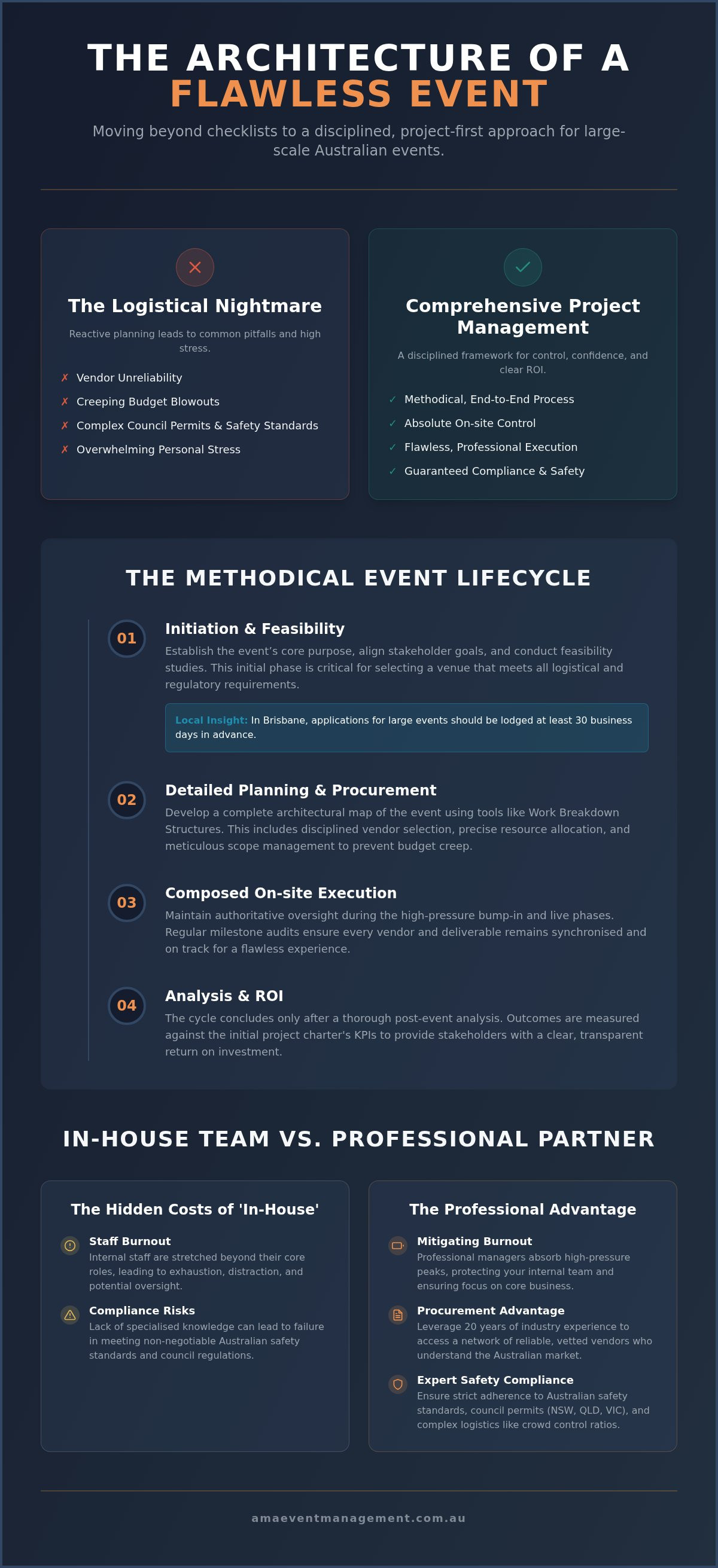
The difference between a landmark event and a logistical nightmare isn't found in a software subscription, but in the methodical architecture of its underlying strategy. You've likely felt the pressure of managing vendor unreliability or the creeping anxiety of a budget blowout as deadlines loom. It's a high-stakes environment where comprehensive event project management becomes the only way to navigate Australian safety standards and local council permits without losing control.
Our strategic guide offers a stabilising force, transforming complex logistics into a disciplined, end-to-end process. You'll learn how to maintain absolute on-site control while delivering a flawless execution that provides clear ROI for your stakeholders. We'll walk through the essential phases of project architecture, from securing necessary public liability cover to managing the latest 2026 regulatory requirements across New South Wales and Victoria. By the end of this guide, you'll have the tools to reduce personal stress and ensure your next corporate conference or community festival runs with quiet, professional confidence.
Table of Contents
Defining Comprehensive Event Project Management in the Modern Australian Context
Large-scale events in Australia, particularly those exceeding 500 attendees in bustling hubs like Sydney or Melbourne, require more than just a creative eye. They demand a rigid, architectural approach. While traditional planning focuses on the aesthetic and the itinerary, comprehensive event project management treats the occasion as a complex engineering feat. It's the seamless integration of a bold creative vision with disciplined logistical execution. In the current Australian climate, where regulatory scrutiny is high, this "project-first" mindset ensures that every moving part aligns with a central strategy.
The industry has shifted. For a foundational Event Management Overview, one can see how the profession has moved from simple coordination to high-level risk mitigation and financial transparency. Modern stakeholders in NSW and Queensland now expect granular reporting and a clear audit trail. This evolution makes the "meticulous architect" approach essential for maintaining stakeholder trust and ensuring public safety. It's about building a structure that remains stable even under the intense pressure of a live event environment.
The Core Components of a Comprehensive Event Plan
A robust plan begins with a project charter. This document aligns stakeholder goals with measurable KPIs, ensuring everyone understands the definition of success before the first vendor is booked. Scope management is equally critical. Without a disciplined manager, "feature creep" can quietly erode budgets and push timelines into the red. Effective comprehensive event project management also involves precise resource allocation. This means identifying the exact human and physical capital required, from security personnel in Brisbane to specialised AV equipment in Sydney, well in advance of the event date.
Why 'In-House' Often Falls Short for Large-Scale Festivals
Many organisations attempt to manage community festivals or corporate galas using internal teams. However, the hidden cost is often staff burnout. Internal employees already have full-time roles; adding a high-pressure event cycle can lead to exhaustion and oversight. Partnering with an expert brings several distinct advantages:
Mitigating Burnout: Professional managers absorb the high-pressure peaks, allowing your internal staff to focus on their core roles without distraction.
Procurement Advantage: Accessing 20 years of industry experience ensures you partner with reliable, vetted vendors who understand the Australian market.
Safety Compliance: Expert oversight ensures strict adherence to Australian safety standards and council regulations, which are non-negotiable for public gatherings.
Technical oversight isn't just an option; it's a safety requirement. Professional site management ensures that complex logistics, like crowd control ratios and RSA compliance, are handled with quiet, authoritative precision. This level of industry tenure provides a stabilising force that in-house teams often lack, transforming a potentially chaotic task into a polished, immersive experience.
The Architecture of Planning: Stages of a Methodical Event Lifecycle
A successful event is built on a foundation of rigorous, sequential phases. By adopting a framework for comprehensive event project management, you move away from reactive decision-making toward a controlled, predictable lifecycle. This process begins with initiation, where we establish the event’s core purpose and conduct feasibility studies. For sites in New South Wales or Queensland, this early stage must account for local variables, such as the recommendation in Brisbane to lodge applications for large events at least 30 business days in advance. This foresight prevents the common pitfall of selecting a venue that cannot meet regulatory or logistical requirements.
Once the foundation is set, the lifecycle moves through detailed planning and procurement. This involves the disciplined selection of vendors who align with your brand’s quality standards. During execution, we maintain oversight through regular milestone audits, ensuring every deliverable remains on track. The cycle only concludes with a post-event analysis, where we measure outcomes against the initial project charter to ensure clear ROI. This methodical approach provides the security and relief that comes from knowing every detail is under expert supervision.
Mastering the Work Breakdown Structure (WBS)
A Work Breakdown Structure is the anatomical map of your event project. It deconstructs a complex gala or national conference into manageable work packages, ensuring no detail is overlooked. To maintain order, we use a RACI matrix to assign clear ownership for each package:
Responsible: The individual performing the task.
Accountable: The person who ensures the task is completed to standard.
Consulted: Subject matter experts who provide input.
Informed: Stakeholders kept updated on progress.
This level of clarity is why many organisations choose to partner with professional event coordination specialists to manage their most critical activations.
Budget Management and Financial Oversight
Effective financial management requires a living budget that evolves with the project. In the Australian market, this means accounting for market fluctuations and ensuring all values are tracked in AUD. We prioritise transparent reporting, keeping stakeholders informed of the project’s financial health through every phase. By identifying cost-saving opportunities early, such as streamlining vendor logistics or optimising site layouts, we protect the budget without compromising the attendee experience. A well-managed contingency fund is also essential, acting as a stabilising buffer against unforeseen site challenges or compliance requirements.
Compliance in the Australian event sector is a disciplined framework for safety rather than a series of administrative hurdles. A
comprehensive event project management
strategy incorporates a rigorous Risk Management Plan (RMP) that aligns with current Australian Standards. This document serves as a live blueprint for site safety, addressing everything from crowd dynamics to emergency egress. In jurisdictions like Queensland, specific security mandates require 7 licensed crowd controllers for the first 1,000 patrons, with an additional controller for every 250 people thereafter. Oversight of these details ensures the event remains a stabilising force for the community rather than a liability.
Council Permits and Public Space Management
Securing permits for public spaces in Sydney or Melbourne involves navigating varying fee structures and lengthy notice periods. As of July 2026, City of Melbourne application fees can range from $70 to $3,112.70, determined by the scale of the attendee list. Managing community impact is a non-negotiable part of this process. It requires methodical resident consultations, strict adherence to noise curfews, and sophisticated traffic management plans. This level of coordination is particularly vital for Effective Market Management and Vendor Coordination, where public access and local council relationships must be managed with quiet authority.
Vendor Procurement and Workplace Health and Safety (WHS)
The event manager acts as the primary WHS officer, especially during the high-pressure bump-in phase. Every contractor entering the site must hold a valid White Card, proving they understand Australian construction and site safety requirements. We perform exhaustive audits of vendor insurance and safety documentation before any equipment is unloaded. This includes verifying that themed activations and temporary structures meet relevant structural integrity codes. By maintaining this level of technical oversight, you eliminate the compliance anxiety that often plagues large-scale festivals.
Modern events must also meet rising community expectations for sustainability. Achieving a zero-waste festival requires integrating environmental compliance into the initial procurement phase. From choosing biodegradable materials for brand activations to managing complex waste diversion logistics, every decision must be documented and transparent. This methodical approach ensures your event meets 2026 standards for environmental stewardship while maintaining a polished, professional delivery. It's about being several steps ahead of both regulatory requirements and public sentiment.
On-site Supervision and the Art of Composed Execution
The true test of comprehensive event project management occurs when the theoretical plan meets the physical site. This is the moment where the "Composed Guide" philosophy becomes indispensable. On-site execution requires a leader who possesses the quiet confidence to manage high-pressure variables without transmitting stress to the team or the client. Whether it's a sudden change in coastal weather or a minor vendor delay, maintaining calm authority ensures the event remains a stabilising force. This professional groundedness allows stakeholders to focus on their guests while we manage the intricate machinery behind the scenes.
Managing the "Bump-In" is a delicate synchronisation of multiple vendors within a strict, time-sensitive window. We establish real-time communication protocols that prioritise clarity while avoiding unnecessary radio noise. Every team member knows their exact position and responsibility, allowing for a frictionless transition from an empty venue to a polished, immersive space. This methodical oversight ensures that the creative vision is realised without compromising safety or the project timeline.
Site Management and Vendor Coordination
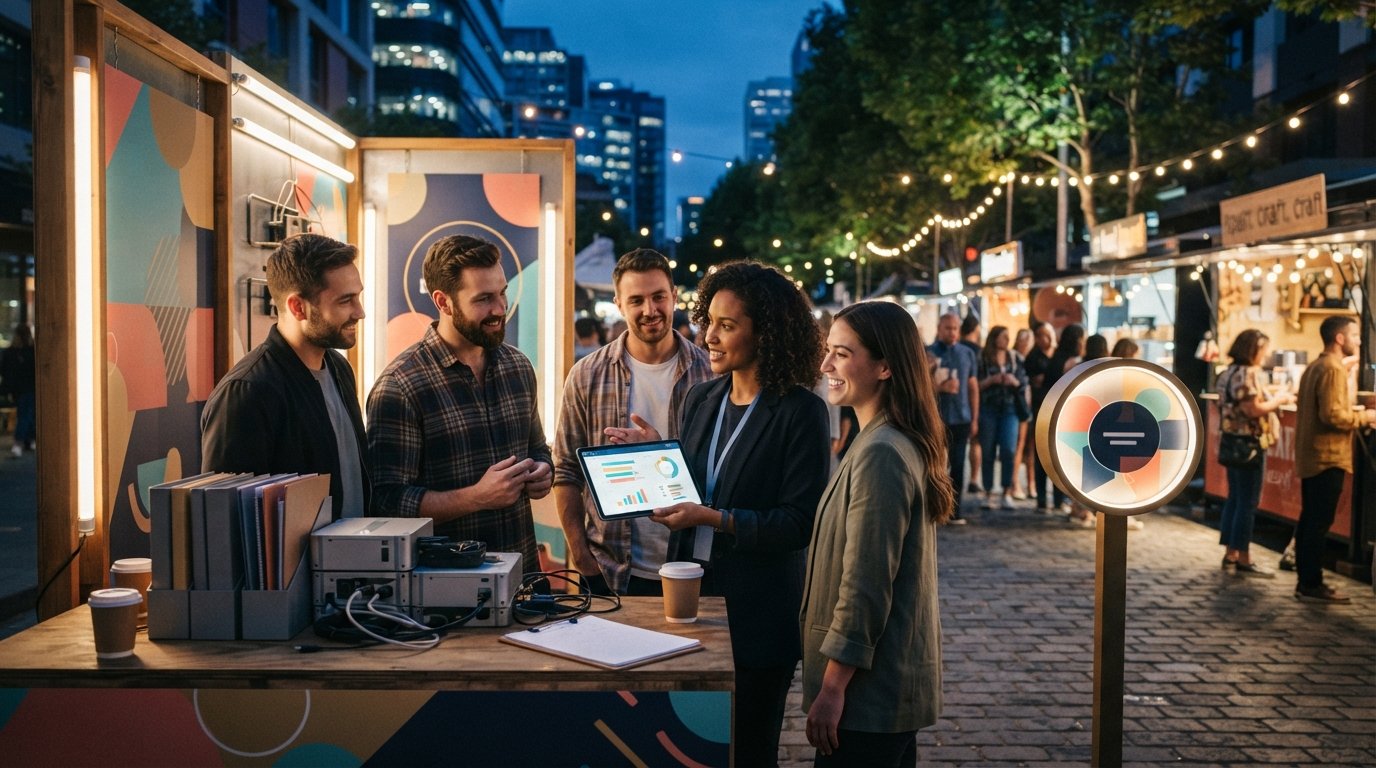
A dedicated site manager is essential for maintaining order during community festivals and large-scale markets. They oversee the intricate logistics of stallholder management, ensuring power requirements are met and waste removal is handled with discreet efficiency. This level of meticulous oversight is just as critical for a Bespoke Private Event Planner Sydney as it is for a national expo. By managing these small details with precision, we prevent the logistical bottlenecks that often disrupt the attendee flow and impact the overall atmosphere.
The Final Countdown: Run Sheets and Minute-by-Minute Logistics
Success on the day relies on a comprehensive run sheet that leaves no room for ambiguity. This document serves as the master script for the "Show Caller," who orchestrates AV, styling, and catering in perfect harmony—often in coordination with technical experts like LivewireAV to ensure every cue is met. 'A run sheet is not a suggestion; it is the rhythmic heartbeat of a successful event execution.' This minute-by-minute deconstruction of the event ensures that every transition is seamless and every stakeholder is aligned with the project's goals.
Crisis management is the final layer of this composed execution. We don't just react to problems; we execute pre-planned "Plan B" scenarios with zero disruption to the guest experience. This proactive approach allows us to stay several steps ahead of potential issues, ensuring the strategic vision remains intact even when circumstances shift. If you're ready to secure a partner who brings this level of discipline to your next activation, explore our professional event management services.
Partnering with Experts: Why End-to-End Management Delivers Security
Partnering with a dedicated expert provides a level of security that software alone cannot replicate. While digital tools offer a framework, they lack the intuition gained from twenty years of on-site experience. A comprehensive event project management partner acts as a stabilising force, remaining several steps ahead of potential logistical bottlenecks. This proactive oversight ensures that your event isn't merely a series of completed tasks, but a cohesive, immersive experience that resonates with your audience. By trusting a professional to manage the intricate architecture of your event, you gain the freedom to focus on high-level strategy rather than technical friction.
Long-term success in the Australian event sector relies on brand consistency and stakeholder trust. When you delegate the architecture of your logistics to a professional, you protect your organisation's reputation. Methodical management ensures that every touchpoint, from the initial site feasibility study to the final post-event analysis, reflects your high standards. This disciplined approach builds confidence among sponsors and attendees alike, transforming a high-pressure activation into a reliable, recurring asset for your brand. It's about creating a narrative of efficiency and predictability that stakeholders can rely on year after year.
The AMA Difference: 20 Years of Composed Authority
We operate with a philosophy of quiet confidence, grounded in two decades of industry tenure across NSW and Queensland. Our project-based fee structure is designed to provide complete clarity and budget certainty, eliminating the hidden costs often associated with internal staff burnout or vendor mismanagement. We specialise in complex logistics for national expos, community festivals, and Themed Brand Activation Sydney. This breadth of experience allows us to anticipate challenges before they manifest, providing a frictionless journey for our clients from the first site visit to the final bump-out.
Taking the Next Step Toward a Flawless Event
The most successful events don't happen by chance; they're the result of deliberate, early engagement. We recommend starting the planning process at least 12 months in advance for large-scale 2026 activations. This timeline allows for thorough resident consultations, secure permit applications, and the procurement of top-tier vendors before their calendars are full. Our consultation process is designed to align with your strategic goals, ensuring every logistical decision supports your broader vision with comprehensive event project management at the core.
If you're ready to secure a partner who values order, precision, and high-level execution, we invite you to Organise a consultation with AMA Event Management today. Let us act as the reliable anchor for your next project, delivering a flawless execution that exceeds stakeholder expectations and adheres strictly to your timelines.
Scaling for Success in 2026
Mastering the logistics of a large-scale activation requires a shift from basic checklists to a structured architectural framework. By embracing comprehensive event project management, you ensure that every regulatory requirement and vendor milestone is met with precision. This disciplined approach doesn't just deliver a successful day; it provides the security and stakeholder trust necessary for long-term brand growth. It's about building a foundation that remains stable under pressure.
Whether you're coordinating a national expo or a local festival, the value of a partner who remains several steps ahead is immeasurable. AMA Event Management brings over 20 years of industry-leading experience to your project, acting as a stabilising force in high-pressure environments. As specialists in Sydney and Melbourne corporate logistics, we possess the proven track record required to manage major community festivals with quiet, authoritative confidence.
Preparing for future activations also involves staying current with workspace standards; to ensure your production office is ready for the coming years, check out Mega Office Supplies for insights into professional furniture trends for 2026.
It's time to transform your logistical challenges into a polished, immersive experience. Secure your event’s success with AMA Event Management and let us guide you toward a flawless execution in 2026. Your vision deserves the meticulous oversight that only seasoned experts can provide.
Frequently Asked Questions
What is the difference between event planning and event project management?
Event planning typically focuses on the creative vision and schedule, whereas comprehensive event project management applies a disciplined logistical framework to the entire lifecycle. We treat each event as a complex project with defined stages: initiation, planning, execution, and closing. This structural approach ensures that every creative element is backed by a feasible technical plan, preventing the gaps that often occur when planning lacks a methodical architecture.
How do you manage event budgets to avoid overspending?
We prevent budget blowouts by creating a "living" budget that incorporates a dedicated contingency fund for unforeseen site requirements. Every expenditure is tracked in AUD and measured against the initial project charter to ensure financial transparency. By identifying cost-saving opportunities during the procurement phase, such as optimising vendor logistics, we maintain the project's financial health without compromising the attendee experience or quality.
What are the essential Australian safety standards for public events?
Essential standards include AS/NZS ISO 31000 for risk management and strict adherence to state-specific Work Health and Safety (WHS) regulations. Public events must satisfy local council requirements for crowd control, emergency egress, and structural integrity for temporary installations. We develop a robust Risk Management Plan (RMP) that addresses these standards, ensuring your event remains compliant with 2026 Australian safety expectations and council permit conditions.
Can you manage events in both Sydney and Melbourne?
Yes, we provide specialised logistical execution for corporate conferences and festivals across both Sydney and Melbourne. Our team possesses a deep understanding of the unique council permit requirements and site management challenges in each city. Whether you're planning an activation in iconic Sydney locations or a large-scale expo in Melbourne, we act as the stabilising force that ensures a consistent, high-quality delivery across state borders.
How do you handle vendor coordination for large community markets?
Vendor coordination for community markets involves a meticulous auditing process and clear site management protocols. We manage everything from stallholder power requirements to waste removal with quiet authority. By using a RACI matrix to define responsibilities, we ensure that every vendor understands their role within the broader project timeline. This level of discipline prevents logistical bottlenecks and ensures a frictionless experience for both stallholders and patrons.
What is included in end-to-end event management services?
Our end-to-end services encompass the entire project lifecycle, from initial feasibility studies to post-event analysis. This includes project chartering, scope management, procurement of vetted vendors, and on-site supervision. By providing comprehensive event project management, we absorb the technical and logistical pressure, allowing you to focus on stakeholder engagement while we ensure that every minute-by-minute detail of the run sheet is executed perfectly.
How do you ensure themed brand activations stay on-brand?
We ensure themed brand activations remain on-brand by aligning every logistical decision with the event's core project charter. This document establishes measurable KPIs and styling requirements that act as a blueprint for the execution phase. Our technical oversight ensures that the physical build reflects your brand's sophisticated standards, transforming a creative concept into a polished, immersive experience that resonates with your target audience.
What happens if a vendor cancels at the last minute?
If a vendor cancels, we immediately activate a pre-planned "Plan B" scenario from our established risk management framework. Our 20 years of industry experience provides us with access to an extensive network of reliable, vetted backups who can step in at short notice. This proactive approach ensures that the disruption remains invisible to your guests, maintaining the event's rhythmic heartbeat and protecting your organisation's reputation.
Comments