

How to Plan a Brand Activation Around Cost and Results
A memorable activation starts with a defined audience, a clear outcome and a budget shaped around the experience. The practical answer to how to plan a memorable brand activation is to estimate the main costs first, then align the creative idea and delivery team with the result you want. Location, production, staffing and materials all influence the budget, so itemise them before committing to a concept.
It’s reasonable to want a standout experience without losing sight of what it needs to achieve. A striking setup alone won’t show whether the activation worked. Define how you’ll measure engagement, gather feedback and assess follow-up actions.
Plan in sequence: set objectives, choose an experiential approach, build a cost plan, coordinate marketing, PR, customer service and UX, then select useful measures. Gather audience feedback and use the results to refine future activations. Each decision should support both the visitor experience and the broader campaign goal.
Table of Contents
How Much Does a Brand Activation Cost?
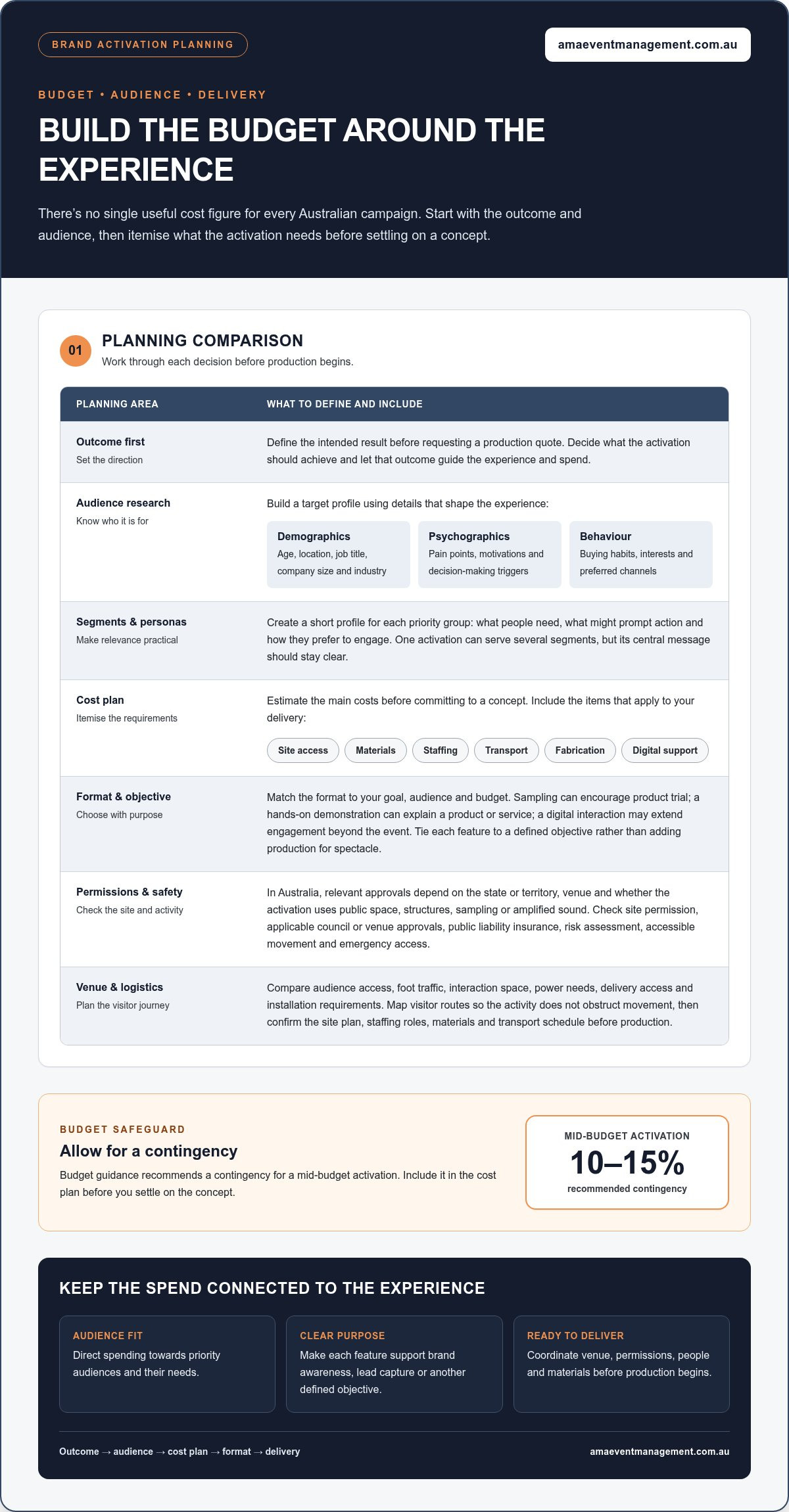
Start with audience research, not a production quote. There’s no single useful figure for every Australian campaign because costs depend on scale, location, audience and delivery requirements. To understand how to plan a memorable brand activation, define the intended outcome first, then itemise site access, materials, staffing, transport, fabrication and digital support. Budget guidance recommends a 10-15% contingency for a mid-budget activation.
Build a target profile using details that shape the experience. Record relevant demographics, such as age, location, job title, company size and industry. Add psychographics, including audience pain points, motivations and decision-making triggers. Then map buying habits, interests and preferred channels. For example, a campaign for local families may need a different setting and activity from one aimed at business decision-makers.
Turn your research into practical customer personas and segments. Create a short profile for each priority group, noting what people need, what might prompt action and how they prefer to engage. One activation can serve several segments, but its central message should stay clear. This keeps the experience relevant and directs spending towards audiences most likely to support your objectives.
Choose a format that suits your goal, audience and budget. Sampling can encourage product trial, while a hands-on demonstration can explain a product or service. A digital interaction may extend engagement beyond the event. Tie each feature to brand awareness, lead capture or another defined objective instead of adding production elements simply because they look impressive.
Plan permissions, insurance and safety around the activity and site. In Australia, relevant approvals depend on the state or territory, venue, and whether the activation uses public space, structures, sampling or amplified sound. Include site permission, applicable council or venue approvals, public liability insurance, a risk assessment, accessible movement and emergency access in your planning checklist.
Assess the venue and logistics together. Compare audience access, foot traffic, interaction space, power needs, delivery access and installation requirements. For a brand activation at a local festival, map the visitor route and position the activity so it doesn’t obstruct movement. Confirm the site plan, staffing roles, materials and transport schedule before production begins.
Use Australian activation examples as formats to adapt, not templates to copy. A local-market sampling activity can invite product trial; a festival demonstration can make a brand benefit tangible; and a QR-led experience can connect an in-person interaction with digital content. When planning a memorable brand activation, make sure the format fits the audience, reflects the brand and offers a clear next action.
Brand activation strategy and experiential marketing
Make the experience a clear expression of your brand, not an activity added for spectacle. A distinctive, shareable concept gives the target audience something relevant to do, notice or discuss.
Shape the Activation StrategySet your strategy by linking audience needs, brand values and campaign objectives. Decide what visitors should understand or do, then use that outcome to guide the experience. For a product launch, the priority might be helping people explore a feature through a demonstration. Check that marketing, PR, customer service and UX teams can support the same message. Avoid concepts that attract attention without a clear connection to the brand.
Create a Distinctive ConceptDevelop a concept from a recognisable brand idea and a specific audience interest. For a sustainability-focused brand, a repair workshop could turn a stated value into a practical activity visitors can share. Make the idea easy to explain, visually distinctive and connected to a genuine visitor benefit. Before committing to production, test the concept with colleagues or a small audience. Refine anything that feels confusing, difficult to join or disconnected from the brand.
Choose an Interactive ExperienceSelect an interactive format that makes sense for the product, service or message. A pop-up demonstration can let visitors try a product, while a simple challenge or quiz can make a key benefit easier to remember. Keep instructions short and the first action obvious, so people can join without a lengthy explanation. Check that the activity suits the venue and visitor flow. Don’t add gamification unless it strengthens the experience.
Use Experiential MarketingDesign the activation so the in-person experience can continue through digital sharing and follow-up. Give visitors a natural reason to capture a moment, such as a hands-on demonstration or a striking display that reflects the brand. Offer a simple way to share, but don’t make posting a condition of participation. Prepare staff to explain the experience consistently, and make sure digital content reinforces the message visitors encounter on site.
For a professionally coordinated experience, explore themed brand activations as one way to bring the concept and visitor journey together.
Calls to action and measuring activation success
Set the intended action before launch, then choose measures that show whether the activation achieved it. A simple framework connects visitor behaviour, campaign outcomes and follow-up improvements.
Define Goals and Success MeasuresChoose one primary objective, such as generating leads, introducing a product, increasing brand awareness or supporting sales. Translate it into a measurable target before planning the activity. For example, a campaign might aim to capture 500 qualified leads across three markets in one month. Check that the target suits the campaign’s scale and timeframe. Avoid treating attendance alone as evidence of success.
Set Calls to ActionGive visitors one clear action that advances your objective. Depending on the campaign, invite them to try a product, scan a QR code, sign up, make a purchase or request a quote. Make the instruction visible and the next step easy to complete. For example, link a product demonstration to a QR code with relevant information. Avoid presenting several competing actions at once.
Measure KPIs and Campaign OutcomesMatch each KPI to the behaviour you want to understand. Track leads or emails collected for lead generation, sales revenue for purchase goals, and social media engagement for sharing. Event footfall and dwell time can indicate how visitors encountered the experience. Record measures consistently across locations or sessions, so comparisons show what generated results rather than simply documenting activity.
Capture both immediate responses and wider campaign signals. A live dashboard or tally sheet can record attendance, interactions, QR scans and completed sign-ups. After the event, review social mentions, website traffic, sales data and brand sentiment alongside those figures. EventTrack reports that 74% of consumers said engaging with branded event marketing experiences made them more likely to buy the promoted product. Treat that finding as context, not a substitute for your own campaign measures.
Set a review schedule and turn findings into specific changes. Measure results, nurture leads and report on campaign impact 1-2 weeks after the activation. Then schedule follow-up sessions every three or four weeks to check progress against goals. If visitors engaged with a demonstration but missed the sign-up, adjust the call to action or its placement. Use each review to refine messaging, format or engagement tactics for future campaigns.
Community engagement and consumer feedback
Design each interaction to help visitors participate, connect with others and leave useful feedback. These moments can build awareness and help you understand what people remember about the brand.
Design for Consumer EngagementGive visitors a clear, low-effort way to take part. A product demonstration, hands-on activity or simple question can prompt meaningful engagement without a lengthy explanation. Check that the activity reflects the brand’s messaging and gives people room to move, watch or join. The International Council of Shopping Centers reports that 97% of Gen Z consumers visit physical stores, showing why in-person experiences can matter to this audience.
Build Community EngagementCreate a shared moment that encourages conversation, not just individual participation. A local food brand, for example, could invite visitors to share how they use an ingredient, then display responses for others to explore. Make the activity welcoming to different levels of involvement. Don’t require visitors to speak publicly or post online; participation should feel comfortable and relevant.
Gather Consumer FeedbackCollect feedback at a natural point in the visitor journey, such as after a demonstration or activity. Use a short QR survey, response card or staff conversation to ask what stood out and what could improve. Keep questions focused on specific moments and the message people remember. Record recurring comments alongside survey responses rather than relying on one memorable conversation.
Extend engagement beyond the event through social media and visitor-created content. Invite people to share a photo or comment if they choose, and use a clear campaign hashtag to make public responses easier to find. Prepare messaging that explains the activity and accurately reflects the experience. Social content can extend an activation’s reach, but online mentions alone don’t show whether visitors understood or valued the brand.
Review feedback alongside measures such as visitor engagement, leads, social media mentions, sales, website traffic and customer comments. Separate observations by activity or location to identify which moments created interest and which caused confusion. For instance, repeated questions about a feature may signal that signage or staff explanations need refinement. Use these findings to adjust the next activation’s design and messaging.
Assess awareness and loyalty through the quality of responses, not simply the volume of activity. Compare what visitors say they noticed with your intended message, then look for recurring signs of interest, trust or intent to return. A useful debrief records what worked, what visitors remembered and what the team will change. This turns feedback into practical improvements for future community engagement.
How to identify and engage the right audience for a brand activation?
Identify the people most relevant to your objective, then tailor the experience and outreach to their needs. Use the steps below to move from audience research to meaningful participation.
Start with the campaign objective. Decide whether the activation aims to build brand awareness, introduce a product, generate leads or support sales. Then describe the audience most likely to respond. For a new workplace service, for example, the target may include business decision-makers in a particular industry. A clear objective keeps audience research focused and helps teams avoid designing for everyone.
Build an audience profile from useful evidence. Record relevant demographics such as age, location, job title, company size and industry. Add psychographics, including motivations, pain points and decision-making triggers. Buying habits, interests and preferred channels also reveal how people might engage. For a local product launch, location and shopping habits may matter more than job title.
Group people by shared needs. Segment the audience into practical groups rather than relying on one broad persona. For example, a technology brand might distinguish first-time users from experienced customers. Note each group’s priorities, likely questions and reasons to participate. Keep segments connected to the campaign objective, and avoid profiles that don’t lead to a different message or experience.
Match the activation format to audience behaviour. Consider where the target audience spends time and what suits its interests. A product demonstration may work for people who want to see how something functions, while a pop-up activity may suit visitors already exploring a public event. Design the interaction around the audience, not just the available technology. A relevant experience gives people a clear reason to stop and take part.
Use channels that reach each segment. Plan digital and in-person communications around audience preferences. Social media can introduce the activation, while event signage can guide people already at the venue. Planning guidance recommends launching pre-event social media campaigns and influencer outreach 2-4 weeks before an activation. Keep the message consistent across channels, and give each one a useful role in reaching or informing visitors.
Prepare teams to engage visitors consistently. Before launch, brief staff on the audience, campaign goal, key message and likely questions. A visitor interested in product details needs a different conversation from someone seeking a quick overview. Let staff listen and respond rather than recite a fixed pitch. Review audience responses during the event, then adjust explanations if the same question repeatedly causes confusion.
For an activation shaped around a defined audience and experience, plan a themed brand activation with coordinated event delivery.
AMA Event Management: Market Management and Vendor Coordination
AMA Event Management plans and delivers themed brand activations, coordinating the event from concept through execution. Its Market Management and Vendor Coordination service supports organisers bringing vendors together as part of a market experience.
For a public-facing activation, AMA Event Management’s Community Festivals and Fairs offer a context for engaging local audiences in Sydney and Melbourne. Corporate Conferences and Galas provide another setting when the experience needs to sit within a business event. The right fit depends on the activation’s audience, objectives and format.
Consider AMA Event Management when you’re ready to move from a defined concept to organised event delivery. Contact AMA Event Management or visit amaeventmanagement.com.au to discuss your event.
Turn your activation plan into a lasting connection
A strong activation can be more than a single event. Treat it as the start of an ongoing relationship: carry conversations, audience insights and the brand experience into your next campaign. Planning a memorable brand activation means making each decision serve that longer-term connection, from the first interaction to the follow-up.
When you’re ready to move from planning to delivery, AMA Event Management can manage a themed brand activation, with Market Management and Vendor Coordination for market-based experiences. Community Festivals and Fairs can also provide a setting for engaging local audiences in Sydney and Melbourne. Choose the format that best fits your objectives and the experience you want to create.
Contact AMA Event Management to discuss your activation and the next steps for bringing it to life. A clear plan gives your team a considered place to begin, and a stronger foundation for what comes after the event.
Frequently Asked Questions
What is a brand activation and what makes one memorable?
A brand activation is a planned experience that encourages people to interact with a brand. It becomes memorable when the activity connects clearly with what the brand offers and gives visitors a meaningful role. For example, a Sydney launch could let people try a product and share a response, rather than only view promotional material. A distinctive interaction gives people something specific to recall and discuss.
How to set objectives and KPIs for a brand activation?
Start with one primary objective, then choose indicators that show whether the desired action happened. For a Melbourne product introduction, the objective might be product trial, with completed demonstrations and visitor feedback as useful measures. For lead generation, assess the relevance of contacts, not just the number collected. Assign each KPI a recording method and a person responsible, so the team can interpret results consistently after the event.
How much does a brand activation cost in Australia?
Costs depend on the activation’s format, location, production requirements, staffing, materials and duration. A sampling activity has different cost drivers from a custom-built pop-up or a multi-location campaign. In Sydney or Melbourne, site access and transport can also shape the budget. Build an itemised estimate around the experience and objective, and include a contingency for changes. The total should reflect the actual scope, not a generic benchmark.
Which brand activation formats work best, such as pop-ups, events, sampling, or experiential campaigns?
The best format is the one that makes the intended action natural for its audience. Sampling suits a product people can try, while a pop-up can create a focused setting for discovery. A festival or conference activation can reach people already gathered around a shared interest. In Melbourne, a business audience may suit a conference demonstration better than a public sampling activity. Match the format to the audience’s context and the campaign’s purpose.
What risks can affect a brand activation, and how can they be managed?
Common risks include poor weather for outdoor events, delivery delays, low attendance, crowding, unclear staff roles and equipment problems. Manage them with a written run sheet, named decision-makers, backup materials and a site layout that keeps visitor movement clear. For an outdoor activation in Sydney, plan an alternative arrangement for changing conditions. Brief staff on escalation steps, and keep key suppliers informed about schedule changes.
How to measure brand activation results and calculate ROI?
Compare the value generated by the activation with its full campaign cost. To calculate ROI, subtract total costs from the attributable return, then divide that result by total costs. Use sales or qualified leads where the activation supports those outcomes, and review engagement, website traffic and feedback for broader effects. Record the measurement period and attribution method. This helps distinguish activation results from sales or activity driven by other campaigns.
What are examples of successful brand activations in Australia?
Examples include a local-market sampling activity that invites product trial, a festival demonstration that makes a brand benefit tangible, and a QR-led experience that connects an in-person interaction with digital content.


Comments