

How to Justify an Event Management Budget to Your Boss
A smaller event budget isn’t automatically easier to defend. If you’re asking how to justify event management budget to your boss, the key is to show how visible costs support outcomes that matter, from stronger client relationships to employee engagement.
It’s reasonable for a decision-maker to question supplier fees, ask whether the team can manage the event internally or request a lower-cost option. A credible proposal answers those questions without vague promises or unsupported savings claims. Link each activity and cost to an organisational priority, then explain how you’ll assess success.
This guide shows you how to build a concise business case around your boss’s priorities. You’ll learn to present costs with clear purposes and owners, compare delivery options fairly, and agree on practical measures, decision points and next steps. That structure makes the investment easier to assess and clarifies what the event is intended to achieve and how it will be delivered.
Table of Contents
Justify Event Management Budgets via Business Goals
A polished concept may capture attention, but decision-makers need a clear business reason to approve the investment. The strongest case connects the event to an existing priority, explains what it will take to deliver and identifies the evidence that will indicate progress. That connection is central to how to justify event management budget to your boss.
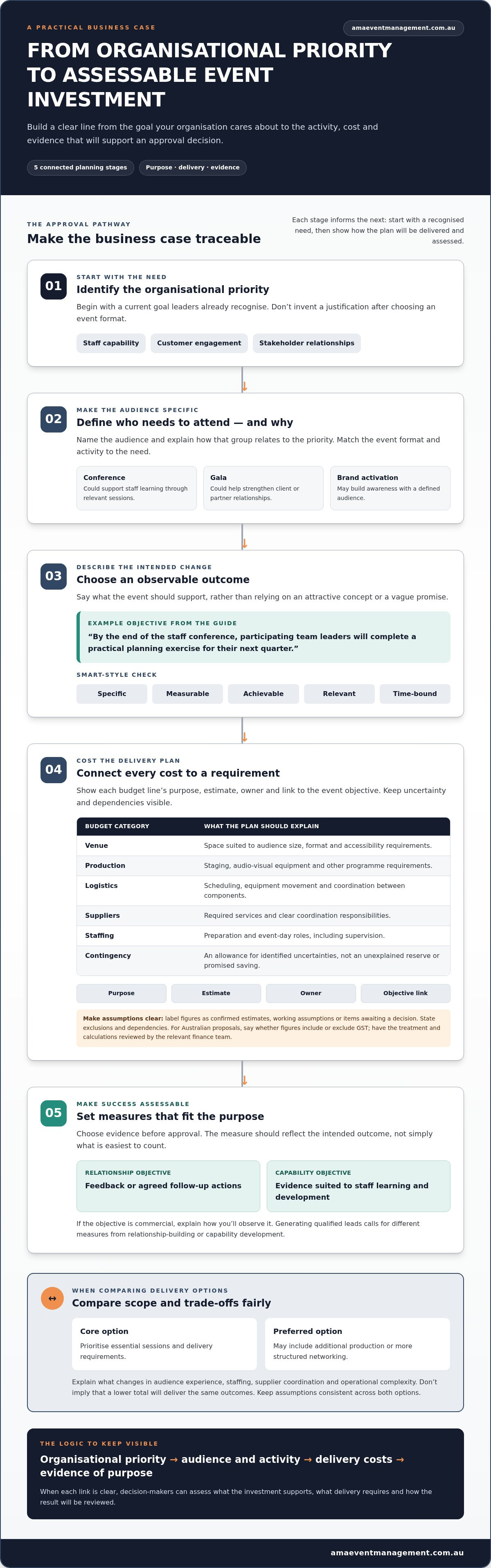
An event business case links the investment, the planned activity and the outcome the organisation intends to achieve. Use this five-step sequence to make that link:
Identify the priority: Start with a current organisational goal, such as staff capability, customer engagement or stronger stakeholder relationships.
Define the audience: Specify who needs to attend and why that group matters to the priority.
Choose outcomes: Describe the change the event should support, rather than relying on an attractive concept alone.
Cost the plan: Estimate the resources and coordination needed to deliver the format and audience experience.
Set measures: Decide what evidence will help assess whether the event served its intended purpose.
Which business priorities can an event support?
Begin with a priority leaders already recognise. Don’t invent a justification after choosing an event format. A conference might support staff learning through relevant sessions, while a gala could help strengthen relationships with clients or partners. A brand activation may build awareness with a defined audience. These aims call for different evidence: generating qualified leads requires different measures from relationship-building or capability development.
Match the format to the need, then explain why that audience and activity are appropriate. Event management brings together elements such as budgeting, scheduling and site selection; the Event management overview outlines this broader scope. In your proposal, show which activities support the objective and who will oversee them.
How do you turn an event idea into an approval objective?
Write one sentence that names the intended change, audience and timeframe. Replace “make an impact” with an observable result that can guide planning. For example: “By the end of the staff conference, participating team leaders will complete a practical planning exercise for their next quarter.” This defines the audience, activity and timeframe without promising an unverified business result.
Apply a SMART-style check: is the objective specific, measurable, achievable, relevant to the priority and time-bound? If a commercial outcome is appropriate, say how you’ll observe it. For a relationship objective, identify suitable evidence, such as feedback or agreed follow-up actions. The measure should fit the purpose, not simply be easy to count.
How to show what an event management budget covers and delivers
A decision-maker should be able to trace each proposed cost to a delivery requirement and the event objective it supports. A clear breakdown makes the budget easier to review and helps separate essential scope from optional enhancements.
Each budget line should have a defined purpose, a realistic estimate and an accountable owner. Use a simple table with these columns: cost category, purpose, estimate, owner and link to the event objective. For example, a production line might cover audio-visual requirements for conference presentations, with an owner responsible for coordinating those requirements with the relevant suppliers.
Which event budget categories should a proposal explain?
Group costs so your boss can see what the delivery plan requires. Depending on the event, include:
Venue: Space suited to the audience size, format and accessibility requirements.
Production: Staging, audio-visual equipment and other elements needed to deliver the programme.
Logistics: Scheduling, equipment movement and coordination between event components.
Suppliers: Services required to deliver the planned experience, with coordination responsibilities made clear.
Staffing: Roles needed during preparation and on the event day, including supervision.
Contingency: A planning allowance for identified uncertainties, not an unexplained reserve or promised saving.
Label figures as confirmed estimates, working assumptions or items awaiting a decision. State exclusions and dependencies too, such as a cost that depends on the final programme or audience numbers. This keeps uncertainty visible instead of burying it in a single total.
How should you compare event budget options?
Present a core option alongside a preferred option, then explain what changes between them. A core conference plan might prioritise essential sessions and delivery requirements. The preferred version could include additional production or more structured networking. Describe the trade-offs in audience experience, staffing, supplier coordination and operational complexity. Don’t imply that a lower total will deliver the same outcomes.
For Australian proposals, state clearly whether figures include or exclude GST, and have the treatment and calculations reviewed by the relevant finance team. Keep assumptions consistent across both options so the comparison is useful.
This level of detail also clarifies ownership across suppliers, logistics and event-day supervision. For a conference, gala or activation, event management support can bring those moving parts into one coordinated delivery plan.
Should your team manage the event in-house or use event management support?
The right delivery model depends on the work involved, available capacity and who will be accountable for decisions. In-house delivery may suit a contained event with straightforward logistics. External event-management support can be worth considering when delivery involves multiple suppliers, complex schedules or demands that would stretch the internal team.
To assess how to justify event management budget to your boss, compare the options against the same requirements:
Scope: How many activities and delivery stages need coordination?
Staff capacity: Who can take on the work, and what existing responsibilities might compete for their time?
Supplier complexity: How many suppliers need to be briefed, scheduled and coordinated?
Oversight: Who will monitor progress, costs and changes?
Accountability: Who makes final decisions and takes responsibility for event-day delivery?
Don’t assume external support will automatically cost less. Compare the full workload and delivery requirements, including internal hours spent on planning, supplier communication, approvals and event-day coordination. Under either model, the organisation retains ownership of its objectives, budget approval and key decisions. Assign each task clearly so responsibilities don’t fall between the cracks.
When might in-house event coordination be sufficient?
In-house coordination can work well for a contained event with manageable logistics, available staff and clearly assigned responsibilities. The internal lead still needs time to plan, liaise with suppliers, secure approvals and coordinate delivery on the day. Specify who will manage contingencies, approve changes and make final calls. If the work can be covered without displacing critical responsibilities, internal delivery may be a practical fit.
When can professional event management strengthen the proposal?
Structured support can help when several suppliers, schedules and operational details need to align. Budget oversight, vendor procurement and on-site supervision create defined ownership across planning and delivery, while the organisation retains strategic direction and approval authority. AMA Event Management provides end-to-end planning and coordination for corporate conferences, galas and brand activations. For more detail on assessing corporate event support, see this corporate gala planner and agency selection guide.
A hybrid arrangement is another option: internal teams can retain the business objective, content and approvals, while event-management support coordinates suppliers, logistics and delivery. Present each option with clear ownership and trade-offs, then recommend the model that best fits the event’s scope and your team’s capacity.
How to present an event budget proposal your boss can assess
A strong proposal makes the decision clear before presenting the detail. If you’re considering how to justify event management budget to your boss, organise the case so they can quickly see what approval is needed, why the event matters and how delivery will be managed. Keep the tone calm and evidence-led. The aim is to support a sound decision, not promise a return you can’t substantiate.
What should an event budget pitch include?
Lead with the decision requested, then connect the event to an agreed business priority. Summarise the intended audience, recommended scope and investment, along with the expected outcomes and how you’ll assess them. Make delivery ownership and key assumptions visible. A concise proposal can follow this order:
Decision: What approval or direction do you need?
Business need: Which organisational priority does the event address?
Recommendation: What format and scope do you propose, and for whom?
Investment and delivery: What are the budget categories, who owns each responsibility, and what assumptions affect the estimate?
Measures: What evidence will you report, and when?
Include viable alternatives and explain the consequences of reducing scope. For instance, a lower-cost option may require a simpler programme or more internal coordination. Describe the trade-off plainly so your boss can compare options on more than the total figure.
How can you respond to common budget objections?
If the event seems discretionary, return to the agreed organisational objective and explain how the proposed activity supports it. If the budget seems high, clarify what the scope includes, then outline changes that could reduce it and what those changes would affect. Don’t defend every line as essential if some elements are genuinely optional.
For uncertain outcomes, present the measurement plan and distinguish what the event team can track from results influenced by other factors. Attendance or feedback may show participation and response, while broader commercial or organisational outcomes can depend on follow-up and conditions beyond the event itself. Acknowledge that distinction to keep the proposal credible.
Before presenting, prepare concise answers about alternatives, internal workload, delivery risks and reporting. That preparation keeps the conversation focused on the decision and its implications. AMA Event Management’s event planning, budgeting and delivery support covers these practical elements.
How to measure event value and decide on the next step
Agree on a small set of measures before approval, while the event objective is still clear. The right indicators depend on what the event is meant to achieve. A useful review checks whether delivery matched the approved scope and whether the evidence points to progress against the agreed goal. It doesn’t need to prove every possible benefit.
Which event KPIs are useful for a budget review?
Choose measures that reflect the event’s purpose, then decide how and when to collect them. For example:
Learning events: Track attendance and participation, then assess evidence of learning against the programme’s agreed goals.
Relationship events: Review relevant feedback, follow-up activity and stakeholder engagement.
Public events: Consider attendance, participation or community measures suited to the event’s purpose.
Set a baseline or target where practical, and name who will gather and report the information. After the event, compare actual delivery and results with the approved scope. Record variances, useful feedback and follow-up actions. If an outcome depended on factors outside the event team’s control, say so rather than attributing the result to the event alone.
How can professional support make the next approval easier?
A disciplined review gives future proposals a stronger foundation. Clear planning, budget management and supplier coordination make it easier to track responsibilities, document changes and report what was delivered. AMA Event Management plans and manages corporate and public events, including conferences, galas, festivals and brand activations. Its work provides structured coordination across planning, suppliers, logistics and on-site supervision without promising a particular result.
Use the review to decide whether to repeat the format, adjust the scope or test a different approach. Carry forward practical lessons, such as where approvals took longer than expected or which measures gave decision-makers useful evidence. This gives the next proposal a clearer basis than relying on impressions alone, and helps you explain how to justify event management budget to your boss using relevant information from the previous event.
For teams planning an event in Sydney or Melbourne, discuss event management support with AMA Event Management.
Make your next event proposal easier to assess
A persuasive event budget does more than list costs. It connects the investment to an organisational priority, assigns clear responsibility for delivery and sets measures suited to the intended outcome. Comparing in-house and supported delivery by scope, staff capacity and coordination needs also helps your boss assess the options without unsupported savings or return claims.
That’s the practical approach to how to justify event management budget to your boss: make the purpose, assumptions and decision required easy to understand, then report what happened against the agreed plan. Clear evidence can inform the next approval and the way future events are planned.
AMA Event Management is an Australian-owned business founded by Amanda, who brings more than 20 years of industry experience. Its event-management work includes budget management, vendor procurement, logistics and on-site supervision for corporate and public events. If structured support would help your team plan and deliver an event, discuss your event management requirements with AMA Event Management.
A considered proposal gives decision-makers a sound basis for moving forward. You can make the case with clarity and confidence.
Frequently Asked Questions
How do you convince your boss to approve an event budget?
Connect the requested investment to an organisational priority and explain how the event will support it. To understand how to justify event management budget to your boss, state the decision you need, identify the audience, outline the delivery plan and propose relevant measures of success. Include realistic alternatives and their trade-offs. A concise, evidence-led case is more persuasive than an attractive concept or a promise of results you can’t guarantee.
What should be included in an event budget proposal?
Include the business need, intended audience, proposed format, estimated investment and approval decision. Break costs into useful categories, such as venue, production, logistics, suppliers, staffing and contingency, where relevant. Show the purpose and owner for each line, and link it to an event objective. Also state which figures are estimates, what assumptions they rely on, what’s excluded and how outcomes will be measured and reported.
How do you calculate the ROI of a corporate event?
Calculate ROI by comparing the event’s attributable financial value with its total cost: (attributable value minus total event cost) divided by total event cost, multiplied by 100. Define which revenue or savings you can reasonably connect to the event and set a measurement timeframe. For example, track qualified leads generated and subsequent sales, while distinguishing event influence from other factors. If you can’t reliably assign financial value, report relevant non-financial outcomes separately.
Is hiring an event management company worth the budget?
It can be worthwhile when supplier coordination, logistics or event-day responsibilities would stretch internal capacity. Compare the proposed support with the full in-house workload, including staff time, oversight and delivery risks, rather than assuming either option is automatically cheaper. For a conference, gala or activation in Sydney or Melbourne, AMA Event Management can provide planning, budget management, vendor procurement, logistics and on-site supervision, with clear responsibilities agreed for each delivery model.
How can you measure whether a business event was successful?
Measure success against the event’s stated objective using a small set of indicators chosen before approval. A learning event might use attendance, participation and evidence of learning; a relationship event could review feedback and follow-up activity. Compare actual delivery and results with the approved scope, then record lessons for future planning. Report what the measures show, and identify factors outside the event team’s control rather than overstating the event’s contribution.
Can you justify an event budget without guaranteed revenue?
Yes. Not every event has direct revenue as its primary objective, and future revenue is rarely guaranteed. Build the case around the organisational priority the event supports, such as staff learning, stakeholder relationships or community engagement. Define observable measures suited to that purpose, such as participation, feedback or agreed follow-up actions. Be clear about what the event can influence and what it can’t, then report the evidence honestly after delivery.
How much contingency should an event budget include?
There isn’t one contingency percentage that suits every event. Set an allowance based on identified uncertainties, the event’s scope and your organisation’s budgeting approach, rather than adding an unexplained amount. Note what the contingency is intended to cover, who can approve its use and how any drawdown will be recorded. Keep it distinct from planned costs, and don’t present unused contingency as a guaranteed saving or expected return.


Comments