

Immersive Brand Experience Design: The Architect’s Guide to Lasting Impact
- Ever After Expo
- Aug 3
- 11 min read
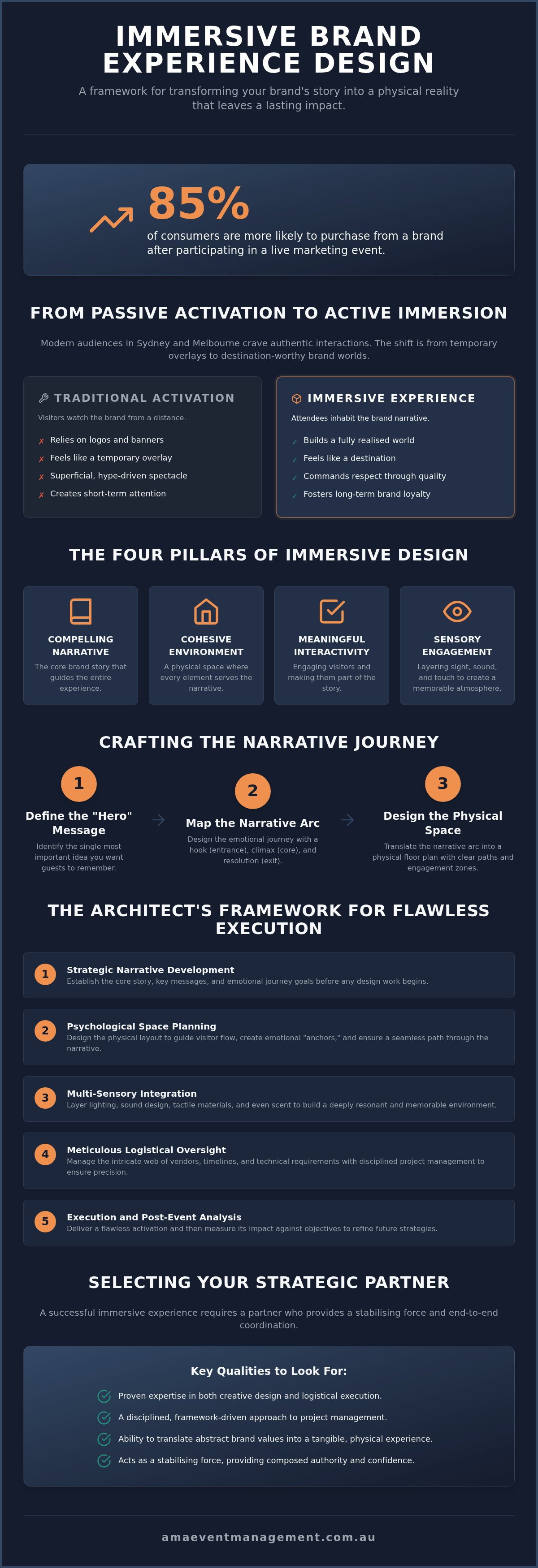
Did you know that 85 per cent of consumers are more likely to purchase from a brand after participating in a live marketing event? Despite this, many leaders still worry that a substantial budget will result in an activation that fails to resonate or feels disconnected from the brand's core values. It's a common challenge to translate abstract concepts into a physical space while managing the intricate web of vendors required for success. Mastering immersive brand experience design is not about flashy technology alone; it's about the disciplined integration of narrative, sensory engagement, and precise logistical oversight.
We recognise that the pressure of a high-stakes event can be daunting, especially when you need every detail to be perfect. This article provides a clear framework to help you transform your brand's story into a physical reality that leaves a lasting impact. You'll learn how to navigate complex execution with confidence, ensuring your next activation is both a creative triumph and a logistical success.
Table of Contents
Defining Immersive Brand Experience Design in 2026
Immersive brand experience design is a disciplined methodology for physical storytelling. In 2026, we define it as the deliberate construction of a physical environment where every element, from the texture of the walls to the sequence of light, serves the brand's narrative. This marks a significant departure from traditional marketing. Instead of merely watching a brand from a distance, visitors inhabit it. They become part of the story through spatial design that prioritises depth over surface-level aesthetics.
The core of immersive design lies in four pillars: a compelling narrative, a cohesive environment, meaningful interactivity, and layered sensory engagement. While a traditional activation might rely on logos and banners, true immersion builds a world. It's the difference between a painted backdrop and a fully realised space that responds to the visitor's presence. By integrating these components, brands create a sense of composed authority that resonates long after the event ends.
Beyond Simple Activations: The Shift to True Immersion
Modern audiences in Sydney and Melbourne crave authentic, tangible interactions. They've become weary of superficial spectacles. A themed event often feels like a temporary overlay, whereas an immersive environment feels like a destination. This distinction is vital for long-term brand loyalty. When a guest feels they are inside a brand's world, the emotional connection is far stronger than any short-term attention gained from a loud, hype-driven activation.
Why Australian Brands are Prioritising Experience Over Advertising
The Australian corporate landscape is shifting toward experiential marketing as a primary tool for connection. Digital fatigue has made physical spaces more valuable than ever. Consumers are looking for real-world interactions that feel grounded and professional. This trend explains why many are turning to a themed brand activation Sydney to cut through the noise. By focusing on high-level execution and meticulous design, brands can establish themselves as a stabilising force in a complex market. It's a move away from shouting for attention and toward providing a space that commands respect through quality and precision.
The Psychology of Space: Designing for Narrative and Emotion
The physical layout of an activation acts as a silent conductor. It orchestrates how a visitor moves, where they linger, and how they feel. Effective immersive brand experience design relies on this psychological influence to turn a simple room into a narrative journey. By establishing a sense of composed authority, designers guide attendees through a sequence of spaces that reflect the brand's values. This guidance isn't about control; it's about providing a clear, stabilising path that prevents the visitor from feeling overwhelmed or lost in the experience.
Within this space, we use "anchors" to reinforce key messages. An anchor might be a central installation, a specific lighting change, or a unique acoustic zone. These elements ground the visitor and serve as milestones in the brand story. Lighting, acoustics, and spatial rhythm work together to create a polished atmosphere. A well-timed shift in sound or a deliberate use of shadow can signal a transition in the story, ensuring the environment feels intentional and highly disciplined.
Crafting the Brand Storyline: From Concept to Physical Journey
Success begins with identifying the "hero" message. This is the single most important idea you want guests to remember. Once this is defined, we map the narrative arc onto the physical floor plan. The entrance serves as the hook, drawing people in with a sense of intrigue. The core of the space acts as the climax, where the deepest interaction occurs. Finally, the exit provides the resolution, offering a moment of reflection. Every touchpoint must align with this arc to maintain a cohesive narrative.
Audience-Centric Mapping: Understanding the Visitor’s Path
Not every attendee interacts with a space in the same way. Some prefer active participation, while others seek quiet observation. We design for both modes by creating distinct zones that allow for different levels of engagement. Spatial logic is essential here to prevent bottlenecks and ensure a smooth flow through the venue. Professionals often utilise expert techniques for immersive design to ensure these interactions feel organic rather than forced.
There is also a delicate balance between creating "Instagrammable" moments and fostering deep interaction. While visual appeal is necessary for social reach, it shouldn't come at the expense of substance. A meticulous architect ensures that even the most photogenic corner has a story to tell. If you're looking to bring this level of precision to your next project, you might consider how a structured approach to event management can transform your vision into a seamless reality.
Executing the Multi-Sensory Environment: Sight, Sound, and Touch
A truly successful immersive brand experience design goes far beyond visual aesthetics. While visual decor provides the first impression, it is the layering of sound, touch, and scent that anchors a visitor in the moment. When we move beyond the visual, we engage the subconscious, making the brand narrative feel permanent rather than fleeting. This approach requires a meticulous focus on bespoke quality. Generic, off-the-shelf solutions often fail to convey the necessary weight and authority required for a high-stakes activation.
Tactile materials are essential for grounding an experience in reality. The cold touch of polished stone, the warmth of recycled timber, or the texture of heavy linen can communicate brand values more effectively than a printed sign. These physical details provide a sense of security and reliability. Similarly, subtle soundscapes and curated scents work beneath the surface. They reinforce the brand identity without demanding constant attention, creating a polished atmosphere that feels complete and well-ordered.
Consider the following sensory priorities for a sophisticated activation:
Tactile Authenticity: Use natural materials that guests are encouraged to touch and interact with.
Acoustic Precision: Design soundscapes that mask external noise and guide the emotional tone of each zone.
Olfactory Nuance: Introduce subtle scents that trigger memory and reinforce the brand presence without being overwhelming.
The Role of Bespoke Styling and Themed Activations
Custom-built furniture and unique decor elements are the hallmarks of an exclusive activation. These pieces aren't just functional; they are architectural components that support the brand's quiet confidence. Sourcing and managing these elements requires the specialised oversight of a bespoke private event planner Sydney. This expertise ensures that every styling choice is deliberate and disciplined, avoiding the loud gimmicks that often clutter less refined events.
Integrating Technology Without Sacrificing Human Connection
Technology should act as a tool for storytelling, not a replacement for human connection. Interactive screens or augmented reality layers must feel integrated into the physical architecture of the event. When digital elements are forced, they can feel alienating and cold. By contrast, a well-placed interactive touchpoint can enhance the narrative while maintaining the warmth of a collaborative partnership. We ensure that technology supports the flow of the event, allowing human-led interactions to remain the primary focus of the visitor's journey.
The Logistics of Immersion: Bringing Complex Designs to Life
Logistical precision is the stabilising force that allows a creative vision to exist in the physical world. Without a disciplined approach to execution, even the most inspired immersive brand experience design will falter under the weight of its own complexity. We view logistics as the invisible architecture of the event. It's the silent foundation that ensures every sensory layer and narrative beat functions as intended. A proactive manager remains several steps ahead, identifying potential bottlenecks in the project timeline long before they manifest on the event floor.
Executing a high-stakes activation requires a structured, five-step logistical framework. This methodical sequence ensures that nothing is left to chance:
Site Audit: A thorough evaluation of the physical space to identify structural or technical limitations.
Vendor Procurement: Sourcing specialised partners who understand the requirements of bespoke quality.
Risk Management: Developing comprehensive plans to ensure safety, accessibility, and regulatory compliance.
On-site Supervision: Maintaining oversight during the build to ensure the design is followed with absolute precision.
Bump-out: Orchestrating an efficient and organised exit that leaves the venue in its original condition.
Site Selection and Infrastructure: The Foundation of Experience
Choosing the right location involves more than just checking capacity. In metropolitan Sydney and Melbourne, activations often take place in heritage venues or public precincts that come with strict regulatory oversight. Navigating council requirements for permits in New South Wales or Victoria is a meticulous process. You need to evaluate infrastructure early. Can the floor support the weight of a custom installation? Does the venue have the electrical capacity for advanced lighting? Addressing these questions during the site audit phase prevents costly mid-project revisions.
Managing Multidisciplinary Vendors and On-site Supervision
Coordination is the key to maintaining composed authority during a high-stakes activation. This involves synchronising stylists, tech teams, fabricators, and caterers so they operate as a single unit. On-site supervision is where the "calm under pressure" mindset becomes most valuable. When you have multiple moving parts, a seasoned expert provides the oversight needed to handle sudden changes without disrupting the attendee experience. If you require a partner who can manage these complexities with professional discipline, our team offers comprehensive market management and vendor coordination to ensure your vision is executed flawlessly.
Partnering for Success: Selecting an Immersive Experience Designer
Selecting a partner for immersive brand experience design is a strategic decision that determines the success of your activation. It requires more than just a creative eye; it demands a partner with the precision of an architect and the strategic vision of a seasoned leader. While many "hype-led" agencies focus on the initial splash of a concept, a process-oriented management firm prioritises the structural integrity of the entire project. This disciplined approach ensures that the final physical reality matches the initial brand narrative without compromise.
A successful partner acts as a stabilising force throughout the high-pressure lifecycle of an event. They provide a sense of relief by managing the moving parts that often cause client stress. By choosing a collaborator who values order and high-level execution, you ensure that every detail, from vendor coordination to on-site supervision, is handled with composed authority. This partnership allows you to focus on your broader strategic goals while we manage the intricate logistics of the space.
The Importance of 20 Years of Industry Experience
Seasoned expertise is a prerequisite for predicting and mitigating the risks inherent in complex activations. With over 20 years of industry experience, we understand that a successful event is built on a foundation of reliability and deep local knowledge. This history allows us to navigate challenges that might catch less experienced teams off guard. We've seen how the industry has evolved and we know exactly what it takes to deliver a polished result in the current Australian market.
Our deep network of trusted Australian vendors and specialists is a significant asset for any project. Whether we are coordinating a large-scale community festival or acting as corporate gala planners Sydney, we use our extensive industry history to inform future innovations. This experience ensures that even the most ambitious designs are grounded in practical, logistical reality. It provides the confidence that your brand is in safe, capable hands.
End-to-End Coordination: Why Logic Trumps Hype
End-to-end coordination is essential for maintaining the integrity of an immersive brand experience design. Having a single point of contact for the entire project lifecycle removes the complexity of managing multiple vendors and disparate teams. It ensures that the creative concept is protected from the first site audit through to the final bump-out. This holistic oversight prevents the "vision creep" that can occur when too many disconnected parties are involved.
When logic and process lead the way, the result is a seamless and frictionless experience for both the client and the attendee. We invite you to view your event manager not just as a service provider, but as a collaborative partner and meticulous architect of your brand's physical story. If you are ready to transform your vision into a lasting reality, organise a consultation with AMA Event Management to begin your immersive journey today.
Mastering the Architecture of Your Next Activation
Successful immersive brand experience design requires more than just creative flair; it demands a disciplined integration of narrative, sensory depth, and logistical precision. We've explored how physical environments guide attendee emotions and how bespoke styling creates a sense of exclusivity that generic events simply cannot match. By prioritising a methodical approach, you ensure your brand story is not just told, but inhabited by every guest who enters the space.
Bringing these complex visions to life requires a partner who remains calm under pressure and several steps ahead of every challenge. With over 20 years of industry-leading experience, we act as the stabilising force for your most ambitious projects. Our team specialises in end-to-end logistical execution and possesses deep expertise in Sydney and Melbourne's premier event spaces. We handle the intricacies of vendor coordination and site management so you can focus on the impact of your activation.
Partner with AMA Event Management for your next immersive brand activation and let's transform your abstract values into a powerful physical reality. We look forward to helping you create an experience that resonates long after the final bump-out.
Frequently Asked Questions
What is the difference between brand activation and immersive experience design?
Brand activation is a broad term for any activity that builds awareness or drives consumer action. In contrast, immersive brand experience design is a specialised methodology that uses spatial architecture to place the audience inside a brand's narrative. While a standard activation might focus on a singular interaction, immersive design creates a cohesive, multi-sensory environment. This disciplined approach ensures that the physical space acts as a living embodiment of the brand's values.
How much does a bespoke immersive brand activation cost in Sydney?
The investment for a bespoke activation depends on the scale, venue requirements, and the level of sensory integration involved. Factors such as custom fabrication, specialised vendor procurement, and on-site supervision will influence the final budget. We recommend a structured consultation to define your specific requirements. This allows us to provide a disciplined logistical framework that aligns your creative vision with a well-managed and realistic financial plan.
Can immersive brand experiences work for small businesses or local markets?
Immersive experiences are highly effective for local markets when they prioritise authentic community connection over sheer scale. Small businesses can create significant impact by using high-quality materials and intimate spatial design that resonates with their specific audience. A well-executed local activation often leads to stronger brand loyalty because it feels grounded and personal. Success in these environments relies on meticulous attention to detail rather than a massive footprint.
How do you measure the ROI of an immersive brand experience?
ROI is measured through a combination of qualitative attendee feedback and quantitative data such as lead generation or social media reach. Industry data indicates that experiential marketing often delivers an average return on investment between 3:1 and 5:1. By tracking engagement levels within the space and post-event purchase intent, brands can verify the efficacy of their immersive brand experience design. This data-driven approach provides the certainty needed for high-stakes projects.
What are the best venues for immersive brand experiences in Melbourne?
Melbourne offers a diverse range of venues suitable for complex activations, from heritage landmarks to modern industrial spaces. The Royal Exhibition Building provides a sense of grandeur, while the Meat Market in North Melbourne offers a versatile, raw aesthetic. For brands seeking a contemporary feel, repurposed warehouses in Richmond or Collingwood provide the necessary infrastructure for bespoke styling. Selecting the right venue is the first step in establishing a stable foundation for your design.
Do I need to use high-tech elements like VR to make an event immersive?
High-tech elements like VR are tools, not requirements for true immersion. You can create a deeply resonant environment using tactile materials, curated soundscapes, and strategic lighting. These physical layers often feel more grounded and reliable than digital alternatives. While technology can enhance a story, it should never replace the human connection or the architectural precision of the space. A multi-sensory approach ensures the experience remains professional and accessible.
How long does it take to plan and execute a themed brand activation?
A standard timeline for a themed activation typically ranges from three to six months. This period allows for a thorough site audit, vendor coordination, and the procurement of custom materials. Complex projects in Sydney or Melbourne may also require extra time to navigate council permits and risk management protocols. Starting early ensures a disciplined execution and allows our team to stay several steps ahead of any potential logistical challenges.
What logistical challenges are unique to immersive events in public spaces?
Public space activations require a meticulous focus on regulatory compliance and infrastructure. Unique challenges include securing council permits, managing public crowd flow, and ensuring a stable power supply in outdoor settings. Weather contingencies and site security also demand intense oversight to maintain the safety of all participants. Handling these moving parts with composed authority is essential for protecting the integrity of the brand narrative in a high-pressure environment.


Comments