

National Expo Organisers Australia: The Strategic Checklist for 2026
Updated: Jul 8
What if the success of your 2026 exhibition tour isn't determined by the size of your floor space, but by the invisible logistics that hold it together? You likely already know the frustration of managing fragmented vendors across different states or discovering hidden costs long after the contracts are signed. It's a high-pressure environment where a single oversight in vendor procurement can compromise your brand's reputation. Selecting the right national expo organisers Australia has to offer is about more than just booking a stand; it's about finding a partner who acts as a meticulous architect for your vision.
We understand that you need a seamless experience that delivers both logistical precision and measurable attendee engagement. This guide provides a comprehensive evaluation framework to help you select an organiser capable of managing complex multi-state rollouts with quiet confidence. We will examine the critical shift in Workplace Exposure Limits (WEL) taking effect in December 2026, the necessity of robust public liability coverage, and the strategies required to turn a standard floor plan into a high-impact brand activation.
Table of Contents
Defining the Role of National Expo Organisers in Australia
The role of national expo organisers Australia trusts has shifted from simple site management to something far more complex. Today, an organiser acts as the central architect of a multi-city brand experience; they're the ones ensuring your message remains consistent from the Melbourne Convention and Exhibition Centre to the Brisbane Convention and Exhibition Centre. While many businesses mistake equipment hire companies for full-service agencies, the difference lies in strategic oversight. A hire company might provide the walls and the furniture, but an organiser provides the logistical framework that ensures those elements serve your brand goals. They don't just supply the stage; they manage the entire performance.
Effective event management principles dictate that every moving part must be synchronised to avoid friction. This requires a sense of composed authority, especially when navigating the rigid regulations and safety standards of major Australian convention centres. You don't just need someone to book freight; you need a partner who understands the nuances of local vendor networks. True national reach isn't just a transport link. It's the ability to tap into established relationships in every state to solve problems before they escalate, ensuring your brand presents a polished image regardless of the city.
The Evolution of Australian Exhibitions in 2026
By 2026, the industry has moved decisively away from passive viewing. We are seeing a significant shift toward immersive event experiences Sydney and beyond, where interactive brand storytelling is the standard. Modern tours now prioritise "low-waste" initiatives, using sustainable materials that reduce the environmental footprint of a national circuit. Additionally, the integration of digital touchpoints, such as lead-capture apps and augmented reality, has become a mandatory part of the physical expo environment to ensure data-driven results and measurable brand impact.
B2B vs B2C Expos: Different Logistical DNA
Understanding the logistical DNA of your event is vital for success. Trade-only trade fairs are high-pressure environments where the focus is on professional networking and high-level negotiations. Public-facing consumer expos, however, require a strategy for high-volume crowd flow and immediate, high-energy engagement. A skilled organiser understands these differences. They manage the specific etiquette of your industry sector, ensuring that whether you're speaking to a procurement officer or a family of four, the environment is tailored to facilitate that specific interaction. It's the difference between a successful transaction and a missed opportunity.
The Strategic Evaluation Checklist: Assessing Organiser Competence
Evaluating the national expo organisers Australia has available requires looking beyond their inventory of shell schemes and furniture. You must assess their capacity for high-level strategy and complex problem-solving. A team that has reached the 20-year industry mark possesses a depth of knowledge that newer agencies simply haven't acquired yet. This longevity translates into a sophisticated understanding of end-to-end project timelines and the ability to manage budget fluctuations with total financial transparency. Selecting a partner with this level of experience ensures that your event isn't just a collection of stalls, but a strategically aligned brand asset.
Risk mitigation is another crucial pillar of competence. A professional organiser maintains a "calm under pressure" protocol for on-site emergencies, ensuring that unexpected challenges don't disrupt the attendee experience. By aligning with standards set by the Exhibition & Event Association of Australasia, top-tier organisers demonstrate a commitment to industry best practices and ethical vendor procurement. When you partner with a seasoned management team, you're investing in a stabilising force that protects your brand's investment across the entire national circuit.
The "Meticulous Architect" Test
Distinguishing between a proactive manager and a reactive vendor is essential for a friction-free tour. A proactive organiser behaves like a meticulous architect, providing detailed floor plans and traffic flow analysis months before the doors open. They anticipate bottlenecks and address them in the design phase rather than during the bump-in. Logistical precision in a 500-stall national expo is the art of synchronising thousands of disparate moving parts into a single, effortless visitor journey.
Vendor Coordination and Quality Control
Consistency is often the first casualty of a multi-state rollout. Maintaining the exact brand colour and style across venues in Sydney, Melbourne, and Perth requires rigorous quality control of third-party contractors. This level of coordination often draws on community market management Australia principles, where managing diverse vendor needs is a core competency. By applying these disciplined management structures to large-scale expos, organisers ensure that every stall and activation meets the same high standard, regardless of the local labour hire or venue constraints. This methodical approach removes the variability that often plagues national tours.
Logistical Precision: Managing Multi-State Expo Requirements
Managing a national tour requires more than just a map; it requires a deep understanding of the unique logistical hurdles present in the Australian landscape. The "Golden Triangle" of Sydney, Melbourne, and Brisbane forms the backbone of most circuits, but coordinating these legs seamlessly is where the expertise of national expo organisers Australia truly comes to the fore. Each city presents its own set of venue-specific nuances. For instance, the loading dock protocols at the ICC Sydney differ significantly from the rigging requirements at the MCEC in Melbourne. An organiser who lacks this granular knowledge risks costly delays and onsite friction during the critical bump-in phase.
Beyond the East Coast, the challenges intensify. Transporting large-scale exhibition equipment to Western Australia or South Australia requires meticulous planning of freight logistics and significantly longer lead times due to the vast distances involved. You can't treat a Perth leg with the same timeline as a Melbourne bump-in. Additionally, state-based regulations, varying OH&S requirements, and specific union labour rules mean that a "one size fits all" approach to safety and staffing will inevitably fail. For industrial exhibitors, ensuring technical equipment meets local standards is paramount; to assist with this, you can check out Independent Scale Service. A seasoned partner among national expo organisers Australia understands these regional differences, ensuring compliance and continuity across state borders.
Sydney and Melbourne: The National Expo Hubs
Securing prime dates in Australia's most competitive convention centres is a strategic exercise that often begins eighteen to twenty-four months in advance. In these high-stakes environments, the focus often shifts toward localised styling and themed brand activation Sydney strategies to ensure your presence isn't lost in the crowd. For brands targeting high-value delegates, adopting a bespoke private event planner Sydney approach for VIP lounges within the expo hall can create the necessary "event within an event" feel that drives deeper engagement and higher conversion rates.
Regional Expo Considerations
Taking an expo into regional NSW or Queensland can yield high rewards by reaching untapped markets, but the infrastructure hurdles are substantial. Limited venue options and restricted local vendor networks mean your organiser must be even more resourceful. Maintaining "meticulous" standards in non-traditional spaces like regional showgrounds or smaller civic centres requires a proactive management style that doesn't rely on the built-in amenities of a capital city facility. It's about bringing the same level of polish to a regional hub as you would to a metropolitan centre, ensuring every attendee receives a consistent brand experience regardless of the postcode.
The Attendee Experience: Beyond the Shell Scheme
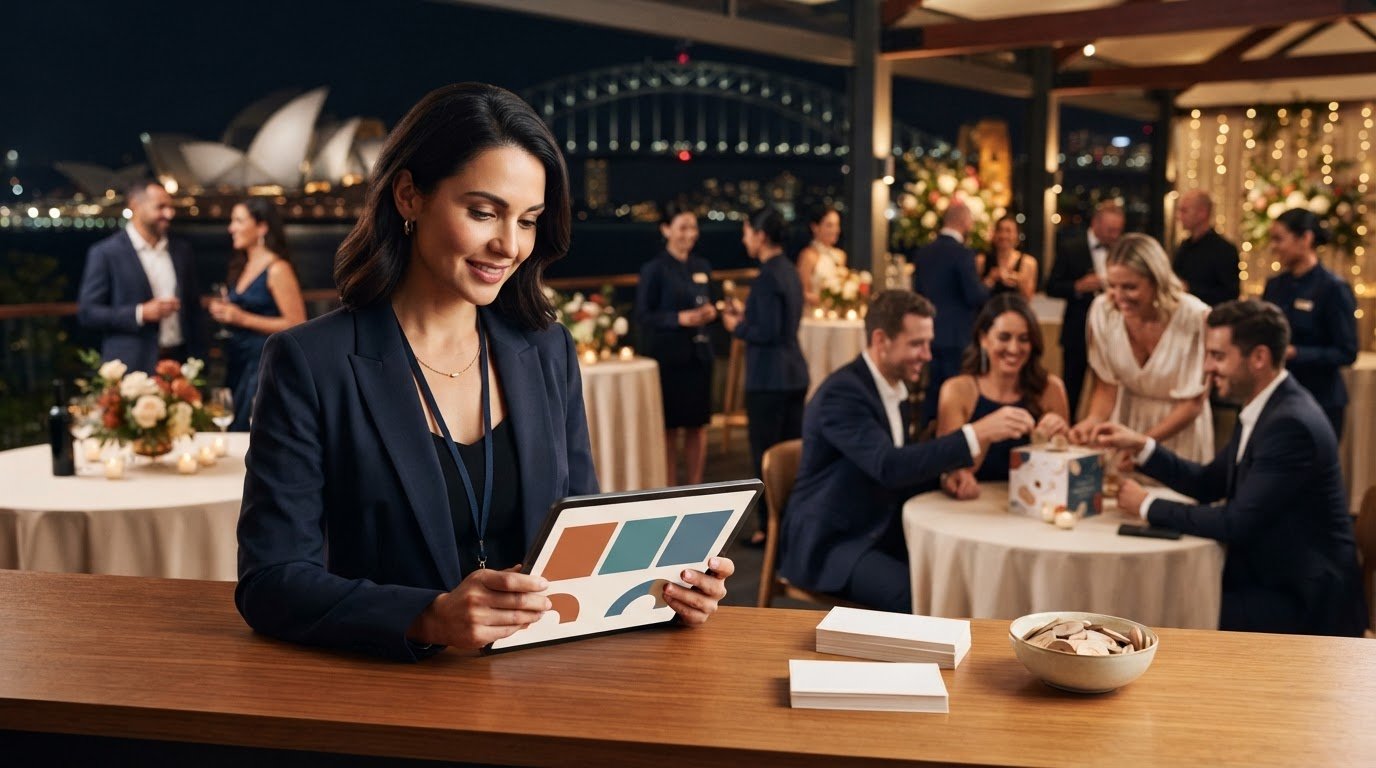
A truly successful exhibition doesn't end with a completed bump-in; it begins when the first attendee walks through the doors. While logistical precision ensures the structure is sound, the role of national expo organisers Australia trusts involves designing the human experience within that structure. An organiser acting as a meticulous architect prioritises the visitor journey from the entrance to the exit, ensuring that every touchpoint reinforces your brand's authority. This transition from logistics to experience is what separates a standard trade show from a high-impact brand event. You need a partner who understands how to direct traffic flow not just for safety, but to maximise dwell time and facilitate natural lead generation.
Creating these environments requires a disciplined approach to space. Instead of generic rows of booths, the focus shifts to immersive zones that encourage interaction. This strategy ensures that your brand isn't just another logo in a crowded hall but a destination that offers genuine value to the delegate. Measuring the success of these zones involves more than just counting heads. By integrating attendee data and engagement metrics, organisers help you quantify your return on investment, providing a clear picture of brand impact that extends far beyond the event dates.
Themed Activations and Brand Storytelling
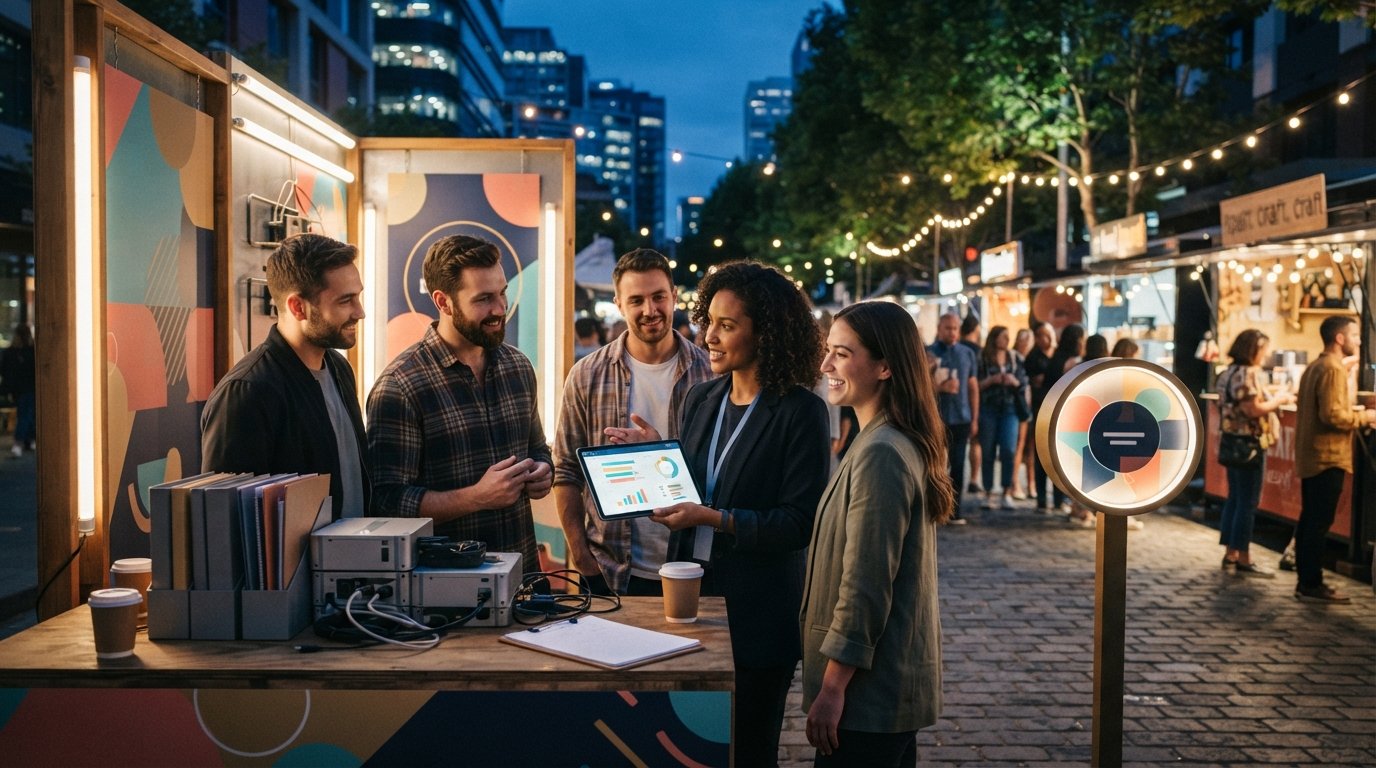
Moving away from generic layouts toward bespoke brand environments is essential in 2026. Creative styling and themed brand activations allow you to stand out in a saturated exhibition hall. This isn't about creating "hype" for its own sake. It involves integrating interactive technology that serves a specific strategic purpose, such as streamlining the lead-capture process or providing deep-dive product demonstrations. Every element, from the lighting to the digital interfaces designed by PurpleCow Digital Marketing, must be synchronised to tell a consistent story that aligns with your national objectives.
On-site Logistics and Crisis Management
The live event environment is inherently high-pressure, requiring the presence of a "composed guide" on the floor at all times. National expo organisers Australia relies on must be capable of managing exhibitor queries and attendee flow in real-time without losing their professional poise. This "quiet confidence" is vital during peak periods when the volume of visitors is at its highest. Whether it's a technical glitch or a sudden shift in crowd dynamics, having a proactive manager who remains unfazed by challenges ensures that your brand’s reputation remains protected. For a partner who brings this level of methodical oversight to your next tour, you can discuss your national expo requirements with AMA Event Management.
Partnering with AMA Event Management for National Success
At AMA Event Management, we believe that the foundation of any successful tour is composed authority. Our philosophy centres on the belief that every square metre of an exhibition hall deserves disciplined planning and rigorous oversight. We don't just act as a vendor; we serve as your strategic partner, ensuring that your brand objectives are the primary driver behind every logistical decision. In the high-pressure environment of a national circuit, we provide the quiet confidence and reliability you need to remain unfazed by the complexities of multi-state coordination. Selecting the right partner among the national expo organisers Australia offers is a decision that protects your brand's integrity and investment.
Our team brings a level of maturity that is rare in the industry. With a 20-year history as community festival organisers Australia trusts, as well as experts in corporate galas, we possess a unique ability to manage both massive crowd flows and high-end VIP experiences. This dual expertise allows us to act as a reliable anchor for your brand, providing end-to-end service that begins with strategic inception and concludes with a detailed post-event analysis. We ensure that the logistical precision we've discussed throughout this guide is applied to every city on your tour, maintaining a polished and professional presence from start to finish.
Our Process: The Architect’s Timeline
We follow a methodical, three-phase approach to ensure your tour is delivered without friction. In Phase 1, we focus on discovery and strategic alignment, where we deeply examine your brand objectives to ensure the expo design serves your long-term goals. Phase 2 moves into meticulous planning, vendor procurement, and site management. During this stage, we handle the complex coordination of freight, labour, and venue-specific regulations. Finally, Phase 3 is about execution. Our team provides on-site supervision with the quiet confidence required to manage live event days, ensuring that every detail is executed with precision.
Ready to Scale Your National Presence?
As the industry moves toward 2026, the demand for high-quality, immersive brand experiences has never been higher. This is the year to elevate your exhibition strategy and move beyond the limitations of generic booth layouts. We invite you to enter a collaborative partnership where your vision is supported by our seasoned expertise and disciplined management. If you are looking for a partner who prioritises your brand's impact as much as its logistics, we are ready to guide you. You can enquire about our national expo management services to begin planning your next successful national tour.
Elevating Your Brand Strategy for the 2026 National Circuit
Navigating the complexities of a multi-state rollout requires more than a simple checklist; it demands a partner who acts as a meticulous architect for your vision. We have explored the necessity of logistical precision when coordinating the "Golden Triangle" and the importance of creating immersive experiences that drive measurable engagement. Choosing from the national expo organisers Australia offers is a strategic decision that determines whether your tour is a series of fragmented events or a seamless, high-impact brand activation.
With over 20 years of industry-leading experience, AMA Event Management provides the stability and foresight needed to manage Australia’s most competitive convention centres. Our proven track record in the ICC Sydney and MCEC Melbourne ensures your logistics are handled with quiet confidence, while our expertise in both corporate logistics and community engagement guarantees a polished attendee journey. We manage every detail so you can focus on your core business objectives. Partner with Australia’s meticulous expo architects to ensure your 2026 tour is delivered with absolute certainty. Your next exhibition is an opportunity to set a new standard for your industry, and we are ready to help you achieve it.
Frequently Asked Questions
What is the difference between an expo organiser and an exhibition stand builder?
An expo organiser manages the entire strategic framework and logistical lifecycle of an event, whereas a stand builder focuses on the physical construction of a specific booth. A professional team among the national expo organisers Australia trusts acts as the meticulous architect, overseeing vendor coordination, floor plan design, and multi-state compliance. The stand builder is a vital vendor within the broader management structure established by the organiser.
How far in advance should we start planning a national expo in Australia?
Strategic planning for a national tour should ideally commence twelve to eighteen months before the first event date. This lead time is necessary to secure preferred dates at competitive venues and to manage the complex freight logistics involved in a multi-city circuit. Starting early allows for the disciplined alignment required to ensure your brand objectives are met without the friction of last-minute adjustments.
Can AMA Event Management handle expos in multiple Australian states simultaneously?
Yes, our team is equipped to coordinate multiple legs of a national tour across different states with composed authority. we maintain a broad strategic view while focusing on the specific logistical requirements of each region, from the East Coast hubs to more remote locations. This disciplined management structure ensures that every activation receives the same level of polished oversight regardless of the city.
What are the typical costs associated with hiring a professional expo organiser?
Costs vary significantly based on the scale, duration, and complexity of the tour. Budget considerations generally include venue hire, freight logistics, vendor procurement, and management fees. While we don't provide fixed pricing without a specific consultation, industry standards for a professional organiser reflect the level of strategic oversight and risk mitigation they bring to a high-pressure national environment.
How do you ensure brand consistency across different venues like ICC Sydney and MCEC Melbourne?
Consistency is maintained through rigorous quality control and detailed brand guidelines that are applied to every venue on the circuit. We account for the specific rigging and structural regulations of centres like the MCEC Melbourne while ensuring the visual colour and style of your activation remain uniform. This methodical approach removes the variability often seen when local vendors are managed without a central strategic architect.
What role does sustainability play in modern Australian expo management?
Sustainability is a core requirement in 2026, with major venues mandating low-impact materials and waste minimisation strategies. Modern management involves selecting vendors who prioritise reusable modular structures and digital lead-capture solutions over printed collateral. This shift reduces the environmental footprint of a national tour while often improving logistical efficiency and reducing freight volumes across the country.
Do you provide on-site supervision during the entire duration of the expo?
We provide dedicated on-site supervision for the entire duration of the event, from the initial bump-in to the final pack-down. Having a composed guide on the floor ensures that any technical challenges or attendee flow issues are addressed immediately and with quiet confidence. This proactive oversight maintains a professional atmosphere and allows your team to focus on delegate engagement rather than managing logistics.
How do you handle vendor procurement and management for national tours?
Vendor procurement is managed through a disciplined selection process based on reliability, quality standards, and local expertise. We coordinate all third-party contractors, acting as the single point of contact to eliminate logistical fragmentation. This centralised management ensures that every vendor aligns with your brand's specific requirements and adheres to the strict project timeline established at the outset.
Comments