

Non-profit fundraising event planning in Sydney with clear budgets
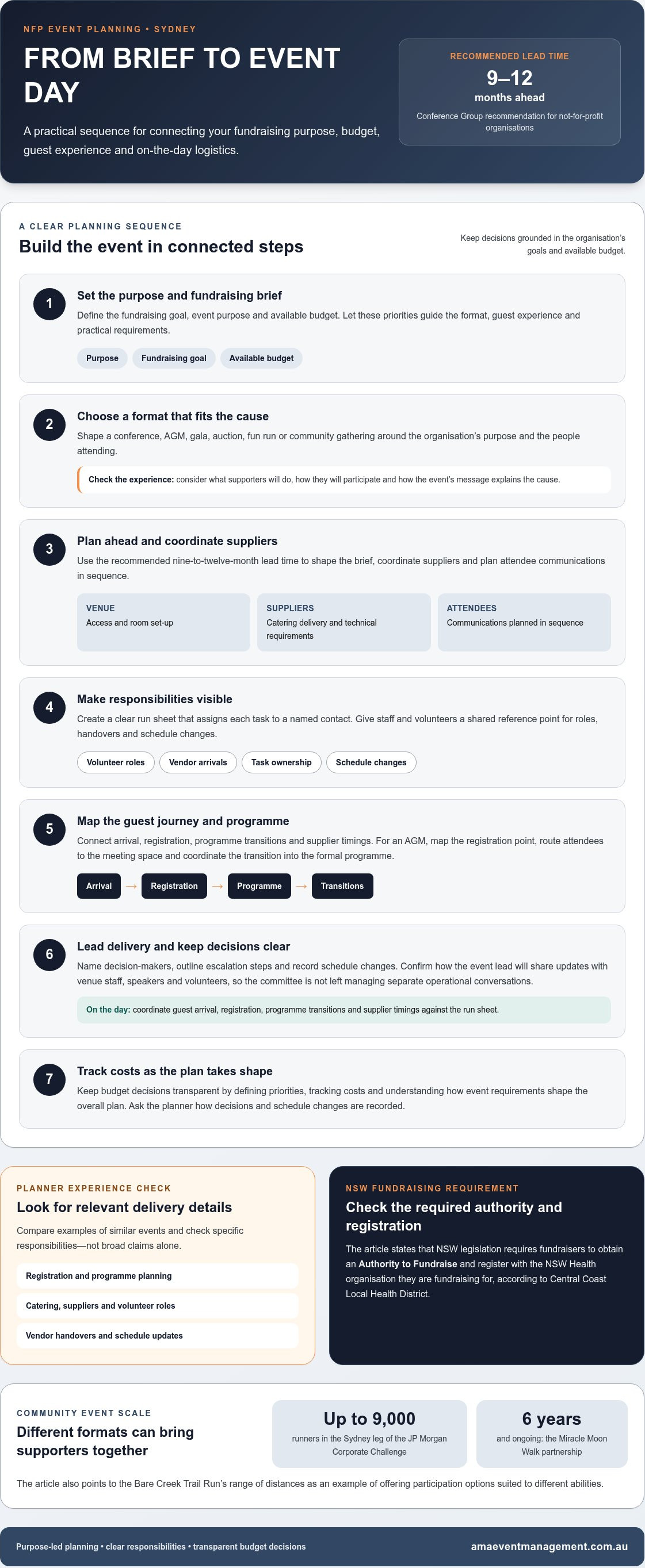
A clear budget starts with a defined fundraising goal and a plan for delivery. For non-profit fundraising event planners in Sydney, the Conference Group recommends booking event planning and management nine to twelve months ahead for not-for-profit organisations. The planning approach should connect the event format, guest experience and practical logistics to the purpose of raising funds.
It’s reasonable to ask whether an event planner understands the priorities of a not-for-profit organisation. Fundraising events need to welcome supporters and donors while keeping decisions grounded in the organisation’s goals and available budget. This article explains how to assess relevant NFP experience, organise a conference, gala or community gathering, and build a transparent budget around the event’s requirements.
You’ll also learn how logistics shape the plan, how to track costs as decisions are made, and when professional event management can help. The aim is a considered process, from the initial brief to the practical details that help the event run smoothly.
Table of Contents
Conference, AGM, gala and community event management
Sydney agencies support charities and not-for-profits with event management for conferences, AGMs, galas and community fundraisers. The work can cover registration, programme planning, venue coordination, catering logistics and on-site delivery, shaped around the event’s purpose.
The Conference Group recommends that not-for-profit organisations book event planning and management nine to twelve months ahead. That lead time allows teams to shape the brief, coordinate suppliers and plan attendee communications in sequence.
Vendor, volunteer and staff coordination
For a gala, the planner can coordinate venue access, room set-up, catering delivery and technical requirements across suppliers. A clear run sheet assigns each task to a named contact and gives staff and volunteers a shared reference point.
Review how the planner handles volunteer roles, vendor arrivals, handovers and schedule changes. NSW legislation requires fundraisers to obtain an Authority to Fundraise and register with the NSW Health organisation they are fundraising for, according to Central Coast Local Health District.
Event operations on site
On event day, the operations plan connects guest arrival, registration, programme transitions and supplier timings. For an AGM, for example, the team can map the registration point, direct attendees to the meeting space and coordinate the transition into the formal programme.
Ask how the event lead shares updates with venue staff, speakers and volunteers during delivery. A practical plan names decision-makers, outlines escalation steps and records schedule changes, so the committee isn’t left managing separate operational conversations.
Planner experience and service listings
When comparing Sydney event planners, look for experience with the format you’re planning, whether that’s a charity gala, auction, fun run or community fundraiser. Review examples for details such as an auction programme, participant registration or vendor coordination, rather than relying on broad claims.
Sydney non-profit fundraising event planners may appear in online management listings, but a listing alone doesn’t show how an event is delivered. Compare its service details with the agency’s event examples, including corporate event management services across Australia, and look for specific responsibilities rather than broad claims.
Choosing a fundraising event planner
Before hiring, ask which parts of planning and event management the agency will oversee, and who will lead delivery on site. Request an example of a comparable event, then discuss how registration, catering coordination, suppliers and volunteer roles would fit your programme.
Ask how the planner tracks decisions, communicates schedule changes and manages vendor handovers. For a community fair, clarify who coordinates stallholder arrival and site set-up; for a gala, discuss guest flow and the auction’s place in the running order. These details help you assess proposals against your event’s actual needs.
Community gatherings and donor appreciation events
A community event can bring supporters together beyond a formal fundraising appeal. The Sydney leg of the JP Morgan Corporate Challenge involves up to nine thousand runners, showing how a shared activity can connect corporate teams with a charitable cause. Smaller donor gatherings can use the same principle: give people a clear reason to attend, participate and stay connected to the organisation.
Build donor relationships into the event plan rather than treating them as a one-night outcome. A thank-you gathering, for example, could include a brief update on the charity’s work, a personal account from a beneficiary and time for supporters to speak with staff. These elements make the event meaningful without turning every moment into an appeal. Assign a team member to welcome returning donors and note follow-up actions.
Sydney examples show how community events can take different forms. The Miracle Moon Walk is a non-competitive night walk in Sydney’s CBD, and its partnership has lasted six years and is ongoing. The Bare Creek Trail Run offers a range of distances, giving participants options suited to different abilities. These formats centre on shared participation, while the organisation’s message explains the cause behind the event.
Plan communications around the participant journey. First, explain the purpose and who benefits. Make registration steps, event details and accessibility information easy to find. A reminder can cover arrival instructions, the programme and what participants should bring. After the event, thank attendees and share a concise update about the organisation’s work. For a donor appreciation event, tailor the message to the relationship instead of sending every supporter the same appeal.
Fun runs and walkathons need practical coordination as well as promotion. Map the course, registration point, participant flow and finish area before sharing event-day instructions. The JP Morgan Corporate Challenge shows the scale a Sydney running event can involve, while the Bare Creek Trail Run illustrates how different distances can serve varied participants. A clear schedule helps volunteers know where to be and when.
Donor events can also recognise communities whose contributions are often overlooked. ACN’s Carers Celebration is scheduled at Canterbury League Club on Friday at 6:30 pm and is free. The Chinese community humanitarian awards celebration is scheduled at 126 Greville St on Sunday, 1 November, at 10:00 am and is free. Each example puts recognition at the centre of the gathering.
For an event centred on local participation, community event planning can bring the programme, vendors and guest experience into one organised plan. Connect each event element to the charity’s purpose, then make the next step clear for attendees.
Fundraising event design and donation appeals
Design the event around one clear purpose, then make each guest interaction support it. For a charity seeking donations for a community programme, the welcome, speaker introduction and appeal can each explain a different part of that work. Keep the central message consistent across invitations, signage and the event programme. This gives the audience a clear thread to follow, whether they attend in person or receive updates through the organisation’s national network.
Make the donation appeal a deliberate moment, not an unexpected interruption. A speaker can explain the need, describe what contributions will support and direct guests to a simple giving method. For example, place the appeal after a short impact story, then allow time for attendees to respond. Agree who introduces the appeal, who manages giving and how guests can request assistance. These details support engagement while keeping the programme composed.
Marketing works best when each communication answers a practical question. An invitation should explain the event’s purpose, intended audience, programme format and registration process. A reminder can clarify arrival arrangements and the order of key moments. After the event, a thank-you message can recognise participation and share an organisation update. Use consistent language and visual details across email, event pages and printed material, so supporters receive a coherent account.
Venue selection shapes the guest experience and event logistics. Consider how attendees will enter, where they will register and how they will move between the presentation and appeal. A community hall may suit a local gathering with stalls, while a theatre-style room can focus attention on a speaker. Walk through the guest journey before confirming the layout. Check sightlines, stage access and the location of donation points, then adjust the floor plan to match the programme.
Lighting and staging should make important moments easy to see and hear. A presentation screen, lectern and speaker position need to work together rather than compete for attention. For an impact story, direct lighting towards the speaker and keep supporting images visible to the audience. Ask the technical team to rehearse transitions between the welcome, presentation and appeal. This sequence helps prevent lighting changes or equipment movement from disrupting the message.
Before finalising the design, review audience needs, donation methods, venue flow, staging and communications with the event team. A floor plan can show how registration, seating and giving points relate to the programme. A run sheet can align those elements with speaker cues and supplier timings. This joined-up planning makes the experience purposeful, with each design choice supporting the cause and fundraising goal.
Budget control and transparent invoicing
The main budget risks are unclear scope, changing requirements and costs that aren’t tracked as decisions evolve. Set an approved budget, assign each cost to a clear category and review changes before committing funds.
Budgeting and resource allocation
Start with the event’s purpose and identify the resources needed to deliver it. Separate venue, production, catering, promotion and administration costs so the committee can see what each allocation supports. A charity dinner may prioritise guest experience and the donation appeal, while a community event may need more planning for site operations and participant flow.
Record each expected cost alongside its owner, status and approval pathway. Track confirmed commitments separately from estimates, and update the budget when a supplier’s scope changes. This gives the finance lead a practical view of funds already committed and resources still available for essential event elements.
Also identify non-cash contributions, such as volunteer time or donated goods, without treating them as cash available for other expenses. This distinction helps supporters and committee members understand which resources are genuinely available to deliver the event.
Tailored plans and budgets
A tailored plan connects the event format, audience and fundraising purpose to the budget. A donor reception, charity dinner and outdoor community gathering have different requirements. Match each allocation to the agreed programme, guest experience and operational needs rather than copying another event’s budget categories without review.
Use the event brief to distinguish essential items from optional enhancements. If awareness is the priority, for example, allocate resources to clear messaging and attendee communications before decorative additions. If the event includes a stage programme, map production requirements against speaker needs and venue layout.
Keep the plan adaptable with documented approval steps. When a proposed change affects the programme, record its purpose, cost category and effect on other allocations. This gives decision-makers a clear basis for accepting or declining changes while keeping the budget specific to the event.
Budget risks and considerations
Common risks include scope changes, supplier adjustments, attendance differing from expectations and overlooked delivery requirements. For an outdoor charity event, weather planning can affect site arrangements; for a seated dinner, guest numbers can influence catering and room set-up. Identify these dependencies early and show how each affects the budget.
Transparent invoicing starts with an agreed scope and a clear record of charges. Review each invoice against the relevant service, approved changes and supporting documentation. If an item differs from the agreed plan, record the reason and approval before processing it. This keeps the organisation’s financial records aligned with event decisions.
Before approving a memorable addition, consider its purpose, operational impact and place among existing priorities. A named budget owner can review proposed changes with the event lead and finance contact. That simple process helps protect funds for delivery, maintain awareness of commitments and keep the event’s financial decisions accountable.
Fundraising event activities and logistics
Activities work best when they support the organisation’s mission and fit the event setting. Plan entertainment, guest movement and hospitality together, so each element has a clear purpose.
Logistics and event coordination
Start with a schedule covering supplier access, set-up, guest arrival, programme transitions and pack-down. Assign an owner to each task, then share the run sheet with staff, volunteers and vendors. For a fundraising cruise, such as the Inception and Project you Presents... MOVEMBER Boat Party Cruise at King Street Wharf 3 on Sat, 21 Nov, 3:00 pm, boarding details and the programme need to work together.
Hospitality also needs practical coordination. Set out how guests enter, where they receive information, and who can assist during the event. For a toy run, map the collection point and participant flow before promoting arrival instructions. The Christmas Toy Run fundraiser is scheduled at 22 Lambs Rd on Sat, 5 Dec, 4:00 pm.
Licences, permits and insurance
Permit and insurance considerations depend on the activity, site and operating arrangements. Add these matters to the planning checklist early, alongside venue conditions and supplier responsibilities. NSW legislation requires fundraisers to obtain an Authority to Fundraise and register with the NSW Health organisation they are fundraising for, according to Central Coast Local Health District.
For raffles, auctions and gaming activities, plan approvals and operating conditions before advertising. Requirements can differ depending on the activity and circumstances, so record who is responsible for each relevant step. Keep event communications consistent with the planned format, including how participants take part and how prizes or donations are handled.
Build the activity around the audience and the cause. A short performance, community stall or interactive appeal can create a natural point of engagement if it fits the venue and schedule. Plan the programme in sequence: welcome attendees, explain the mission, deliver the activity, then make the fundraising opportunity clear. This keeps entertainment connected to purpose rather than feeling like a separate attraction.
Review logistics before finalising the activity. Check access, equipment, supplier timing, weather exposure where relevant, and handovers between programme elements. For an outdoor event, identify where guests will gather and how the team will communicate schedule updates. For a venue-based function, confirm where hospitality will be served without disrupting the programme.
Coordinate vendors through one clear point of contact and document arrival instructions, site access and set-up responsibilities. A market-style fundraiser needs stallholder details aligned with guest circulation; a performance needs its staging and technical requirements aligned with the run sheet. To organise vendor coordination for a community event, plan your event logistics with a clear programme and task allocation.
AMA Event Management: Market Management and Vendor Coordination
AMA Event Management provides event management for community festivals and fairs, market management and vendor coordination, themed brand activations, and corporate conferences and galas. These services can suit a not-for-profit planning a community gathering, vendor-led event or formal conference and gala.
For a market or community fundraiser, vendor coordination brings stallholder requirements and event operations into one plan. For a conference or gala, event management supports programme flow and practical delivery. The right fit depends on your event format and the coordination your team needs.
To discuss your event requirements, visit AMA Event Management online.
Take the next step with a clear event brief
Your next step is to turn the fundraising idea into a brief your committee can act on. Set out the event’s purpose, intended audience, preferred format and decisions that need approval. Then identify what your team can manage internally and where event coordination support would make planning more straightforward.
That brief gives non-profit fundraising event planners in Sydney a practical starting point for discussing your event’s needs. It also helps keep decisions connected to your organisation’s mission, supporters and available resources. If your plans involve community participation, vendor coordination or a distinctive event experience, define those priorities early so they can guide the planning conversation.
AMA Event Management provides market management and vendor coordination, community festivals and fairs, and themed brand activations. Consider whether one of these services aligns with the event you’re developing, then share the key requirements and intended outcomes.
Contact AMA Event Management to discuss your event brief and explore a considered next step. A clear starting point can help your team move forward with purpose.
Frequently Asked Questions
Do you have experience with NFP clients?
AMA Event Management works with community organisations and manages public and private events, including community festivals and fairs, corporate conferences and galas, and markets. For a not-for-profit event brief, define the cause, audience and format at the outset. This helps shape a clear discussion about how the event requirements align with the organisation’s objectives.
How do I get contact information for these companies?
For AMA Event Management, use the contact option on its website to reach the team about your event. Prepare a short brief first, including the event format, intended audience, location and the support you need. If your committee has key dates or approval steps, include those too. A focused enquiry gives the conversation a practical starting point without requiring a fully developed event plan.
How do you collaborate with NFP teams under resource constraints?
Agree on one internal decision-maker and a clear approval process before planning begins. The not-for-profit team can set priorities, provide cause-related content and approve major decisions, while the event team coordinates the agreed requirements. For example, nominate who approves programme changes and who supplies speaker information. This division helps staff and volunteers contribute without duplicating tasks or losing track of decisions.
Which event planners in Sydney specialise in non-profit fundraising events?
For organisations searching for non-profit fundraising event planners in Sydney, AMA Event Management offers community festivals and fairs, market management and vendor coordination, and corporate conferences and galas. These services suit different fundraising formats, from a vendor-led community gathering to a formal event. Match the brief to the service scope and describe the outcomes your organisation wants the gathering to support.
How much do fundraising event planners in Sydney charge, and what pricing models do they use?
Event management and coordination fees are project-based. The cost depends on the event format, planning scope, logistics, supplier coordination and on-site requirements. Ask for the proposed scope and invoicing basis to be set out clearly, so your finance team can understand what each charge covers and assess it against the event brief.
How do Sydney fundraising event planners compare by services, reviews, and past clients?
Compare planners by the services they provide and the event formats they manage. AMA Event Management’s relevant offerings include market management and vendor coordination, community festivals and fairs, themed brand activations, and corporate conferences and galas. Consider whether available examples and feedback relate to your event’s format and audience. Focus on practical fit, such as supplier coordination for a market or programme delivery for a gala.
How can a Sydney non-profit choose a venue and suppliers for a fundraising event?
Choose a venue by mapping the event format, guest journey and operational needs before confirming a space. Consider how attendees will arrive, register, move through the programme and access the main activity. Then list the suppliers needed for that format, such as production suppliers or stallholders, and define responsibilities and delivery timings. A shared plan helps align the venue layout, supplier roles and event purpose.



Comments