

Outdoor Festival Coordination in NSW: The Architect’s Guide to Seamless Events
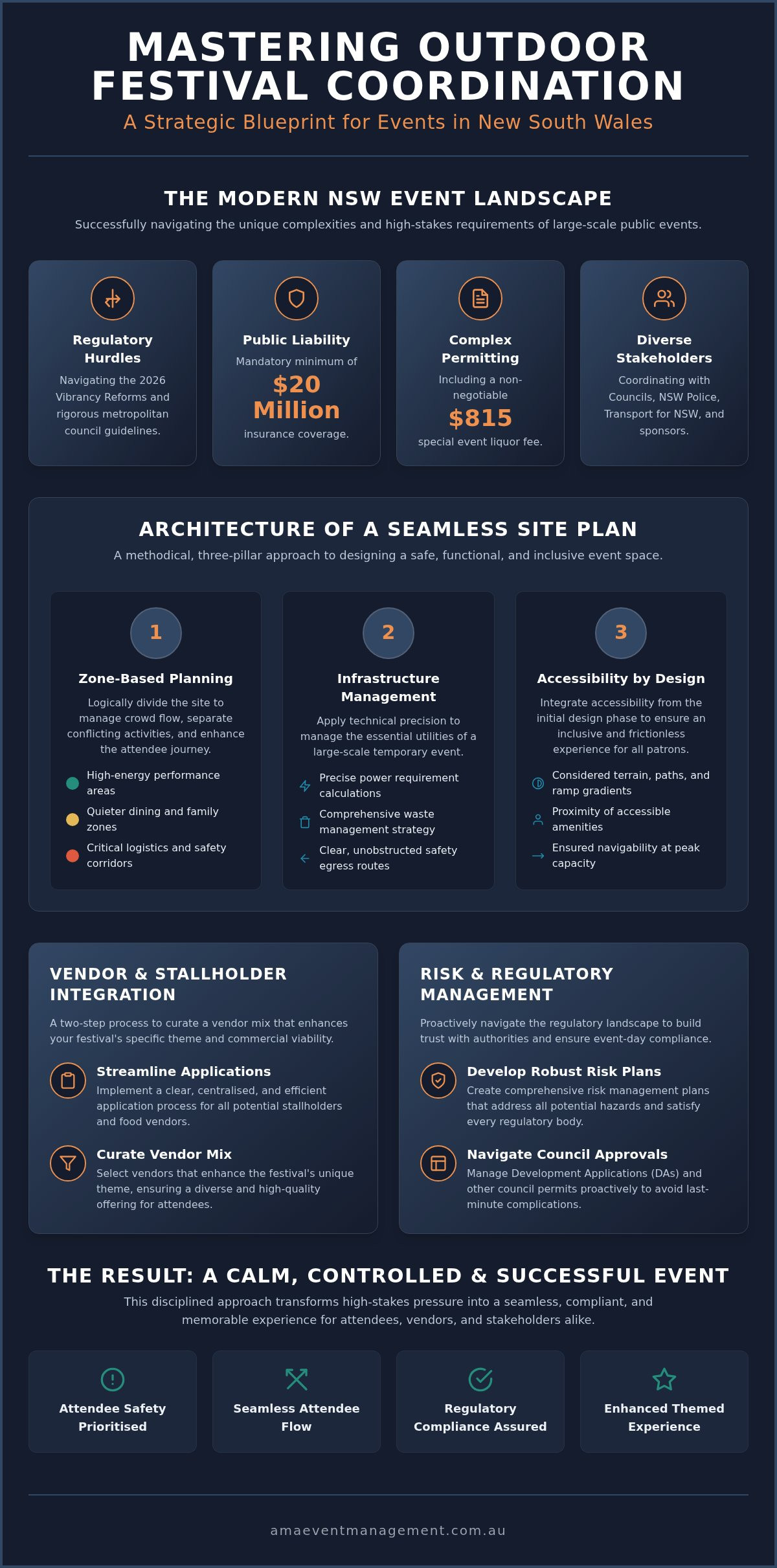
What if the success of your next event depended less on the weather and more on the invisible architecture of your planning? You likely understand that delivering a large-scale event in New South Wales often feels like a high-stakes balancing act between creative vision and rigid compliance. Between the 2026 Vibrancy Reforms and the strict 20 million dollar public liability requirements, the pressure to maintain site safety while managing hundreds of moving parts is immense. This complexity is exactly why professional outdoor festival coordination NSW requires a methodical, disciplined approach rather than just a simple checklist.
We agree that the weight of council permits and diverse vendor logistics can be overwhelming for even the most seasoned organisers. This guide promises to transform that anxiety into a clear, actionable roadmap for your festival. You will learn how to master the latest NSW liquor licensing fees, such as the 815 dollar special event processing fee, and how to implement a site coordination strategy that ensures attendee safety. We will preview the essential steps for efficient stallholder management and show you how to create a seamless, compliant experience that resonates with your audience and satisfies every regulatory body.
Table of Contents
The Landscape of Outdoor Festival Coordination in NSW
Professional outdoor festival coordination NSW isn't just about booking talent or arranging food trucks. It's the disciplined integration of site constraints, regulatory boundaries, and human experience. Think of an event coordinator as a meticulous architect drafting a complex blueprint. Every line represents a safety egress, a power run, or a crowd flow path. In New South Wales, this process is shaped by unpredictable coastal weather patterns and some of the most rigorous metropolitan council guidelines in the country. Without a grounded, methodical approach, the creative vision of a festival can quickly be overshadowed by logistical friction.
While the cultural significance of festivals continues to grow as a driver for local tourism and community identity, the operational reality is increasingly complex. Success relies on early coordination to mitigate high-pressure risks before they manifest on event day. Waiting until the month of the festival to address traffic management or police requirements often leads to compromised safety or cancelled permits. A seasoned manager acts as a stabilising force, ensuring that every moving part aligns perfectly before the first attendee arrives at the gate.
The event manager functions as the composed guide through this landscape. They possess a broad strategic view while maintaining an intense focus on the smallest details, such as the placement of accessible amenities or the load capacity of temporary flooring. This level of oversight isn't a luxury; it's a requirement for any event aiming to survive the scrutiny of modern compliance standards.
The Complexity of Modern Public Events
Events in 2026 have moved beyond simple gatherings. They're now immersive, multi-layered experiences that demand a delicate balance between community engagement and commercial viability. With the introduction of the 2026 Planning for Community Events Guide, organisers must be more precise than ever. To manage this, we use a centralised coordination hub for all event data. This ensures that every stakeholder, from the site crew to the sponsors, has access to the same live information. This methodical approach reduces errors and provides a clear narrative of efficiency during the build and execution phases.
Key Stakeholders in the NSW Festival Ecosystem
Successfully managing a festival involves navigating a dense network of authorities. You'll need to liaise effectively with local councils for Development Applications, while coordinating with NSW Police and Transport for NSW for public safety and road closures. These relationships require a professional, polished approach to build the trust necessary for long-term event success. Beyond the authorities, you must also manage the diverse expectations of sponsors, local businesses, and the general public. Stakeholder coordination is the alignment of regulatory safety and creative vision.
Strategic Logistics: The Architecture of a Seamless Site Plan
A seamless site plan is the physical manifestation of your event's strategy. It requires more than just placing stalls on a map; it demands a deep understanding of spatial dynamics and human behaviour. Effective outdoor festival coordination NSW relies on "zone-based" planning to manage large-scale outdoor venues effectively. By dividing a site into logical sections, you separate high-energy performance areas from quieter dining zones and essential logistics corridors. This methodical structure ensures that attendees move intuitively through the space while keeping critical safety egress routes clear and accessible.
Integration of accessibility standards is not an afterthought. It must be woven into the initial design phase to ensure every patron enjoys a frictionless experience. This includes considering terrain, ramp gradients, and the proximity of accessible amenities. When you prioritise these details early, you create a safer, more inclusive environment that meets both ethical standards and legal requirements. This disciplined approach to design prevents bottlenecks and ensures the site remains navigable even at peak capacity.
Infrastructure and Utility Management
Managing the utilities of a temporary city requires technical precision. You must calculate the exact power requirements for diverse food vendors and heavy-duty stage production to prevent site-wide failures. Waste management is equally critical, requiring a strategy that spans from the initial bump-in to the final site clearance. According to the City of Sydney outdoor event guidelines, a detailed site plan must account for every temporary structure, marquee, and stage to ensure they are anchored and positioned safely. Oversight of these moving parts ensures that the infrastructure supports the event without becoming a distraction.
On-site Supervision and Real-time Problem Solving
The true test of a site plan occurs during the high-pressure "bump-in" phase. A composed, professional presence on the ground is necessary to manage schedules and avoid site congestion as multiple vendors and contractors arrive simultaneously. Clear communication protocols between security, medical, and management teams are vital for real-time problem solving. If a generator fails or a weather front approaches, the response must be immediate and disciplined. This level of oversight is a hallmark of professional outdoor festival coordination NSW, ensuring that the transition from a vacant park to a vibrant festival remains orderly and safe. For those seeking a partner to manage these complexities, our expertise in community festivals and fairs provides the structural anchor your project needs.
Vendor Management and Stallholder Integration
The transition from site architecture to vendor integration is where the festival truly begins to take shape. While the site plan provides the structural skeleton, the vendors provide the life, colour, and character of the event. Professional outdoor festival coordination NSW involves a disciplined approach to vendor management that begins months before the first marquee is pegged. It's a process of curation rather than just filling space. You must select a mix of stallholders that enhances the festival's theme while ensuring each one adheres to strict NSW food safety and insurance standards.
Every vendor operating on council-managed land in NSW must carry a minimum of 20 million dollars in public liability insurance. Verifying these documents is a non-negotiable step in your risk management strategy. Beyond compliance, you'll need to manage complex logistics like staggered arrival windows and specific power draws. A gourmet food truck requires vastly different infrastructure than a local craft stall. Mapping these needs accurately prevents power failures and site congestion during the high-pressure bump-in phase.
The Stallholder Lifecycle
Managing a diverse group of independent businesses requires a highly structured lifecycle. This starts with a streamlined night market stallholder application process to capture essential data and compliance documents. Following selection, providing a detailed stallholder handbook is vital. This document serves as a guide for everything from vehicle access routes to waste management protocols. Clear instructions reduce on-site friction and allow your team to maintain a calm, authoritative presence. Financial management is also a priority. You'll need to establish firm participation agreements that cover rental fees and site requirements to protect the event's commercial stability.
Curating the Attendee Experience
A festival's atmosphere relies heavily on the diversity of its offerings. To foster a genuine "market fair" environment, you should balance artisan retail, interactive stalls, and a wide variety of food options. Over-saturating a site with similar vendors leads to poor returns for stallholders and a repetitive experience for patrons. By carefully managing the vendor mix, you ensure high engagement and a memorable attendee journey. For deeper insights into these logistical nuances, reviewing the standards for community market management Australia can help you build a more resilient event model. This methodical oversight ensures that every stall contributes to a seamless and profitable festival.
Navigating NSW Regulatory Requirements and Council Approvals
Regulatory compliance is the structural framework that ensures public safety and operational longevity. In the context of outdoor festival coordination NSW, this involves more than just filling out forms; it's the disciplined translation of state legislation into a functional operational plan. You must secure the correct permits, whether that's a Development Application (DA) for a new site or a Special Event permit for established public spaces. This process requires a methodical approach to noise ordinances, environmental protection, and community impact to ensure the festival remains a welcome addition to the local area.
Coordinating with Transport for NSW is another critical layer of the planning phase. You'll need to develop a traffic management plan that accounts for road closures, shuttle bus services, and the impact on local public transport networks. By addressing these logistical hurdles early, you reduce the risk of last-minute permit denials or community backlash. This level of oversight provides the stability needed to execute a large-scale event without the friction of regulatory non-compliance.
Risk Assessment and Safety Protocols
Outdoor environments introduce variables that indoor venues simply don't face. You must account for shifting coastal weather patterns, high crowd density, and potential fire hazards, particularly in regional NSW. A Risk Management Plan is a living document, not a one-off checklist. It requires constant updates as your site layout or vendor list evolves. Implementing a disciplined security presence and a professional first-aid team ensures that if an incident occurs, the response is swift and controlled. This proactive stance is what separates a chaotic event from a professionally managed festival.
The Council Liaison Process
Presenting your event vision to council stakeholders requires a polished, professional approach. It's vital to understand the specific lead times for different regions to avoid peak-season delays in 2026. For example, while the City of Sydney requires applications at least six weeks prior, councils like MidCoast or Shoalhaven often require three to four months' notice for events involving road closures or alcohol. Managing these timelines is essential to your success. You must also stay ahead of liquor licensing requirements; as of 15 March 2026, Large Scale Commercial Event applications carry an 815 dollar processing fee. Missing the 29 May 2026 annual fee deadline can lead to licence suspension, adding unnecessary pressure to your team.
If you're feeling overwhelmed by these bureaucratic hurdles, our team provides expert market management and vendor coordination to ensure every permit is secured and every regulation is met with precision.
Elevating Your Event with Professional Coordination
The final layer of a successful festival is the transition from a functional gathering to a bespoke, immersive celebration. While logistics and regulations provide the foundation, professional outdoor festival coordination NSW acts as the bridge to a memorable attendee experience. This stage of planning focuses on the seamless integration of every moving part, ensuring that the technical precision we've discussed translates into a polished, high-end production. When you elevate the coordination process, you move beyond mere management and begin to craft a narrative that resonates with your community and stakeholders alike.
With over 20 years of industry experience, our team functions as a stabilising force in high-stakes environments. We maintain a sense of calm under pressure, providing the security you need to focus on your strategic goals while we manage the granular details. Integrating a themed brand activation Sydney into the festival fabric ensures that commercial partnerships feel like a value-add for the attendee rather than a distraction. This methodical approach ensures that your event isn't just compliant, but extraordinary.
Bespoke Styling and Thematic Design
Generic setups rarely resonate with modern audiences who seek authentic connection and visual storytelling. By engaging a bespoke private event planner Sydney, you can access high-end styling ideas that transform a standard public space into a curated environment. We use interactive elements to drive social media engagement and strengthen community bonds, ensuring that every touchpoint reflects your event's unique theme. This attention to detail elevates the attendee journey, making the festival feel like a cohesive, intentional experience from the moment they arrive at the gate.
The AMA Event Management Advantage
Our disciplined, methodical approach is specifically designed to solve complex logistical puzzles before they impact your timeline or budget. Professional outdoor festival coordination NSW provides a sense of relief for organisers, knowing that a seasoned expert is always several steps ahead of any challenge. We prioritise order and high-level execution, acting as a reliable anchor for your project from initial concept to final site clearance. As you plan your 2026 festival calendar, engaging a professional coordinator is the most effective way to ensure a frictionless, safe, and sophisticated event that leaves a lasting impression on every guest.
Master Your Next Outdoor Event with Precision
Executing a successful festival in New South Wales requires a disciplined blend of architectural site planning and rigorous regulatory adherence. You've seen how a methodical approach to logistics, from power distribution to council approvals, creates a stable foundation for any public gathering. By prioritising attendee flow and vendor compliance, you ensure that the creative vision of your event remains protected from operational friction and unexpected site challenges.
Professional outdoor festival coordination NSW provides the oversight necessary to manage these moving parts with quiet confidence. Whether you are navigating the 2026 Vibrancy Reforms or managing hundreds of stallholders, having a seasoned expert on the ground is invaluable. We provide a stabilising force through composed, professional on-site supervision and a strategic view of the entire project timeline. With 20+ years of expert event coordination and a specialisation in large-scale community markets, we act as your meticulous guide through every phase of the journey.
Partner with AMA Event Management for your next NSW festival to ensure a seamless, compliant, and extraordinary experience for every attendee. Your vision deserves the security of professional execution.
Frequently Asked Questions
What is the first step in outdoor festival coordination in NSW?
The first step is conducting a thorough site feasibility study and defining your event's scope. This involves identifying the physical constraints of your chosen location and understanding the specific regulatory requirements of the local council. Starting with a clear architectural vision ensures that the subsequent layers of outdoor festival coordination NSW are built on a stable and compliant foundation.
Do I need a permit for a small community market in Sydney?
Yes, any event held on public land in Sydney requires a permit or Development Application from the local council. Even a small community market must comply with public safety, noise, and waste management regulations. Councils like the City of Sydney have specific guidelines for outdoor public spaces that must be followed to ensure the event is legal and safe for the community.
How far in advance should I start planning a large-scale NSW festival?
Planning for a large-scale festival should ideally begin 12 months in advance to secure the best vendors and meet council deadlines. Some NSW councils require at least four months' notice for events involving road closures or alcohol. Starting early allows you to manage the 2026 peak-season demand and ensures all logistical elements, from traffic management to police liaison, are meticulously organised.
What insurance is required for festival stallholders in Australia?
Stallholders are typically required to hold a minimum of 20 million dollars in Public Liability Insurance. This is a standard requirement for events on council-managed land across Australia and protects both the vendor and the organiser from potential claims. We verify these documents during the application process to ensure compliance before any vendor bumps into the site.
How do you manage crowd safety at an outdoor event?
Crowd safety is managed through a combination of intelligent site design and a disciplined Risk Management Plan. We prioritise clear egress routes, wide thoroughfares, and logical zone-based layouts to prevent overcrowding. On the day, a professional security presence and real-time monitoring allow for immediate adjustments to maintain a safe and orderly environment for all attendees.
Can you help with stallholder applications for night markets?
Yes, we specialise in end-to-end market management, which includes streamlining the stallholder application process for night markets and festivals. Our team handles everything from curation and document verification to site placement and on-site coordination. This meticulous oversight ensures that your vendor mix is high-quality, compliant, and perfectly aligned with your event's theme.
What are the most common mistakes in outdoor event logistics?
The most common mistakes include underestimating power requirements and submitting permit applications too late. Many organisers also fail to account for the complexity of waste management or the impact of heavy vehicle movements on parklands. Professional outdoor festival coordination NSW mitigates these risks by using precise calculations and a structured project timeline that accounts for every logistical detail.
How does weather impact festival coordination and site planning?
Weather significantly influences site planning, requiring robust contingency plans for both extreme heat and heavy rain. We design site maps with drainage in mind and ensure all temporary structures meet Australian wind-loading standards. A wet weather version of the site plan is often developed to ensure the event can proceed safely or be postponed with minimal friction if conditions become hazardous.


Comments