

Successful Local Market Stall Ideas: 12 Concepts to Inspire Your Next Market
The best successful local market stall ideas are not necessarily the most unusual. They’re the ones that suit local shoppers and give them a clear reason to stop. With so many possibilities, it’s easy to get stuck choosing a product or worry that your stall will blend into the crowd. Start with an offer you can explain quickly, prepare reliably and adapt to the market you want to join.
This guide covers 12 practical concepts, from handmade goods to interactive experiences, and explains how to assess each against your skills, setup and likely audience. You’ll also learn how product choice, presentation and customer experience work together to make a stall distinctive without making it difficult to run. Use the ideas to narrow your options, observe what local shoppers respond to and plan a small test before committing to a larger setup. By the end, you’ll have a clearer way to choose a concept and refine it for markets in Sydney, Melbourne and beyond.
Table of Contents
What makes a local market stall idea successful?
A promising stall concept is more than a popular product. It needs to suit the people who attend, communicate its value quickly and be practical for you to deliver. A stall that attracts attention but is difficult to stock, explain or operate may not be a good fit for your business.
A successful market stall idea matches customer interest with a clear offer you can deliver consistently in that market’s setting. The setting matters: a family-focused community outing, an artisan market and a seasonal event can create different expectations. A farmers' market, for example, focuses on producers selling food directly to customers. Other markets may bring together makers, retailers and community activities.
Start with the people who attend the market
Think about why visitors come, then observe their behaviour at local markets before settling on an offer. Are they browsing at a relaxed pace, looking for gifts, shopping for specific goods or making a day of their visit? Notice which stalls draw attention, what visitors stop to examine and how the event’s layout and atmosphere shape their movement.
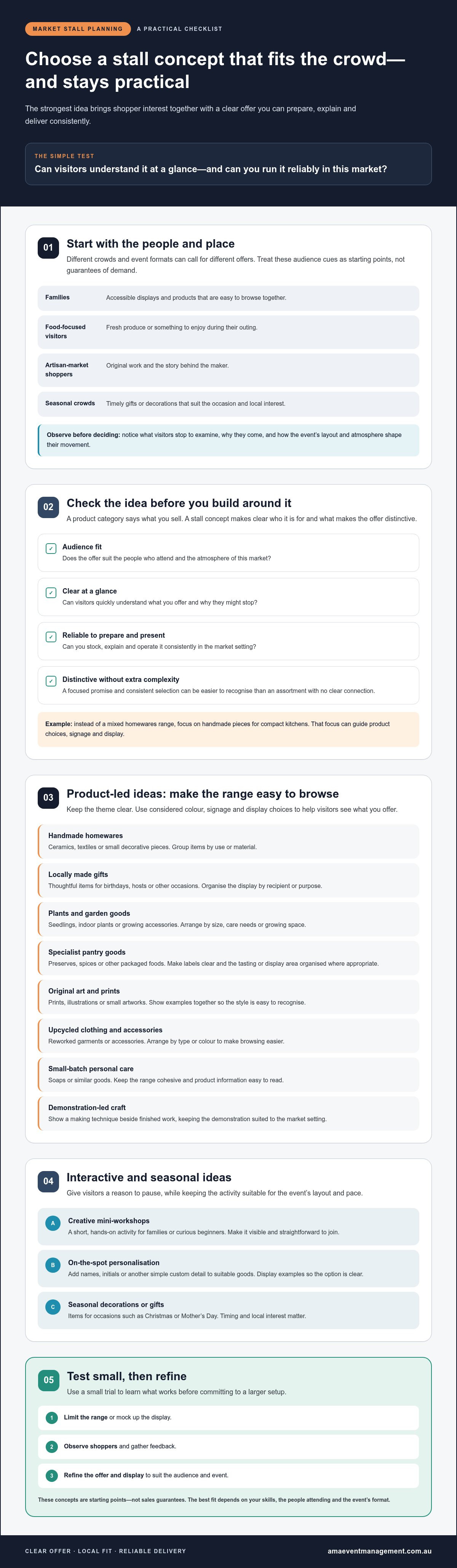
Different audiences have different priorities. Families may value accessible displays and products that are easy to browse together. Food-focused visitors may be looking for fresh produce or something to enjoy during their outing. Artisan-market shoppers may be drawn to original work and the maker’s story, while seasonal audiences might be seeking timely gifts or decorations. Use these as starting points, not guarantees of demand. The particular crowd and event context still matter, so compare markets in Sydney or Melbourne with the one you’re considering.
Turn a product or skill into a clear stall concept
A product category describes what you sell. A stall concept explains who it is for, what makes the offer distinctive and how customers can engage with it. A maker, grower or small-business owner can shape a broad skill into a focused promise, supported by a consistent product selection and display. A simple offer is easier to recognise than an assortment that asks visitors to work out what connects each item.
Illustration only, not a sales result: rather than presenting a mixed range of homewares, a maker might focus on handmade pieces for compact kitchens. That direction helps guide product choices, signage and display, while giving shoppers a clear reason to pause.
To assess your own idea, ask whether visitors can understand it at a glance, whether it fits the market’s audience and atmosphere, and whether you can prepare and present it reliably. The best successful local market stall ideas bring those elements together with a recognisable point of difference, without adding unnecessary complexity.
12 Successful local market stall ideas, from handmade goods to experiences
These concepts are starting points, not sales guarantees. The strongest fit depends on your skills, the people attending and the event’s format. Adaptable ideas can suit a range of markets when shaped for the audience; seasonal concepts depend more on timing and local interest.
Product-led stall ideas shoppers can understand quickly
A focused range helps visitors see what you offer at a glance. Keep the theme clear, then use colour, signage and considered display choices to make browsing straightforward.
Handmade homewares: Ceramics, textiles or small decorative pieces may appeal to shoppers furnishing a home or looking for a gift. Group items by use or material.
Locally made gifts: Offer thoughtful items for birthdays, hosts or other occasions. A clear gift-focused display can help visitors browse by recipient or purpose.
Plants and garden goods: Seedlings, indoor plants or practical growing accessories can suit garden enthusiasts and new plant owners. Arrange them by size, care needs or growing space.
Specialist pantry goods: A focused range of preserves, spices or other packaged foods may interest home cooks and food-minded visitors. Use clear labels and an organised tasting or display area where appropriate.
Original art and prints: Prints, illustrations or small artworks can attract people looking for distinctive pieces. Show a few examples together so the style is easy to recognise.
Upcycled clothing and accessories: Reworked garments or accessories may appeal to shoppers seeking individual style. Arrange them by type or colour to make browsing easier.
Personal care made in small batches: Soaps or similar goods can suit gift buyers and people exploring everyday alternatives. Keep the range cohesive and make product information easy to read.
Demonstration-led craft: Show a making technique alongside finished work for visitors interested in the process as well as the product. Keep the demonstration simple enough to fit the market setting.
Experience-led and seasonal stall ideas
Interactive offers can give visitors a reason to pause, but they need to suit the event’s layout and pace. Seasonal ideas also call for careful timing: what feels relevant at a spring market may not suit another season or local crowd.
Creative mini-workshops: A short, hands-on activity may suit families or curious beginners. Make the activity visible and straightforward to join.
On-the-spot personalisation: Add names, initials or another simple custom detail to suitable goods. Display examples so shoppers can understand the option quickly.
Seasonal decorations or gifts: Offer items tied to occasions such as Christmas or Mother’s Day. Test whether the timing and local audience support the theme.
Harvest-inspired goods: Seasonal produce or pantry items can connect with visitors interested in local food. Food-related concepts require current, location-specific compliance checks before trading.
Bundles or demonstrations may help explain how products work together, but they’re options to test, not guaranteed sales tactics. A well-coordinated market can also bring complementary stalls together. Explore market management and vendor coordination to see how event planning supports a cohesive visitor experience.
How to choose a stall idea that stands out without overcomplicating it
A distinctive stall doesn’t need an elaborate setup or a wide product range. It needs a clear reason for shoppers to stop, an offer that suits the event and a plan you can manage consistently. Use the framework below to compare ideas before committing. It supports your judgement, but it can’t predict sales or replace observing local markets and speaking with potential customers.
Compare ideas against your skills, time and resources
Rate each concept against the four criteria using a simple scale, such as low, medium or high. Then consider the work behind the display: what you need to make or source, how you’ll manage stock, how much explanation customers may need and whether you can handle interactions while keeping the stall organised.
A product that needs frequent restocking or careful handling may require a different setup from prints that can be stored flat. A demonstration or personalisation service also takes time to deliver while engaging with visitors. Start with a manageable offer, then expand only when you understand the preparation it involves and how customers respond. This practical filter can help narrow down successful local market stall ideas to those you can deliver well, not just those that look appealing on paper.
Make the offer easy to recognise and remember
Give the stall one visual direction. Use clear signage that names the offer, group related items together and repeat a small set of colours across your display and packaging. Shoppers should be able to understand what you sell without searching through a crowded table or asking you to explain every item.
Good differentiation makes your offer easier for the right customer to recognise, without adding complexity they don’t need. Keep that principle at the centre of design choices, from the wording on a sign to the way products are arranged.
Instagram can extend discovery before and after a market visit. Share clear previews of what you’ll bring, useful details about the event and, afterwards, a glimpse of new work or upcoming market plans. Treat it as a way to maintain interest and help people find your stall, not a substitute for a relevant offer, thoughtful presentation or direct market research.
How to test and prepare a local market stall idea
A small, structured trial can reveal what needs adjusting before you commit to a full range or elaborate display. Treat each market as a chance to learn: record what visitors ask, what they pause to examine and which parts of your setup are easy or difficult to manage. One event offers useful observations, not a reliable prediction of future demand.
Validate interest before committing to a full stall range
Start with what you can observe and test. Review comparable local markets to understand the mix of stalls and spot gaps, but use that research to shape your own offer rather than copy another vendor. Early conversations, social posts and a simple display mock-up can help you gauge whether people understand the idea and what they want to know.
Observe the audience. Note who attends, what draws their attention and how they move around the market. Look for patterns, not one-off reactions.
Define a small trial. Choose a limited product range or prepare a mock-up of your stall. Keep the offer focused so you can assess it clearly.
Invite feedback. Ask potential customers what they notice, what they would use the product for and what information is missing. Treat responses as directional evidence, not a promise of future purchases.
Trade and take notes. Record common questions, customer reactions, items people examine and what you sell. Separate direct observations from your own assumptions.
Refine before expanding. Keep what works operationally, revise what causes confusion and remove elements that don’t support the central offer.
Prepare a reliable, customer-ready market setup
Before the event, plan how visitors will approach and browse your stall. Make the main offer visible, keep signage easy to read and arrange stock so customers can handle or view it without disrupting the display. Check that your payment options are ready, and plan how you’ll protect, replenish and pack stock. Consider weather contingencies that suit the event and your products.
If your idea involves food, verify current requirements for the relevant location and market before trading. Requirements can vary, so avoid relying on assumptions or guidance intended for another area.
After the event, take a short review while details are fresh: what should you retain, revise or remove? For practical steps on planning market participation, read the market stallholder application guide. To plan a market with coordinated vendors and event logistics, explore market management with AMA Event Management.
From stall idea to a well-run Australian community market
A stall operates within a wider visitor experience. A thoughtfully selected mix of makers, growers, food vendors and interactive activities can give people different reasons to browse and create a market that feels varied without losing its sense of purpose. The aim isn’t to make every stall appeal to everyone. It’s to bring together offers that complement the event and its community.
Why stall success is connected to the wider market
Product variety is one part of the picture. Stall placement can also influence how visitors move through an event, which areas they notice and whether the market feels easy to explore. Clear event information helps visitors understand what’s on offer and plan their visit, while considered vendor coordination can reduce confusion around layout and event operations.
For stallholders, clear communication about practical arrangements helps them prepare for the event and focus on serving customers. Organisers manage the moving parts, from coordinating vendors to planning event logistics and shaping an environment that supports a smooth visitor journey. These measures create a considered framework, but they can’t guarantee how an individual stall will perform. Customer interest, the offer and the stallholder’s execution still matter.
AMA Event Management organises recurring local markets across New South Wales and Queensland, coordinating vendors and market operations. Founder Amanda brings more than 20 years of industry experience to the business, including an organiser’s perspective on how individual stalls contribute to the whole.
A practical next step for vendors and market organisers
For vendors, choose one clear concept and name the audience it serves. Then consider how your offer fits the event, what visitors need to understand quickly and what you can deliver consistently. A focused idea is easier to assess and refine than a stall that tries to cover too many unrelated interests.
For organisers, start with the purpose of the market and consider how the vendor mix can reflect it. Complementary stalls can add variety, while practical layout decisions and clear event information help connect those offers into a coherent experience for visitors. Thoughtful coordination gives the market structure without taking away the character of its individual vendors.
If you’re planning a community market, explore AMA Event Management’s market coordination work and consider how vendor coordination and event logistics can support your event’s aims.
Take your stall idea from plan to market
The strongest stall concept is one that suits local shoppers, gives them a clear reason to engage and remains practical for you to deliver. Choose a focused offer, compare it against your skills and resources, then test it on a small scale. Use what you observe and hear to refine your products, presentation and customer experience, rather than assuming one market will predict every result.
Successful local market stall ideas also sit within a wider event. A thoughtful mix of vendors, clear coordination and well-planned logistics can help create a more coherent experience for visitors. AMA Event Management organises recurring local markets across New South Wales and Queensland, drawing on more than 20 years of industry experience through founder Amanda.
Explore AMA Event Management’s market coordination work to see how vendor coordination and event logistics support well-run community markets. With a clear concept and a manageable first test, you can take the next step with confidence.
Frequently Asked Questions
What are the most successful local market stall ideas?
The most successful local market stall ideas match the market’s audience with a clear offer you can deliver reliably. Handmade goods, plants, locally made gifts and a simple interactive activity can all be worth considering, depending on the event. None guarantees sales. Assess what you can produce or provide consistently, then compare it with the market’s character and visitor motivations before settling on a concept.
How do I choose what to sell at a local market?
Start with products or skills you can deliver consistently, then consider who attends the market and what other stalls already offer. In Sydney or Melbourne, the right choice may differ between a neighbourhood market and a larger artisan event. Test a small range with a clear display and invite early feedback. Choose an offer that suits your abilities and this specific market, rather than chasing a supposed universal bestseller.
What sells best at a local market in Australia?
There’s no reliable universal best-seller at Australian markets because audiences, locations and event formats differ. Gifts, handmade goods, plants and specialist food concepts can all be relevant, depending on local visitors and the market’s character. In Sydney and Melbourne, observe comparable nearby markets and note what shoppers browse or ask about. Test a focused offer before expanding, and treat each result as specific to that event rather than proof of a national trend.
How can I make my market stall stand out?
Make your stall stand out with a recognisable concept, readable signage and a tidy, focused display. Use consistent colours and arrange related products together so visitors can understand the offer quickly. A demonstration or personalisation option can invite interaction if it suits your products and the event format. Aim for practical differentiation: help the right shopper recognise your offer, rather than adding complexity for its own sake.
Are food stalls a good idea for local markets?
Food stalls can suit a local market if the offer matches visitor expectations and you can prepare and serve it consistently. Consider whether the concept fits the event, your skills and the practical demands of the setup. Food preparation and service requirements vary by location and activity, so verify the current requirements that apply before operating. A suitable idea still needs sound planning; no category guarantees commercial results.
How do I test a market stall idea before investing in it?
Test the idea in stages: observe comparable markets, speak with potential customers, then trial a limited range or simple display. During the event, note questions, customer reactions, items people handle and any display or stock issues. A small test can reveal useful patterns, but it can’t guarantee future sales. After each market, review your notes and make measured changes before deciding whether to keep, adjust or expand the offer.


Comments