

The Evolution of Recurring Markets in NSW: A Guide to Community Anchors
Updated: Jul 10
A successful market is not a happy accident of local stalls; it is a precisely engineered piece of social infrastructure. You've likely experienced the frustration of visiting a local event only to find inconsistent quality, poor vendor coordination, or a general lack of direction. It's easy to view these gatherings as simple weekend hobbies, yet the reality behind the recurring markets NSW residents rely on is far more complex and disciplined. When managed with precision, these events transform from mere shopping precincts into vital community anchors that provide stability and social connection.
This guide will show you exactly how these markets evolve and reveal the meticulous logistics required to sustain their long-term success. We'll explore the strategic differences between weekly, fortnightly, and monthly frequencies to help you understand which models offer the most value for different regions. You'll also learn to identify the hallmarks of a well-managed community event, from seamless vendor integration to the sophisticated oversight that keeps a complex operation running like clockwork. By the end, you'll see these local fixtures through the eyes of a meticulous architect, appreciating the order and effort behind the atmosphere.
Table of Contents
What Defines Recurring Markets in NSW?
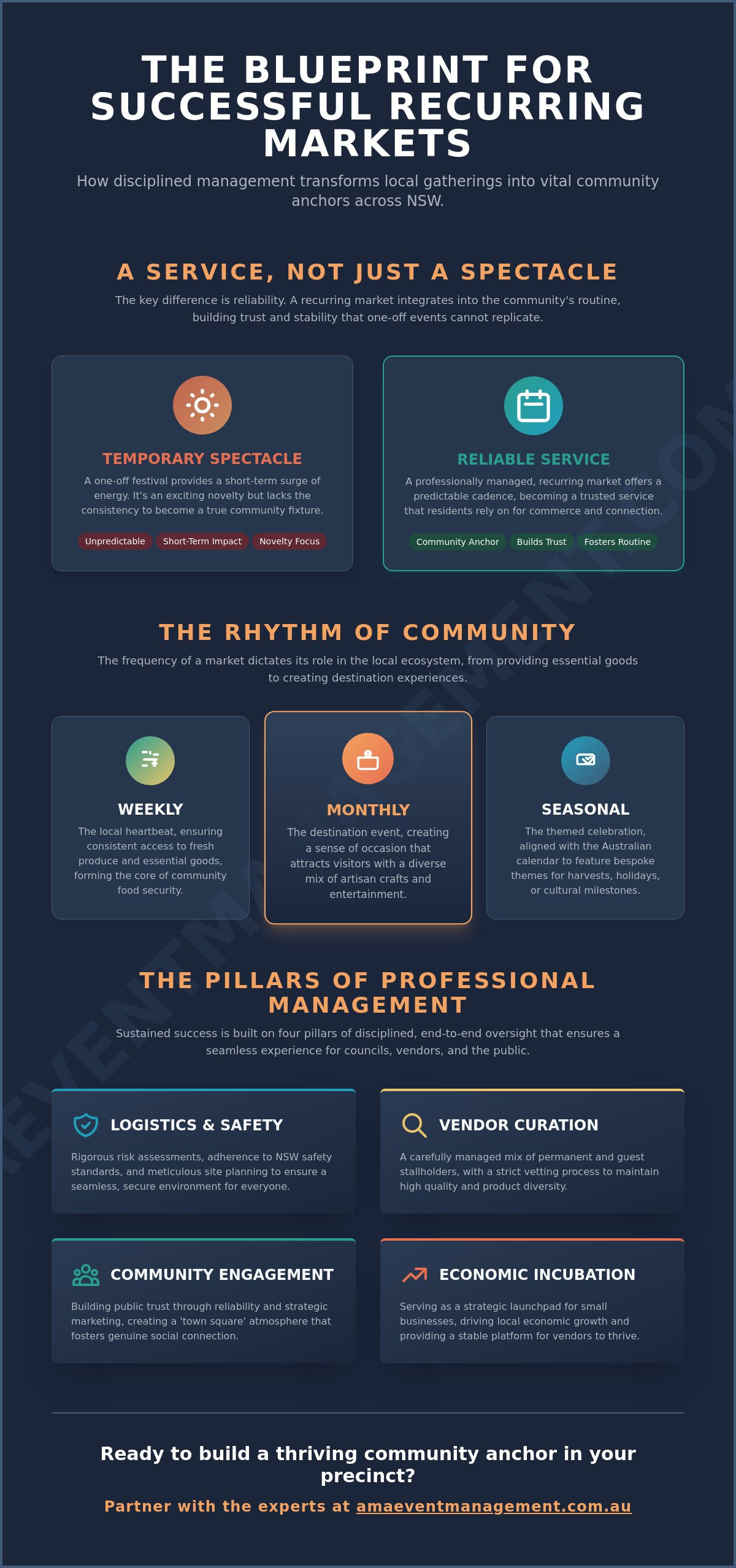
A recurring market is defined by its predictable cadence. Unlike one-off annual festivals that provide a temporary surge of energy, recurring markets NSW residents visit are structured events held at fixed intervals, typically weekly, fortnightly, or monthly. This regularity transforms a simple gathering into a reliable community anchor. While a festival is a spectacle, a recurring market is a service. It provides a stable platform for commerce and social interaction that locals can integrate into their daily or weekly routines. This steady presence fosters a sense of belonging that temporary events simply cannot replicate.
The current Sydney's diverse market scene illustrates how these activations range from essential produce hubs to curated artisan night markets. Each serves a specific purpose within the urban or regional fabric, acting as a disciplined alternative to the traditional retail centre. They offer a physical space where the community can gather, browse, and engage in a way that feels organic yet organised.
The Different Rhythms of NSW Markets
Market frequency dictates the role the event plays in the local ecosystem. Weekly markets are often the heartbeat of local food security. They focus on fresh produce and essential goods, ensuring that residents have consistent access to regional growers and makers. Monthly activations function more as destination events. By occurring less frequently, they create a sense of occasion that draws crowds from across the broader region, often featuring a wider variety of artisan crafts and entertainment. Quarterly and seasonal events align with the Australian calendar. These markets offer bespoke themes that reflect the changing seasons or cultural milestones, such as harvest periods or winter solstice celebrations.
Why Consistency is the Key to Success
Reliability is the foundation of a loyal local following. When a market appears without fail at the same time and place, it builds trust with the public. This predictable scheduling allows small businesses to plan their production cycles with precision. They don't have to guess when their next opportunity to sell will arise. Instead, they can manage inventory and staffing with confidence. There is also a significant psychological benefit to this consistency. In an increasingly digital age, the town square atmosphere of a well-managed market provides a grounded, physical space for connection. It's a reliable venue where people know they'll find familiar faces and high-quality goods, reinforcing the market's role as a permanent fixture in the community's social life.
The Logistics of Longevity: How Professional Markets Operate
The sustained success of recurring markets NSW residents enjoy depends on a foundation of disciplined logistics and invisible oversight. While visitors experience a seamless stroll through stalls, the reality is a complex operation that requires a composed approach to site management. Professional organisers don't simply fill spaces; they engineer an environment. This process begins with a comprehensive risk assessment of the public space, ensuring that safety standards meet rigorous NSW requirements. From electrical safety for food vendors to pedestrian flow and emergency access, every detail is planned with precision to prevent the inconsistent quality that often plagues unmanaged events.
Maintaining high foot traffic year-round requires more than just a good location. It involves a strategic marketing effort and active community engagement. Professional managers oversee the "mix" of stallholders, ensuring that the offering remains diverse and fresh. By balancing essential produce with artisan crafts and ready-to-eat food, organisers create a destination that rewards repeat visits. This methodical oversight ensures that the market remains a reliable anchor for the precinct, rather than a temporary novelty that fades after a few months.
Vendor Coordination and Stallholder Quality
The vetting process is the most critical element of vendor coordination. Research into the social impact of farmers' markets highlights that high standards in produce and professional conduct are what build long-term community trust. Organisers must manage a delicate balance between permanent stallholders, who provide the market's backbone, and guest pop-ups that offer variety. To maintain this level of quality, managers provide clear frameworks through formal night market stallholder applications. This structured approach ensures that every participant understands their obligations, from insurance requirements to professional presentation standards. Seeking a partner for expert market management and vendor coordination can help landholders achieve this level of operational excellence without the stress of daily administration.
Site Logistics and Council Liaison
Success in the NSW market landscape requires a sophisticated understanding of council regulations and environmental health standards. Organisers act as the central point of contact, managing permits and ensuring compliance with local government requirements. Waste management is a priority, with "leave no trace" policies strictly enforced to protect public parks and urban centres. On-site supervision is present throughout the event to handle any immediate challenges, ensuring a frictionless experience for the public. This proactive management style prevents small issues from escalating, maintaining the market's reputation as a polished and reliable community fixture.
The Economic and Social Impact on NSW Communities
Beyond the immediate transaction, the recurring markets NSW residents frequent act as powerful economic catalysts. They generate a "multiplier effect" where visitors don't just spend at stalls but also patronise nearby brick-and-mortar cafes and retailers. This synergy revitalises high streets and underutilised public spaces, turning quiet precincts into vibrant commercial hubs. The City of Sydney Markets Policy provides a formal framework for these operations, ensuring they contribute positively to the urban fabric while maintaining high standards of community consultation. When a market is managed with disciplined oversight, it becomes a predictable driver of foot traffic that benefits the entire local ecosystem.
Markets serve as a vital low-risk incubator for small businesses. For many artisans and primary producers, a stall is the first step toward commercial viability. It allows them to test products and receive direct feedback without the overheads of a long-term lease. This is particularly relevant given that NSW small business confidence was recorded at 28% in early 2026; markets provide a flexible entry point that helps maintain business momentum despite broader economic caution. We've seen numerous success stories where a weekend stall evolved into a permanent shopfront, strengthening the local economy and creating jobs. This process also shortens regional supply chains, connecting NSW growers directly with urban consumers.
As these small businesses grow, the focus on professional branding—including personal presentation—becomes increasingly important for stallholders; for instance, those looking to sharpen their image can check out The Barber House for a guide on versatile grooming styles that suit a professional setting.
Supporting the Local NSW Economy
The transition from a market stall to a permanent retail presence is a hallmark of a healthy local economy. By offering a low-barrier entry, markets allow artisans to refine their brand and build a loyal customer base before committing to significant capital investment. For those ready to take the next step into property ownership within these thriving hubs, you can visit The Home Loan Partners for tailored mortgage advice. This direct connection between growers and consumers also ensures that primary producers receive a fairer share of the retail price, reinforcing the sustainability of regional farming. These connections help secure local food systems and support the growth of niche industries across the state.
Fostering Community Bonds and Engagement
Socially, these events create inclusive spaces for diverse groups. They aren't just for commerce; they are for connection. By providing a platform for local musicians and performers, markets become cultural stages that celebrate local talent. In rapidly growing areas like Penrith or Western Sydney, they help establish a sense of "place" and local pride that can be missing in new developments. Themed activations further enhance this by celebrating local culture and heritage, ensuring the market remains a deeply relevant community fixture rather than just another shopping destination.
Regional Diversity: From Sydney Harbour to Country NSW
The geographic diversity of New South Wales creates vastly different operational requirements for market organisers. While a market in the Rocks or Darling Harbour must contend with high-density pedestrian flow and strict urban noise limits; a regional event in the Central West, the Riverina, or the Central Coast faces challenges involving vast travel distances and basic infrastructure. In these coastal regions, the same standard of excellence seen in local events is often mirrored in the community's choice of services, such as Central Coast House Painters, who help maintain the residential appeal of the area. These recurring markets NSW communities host are tailored to their specific environments. For instance, market organisers must adapt their layout and stall selection based on local climate conditions, ensuring comfort for patrons whether they are facing coastal humidity or the dry heat of the inland plains. Coastal markets often benefit from natural breezes but must prepare for sudden weather shifts, while inland produce markets focus on providing shaded, well-ventilated spaces for both vendors and visitors.
Urban settings demand a specific type of logistical expertise. The presence of professional community market organisers in Sydney is essential for managing urban congestion and ensuring that large-scale events don't disrupt the daily lives of local residents. These managers coordinate with transport authorities and local councils to maintain clear access routes while creating a vibrant atmosphere that supports the city's growing after-dark economy. This methodical oversight ensures that the market adds value to the urban landscape without creating friction for those who live and work nearby.
Metropolitan Markets: Managing the Urban Pulse
Operating in high-traffic Sydney areas requires a surgical approach to space. Organisers must navigate complex transport links and ensure that pedestrian flow remains fluid even during peak visiting hours. There is a delicate balance to maintain between the vibrancy of a public event and the needs of nearby residents. When managed correctly, these markets act as a stabilising force, providing a safe and organised way for people to enjoy the city after sunset. This methodical planning is what prevents urban markets from becoming chaotic or intrusive, turning a busy street into a polished community precinct.
Regional and Rural Markets: The Heart of the Shire
In regional NSW, the market often serves as the primary social event for geographically isolated communities. For producers who may be drought-affected or facing rising input costs, these markets offer a critical direct-to-consumer sales channel. The logistics here shift from managing crowds to managing resources. Organisers must solve practical problems regarding power supply, water access, and accessibility in locations that may lack permanent facilities. These events are the lifeblood of the shire, providing a venue where the community can gather to support their own. If your council or regional group requires professional market management and vendor coordination, engaging an expert team ensures these vital community hubs remain sustainable and secure for the long term.
Partnering for Success: Professional Management of Recurring Markets
The longevity of recurring markets NSW communities rely on depends entirely on the strength of their management framework. A disciplined, end-to-end approach ensures that the initial enthusiasm for a community event matures into a sustainable, long-term operation. Without this professional oversight, even the most promising locations can struggle with inconsistent quality or logistical friction. By acting as a central point of contact, a professional management firm streamlines communications between local councils, emergency services, and hundreds of individual vendors. This single point of accountability provides a sense of security for all stakeholders. It allows the community to focus on the experience while the technical details are handled with precision behind the scenes.
AMA Event Management applies 20 years of proven experience to these complex recurring structures. We understand that a successful market is a living organism that requires constant monitoring and strategic adjustment. Our role is to serve as a stabilising force, ensuring that the high standards established at the launch are maintained for years to come. This long-term perspective is what separates a temporary activation from a true community anchor. We act as a reliable guide for landholders, ensuring that the moving parts of a large-scale public event remain integrated and efficient.
The AMA Approach: Composed Authority in Action
Our methodology is built on composed authority and meticulous execution. We don't just coordinate vendors; we curate them to ensure the product mix remains vibrant, competitive, and relevant. This seamless coordination transforms a simple public space into an immersive community experience that reflects the local character. By managing every moving part with quiet confidence, we project an aura of reliability that encourages public trust and repeat attendance. We take the pressure off landholders by providing a strictly disciplined management layer that handles everything from site safety to vendor compliance without fail.
Developing a Sustainable Market Strategy
For councils or community groups looking to establish a new presence, the first step is a thorough strategic consultation. We analyse frequency, location, and the ideal vendor mix to ensure maximum social and economic impact. Implementing robust administrative and marketing frameworks from the outset is essential for long-term growth. This involves setting up clear communication channels, rigorous safety audits, and sophisticated branding that aligns with the region's identity. If you're ready to build a lasting legacy, the path forward involves a structured transition from a vision to a high-performing community fixture. Success is not found in the grand opening, but in the disciplined repetition of excellence every week thereafter.
Securing the Future of Your Community Market
Building a successful market requires more than a vacant lot and a list of vendors; it demands a sophisticated understanding of social infrastructure and the discipline to maintain high standards over many years. We've seen how consistent scheduling and professional site management create the reliability that locals value. Whether you're navigating the high-density requirements of Sydney or the unique logistical needs of a regional shire, the goal remains the same: creating a secure, vibrant space where the community can thrive. These gathering points are the heartbeat of local life and deserve a meticulous approach to their operation.
The recurring markets NSW residents support are most successful when managed with a long-term strategic view. AMA Event Management brings over 20 years of industry experience to every project, acting as a trusted partner for NSW councils and landholders. As specialists in Aussie Night Markets coordination, we understand the meticulous planning required for large-scale community events. We invite you to enquire about our professional market management services to see how we can stabilise and grow your next project. With the right oversight, your market can become a permanent, prosperous anchor for your community.
Frequently Asked Questions
How often do recurring markets in NSW typically run?
Most recurring markets NSW hosts operate on a weekly, fortnightly, or monthly schedule. This fixed cadence allows residents to integrate the market into their regular routines. Weekly markets often serve as primary sources for fresh produce and essentials, while monthly events typically function as larger destination activations with a broader range of artisan goods.
What is the difference between a farmers' market and an artisan market?
Farmers' markets primarily sell raw agricultural products and primary produce directly from the grower to the consumer. In contrast, artisan markets focus on handmade crafts, bespoke jewellery, and unique artistic works. While many events include elements of both, the core difference lies in whether the emphasis is on local food security or curated creative industries.
How can I apply to be a stallholder at a recurring NSW market?
Potential stallholders must submit a formal application through the specific market's management website or portal. Professional organisers require detailed information about your products, presentation standards, and business history. This vetting process is essential to ensure that every participant contributes to the market's overall quality and diverse range.
Do I need special insurance to participate in a managed market?
Yes, almost every professionally managed market requires stallholders to hold current public liability insurance. The standard minimum coverage is typically A$20 million. This insurance protects you and the public against accidents or damage. You'll need to provide a valid Certificate of Currency as a mandatory part of your application process.
How do professional organisers ensure a fair variety of stalls?
Organisers use a curated vetting process and strict category caps to maintain a balanced mix of offerings. By limiting the number of vendors in a specific niche, such as coffee or handmade soap, managers prevent market saturation. This strategy ensures that visitors enjoy a diverse experience while vendors face fair competition within their category.
What role does the local council play in recurring markets?
Local councils act as the primary regulatory body and landholder for many public market sites. They issue the necessary permits, oversee environmental health standards, and ensure the event aligns with the recurring markets NSW policies for public space usage. Professional managers handle all liaison with councils to ensure every event is compliant and secure.
Can recurring markets help revitalise a struggling high street or suburb?
Markets are highly effective at revitalising precincts by driving significant foot traffic to nearby brick-and-mortar businesses. This "multiplier effect" encourages visitors to patronise local cafes and shops they might otherwise overlook. By transforming underutilised spaces into vibrant hubs, markets help build a positive reputation for the suburb and encourage long-term growth.
What happens if there is bad weather for an outdoor market?
Outdoor markets are generally "all-weather" events and proceed during light rain or wind. However, professional managers monitor Bureau of Meteorology reports and will postpone or cancel an event if conditions pose a genuine safety risk. These decisions are made based on rigorous risk assessment protocols to ensure the security of vendors and the public alike.


Comments